

Are you talking about prediction markets? If so, I probably share some of the scepticism.


Virgin TCP also cares about decentralization.
Chad UDP likes central services with huge switching capabilities.
Antonopoulos would say Bitcoin is already purest communication. Value statements over the internet.
Early morning theory:
Writing your failing tests first is a bit like the scientific method.


Not that bad if you write tests first.

Actually not precisely. I think God told him multiple times to get his shit together and build it.
Started reading Nassim Talebs Black Swan again. Thinking about consequential end states.
What if: GitHub started censoring?
Or to say it in Balmer‘d terms: developers, developers, developers, …

"FIRE THE CORE DEVS"
a reminder...
https://medium.com/the-coinbase-blog/what-happened-at-the-satoshi-roundtable-6c11a10d8cdf
Oh wow, this is from 2016

Just make sure that the outbox model is as essy to implement as is NIP-01 and we‘re good, I think.

Listened to Michael Saylor on the nostr:npub1r8l06leee9kjlam0slmky7h8j9zme9ca32erypgqtyu6t2gnhshs3jx5dk podcast. It's 3 months old, but sheds some light on the ARK funding story.
TL;DW: Saylor strongly believes in *OSSIFICATION NOW*. From that POV, protocol development is a liability.
Some quotes (and thoughts)👇
"You only get to play God once. And Satoshi played God. And you can say 'well Satoshi got to do it, why can't I?' Well the answer is Satoshi did it, the reason we're talking about Satoshi is 'cause the other 100,000 would-be Satoshis failed. If you read the history of the world, work your way through 10,000 pages of Western history, there will be thousands and thousands and thousands of episodes of 'alpha male thinks he was put on this earth, you know, to change everything', full of hubris [...] he's gotta do more, change more, etcetera.'" (53:34) "Bitcoin Core developers, or protocol developers, they want to fix something, or they want to make a contribution, because it's in their DNA, but developers are just the lawyers of cyberspace. When a lawyer shows up at the capital, they gotta make a law to save you from yourself, and the more laws they make, the more they cripple the economy, until eventually there's so many laws that the entire civilization collapses under its own weight." (58:06) "The world is full of people that need something to do. I would say, the real key to wisdom, channel your energy constructively. If you're gonna do something, improve Lightning, build an application, persuade someone to adopt Bitcoin as a reserve asset, educate someone… these are all constructive things. Destructive, dilutive, distractive things are: fight with random people 'cause they want to fight with you, attack the core network and make it confusing and introduce anxiety, and confusion and fear, uncertainty and doubt into the base layer. Right? And then attempt to imprint your ego, you know, on the base protocol, you know? Like, 'I gotta introduce this so my name will go down in history forever'." (2:38:55) My view: it's understandable to want Bitcoin to behave like the granite under Manhattan (his analogy); a solid bedrock that never changes. Especially if you truly believe Bitcoin will take over the world as SoV-only and "there is no second best". But IMO this is wishful thinking. While I agree it's near-impossible for an alt to overtake Bitcoin, I do think adoption could stall.
Luckily, Bitcoin isn't really a natural element. It's spontaneous order, more like language. Hard to change and no one can dictate changes, but if market wants it to change, it can.
Furthermore, despite Stephan asking a few questions in that direction, Saylor mostly failed to distinguish between protocol upgrades and general software maintenance.
Arguing against any hard/soft forks is one thing, but Bitcoin Core 26.0 can obviously not last for centuries...
Having said that, Saylor is of course free to not upgrade anymore and stick to Bitcoin Core 26.0 for as long as he lives.
From the quotes he puts everything into the context of „Geltungsdrang“. Tell more about him than about the world I think.
What‘s the story behind the name of the place? I mean a dead man at the cape of disappointment must be a good story.

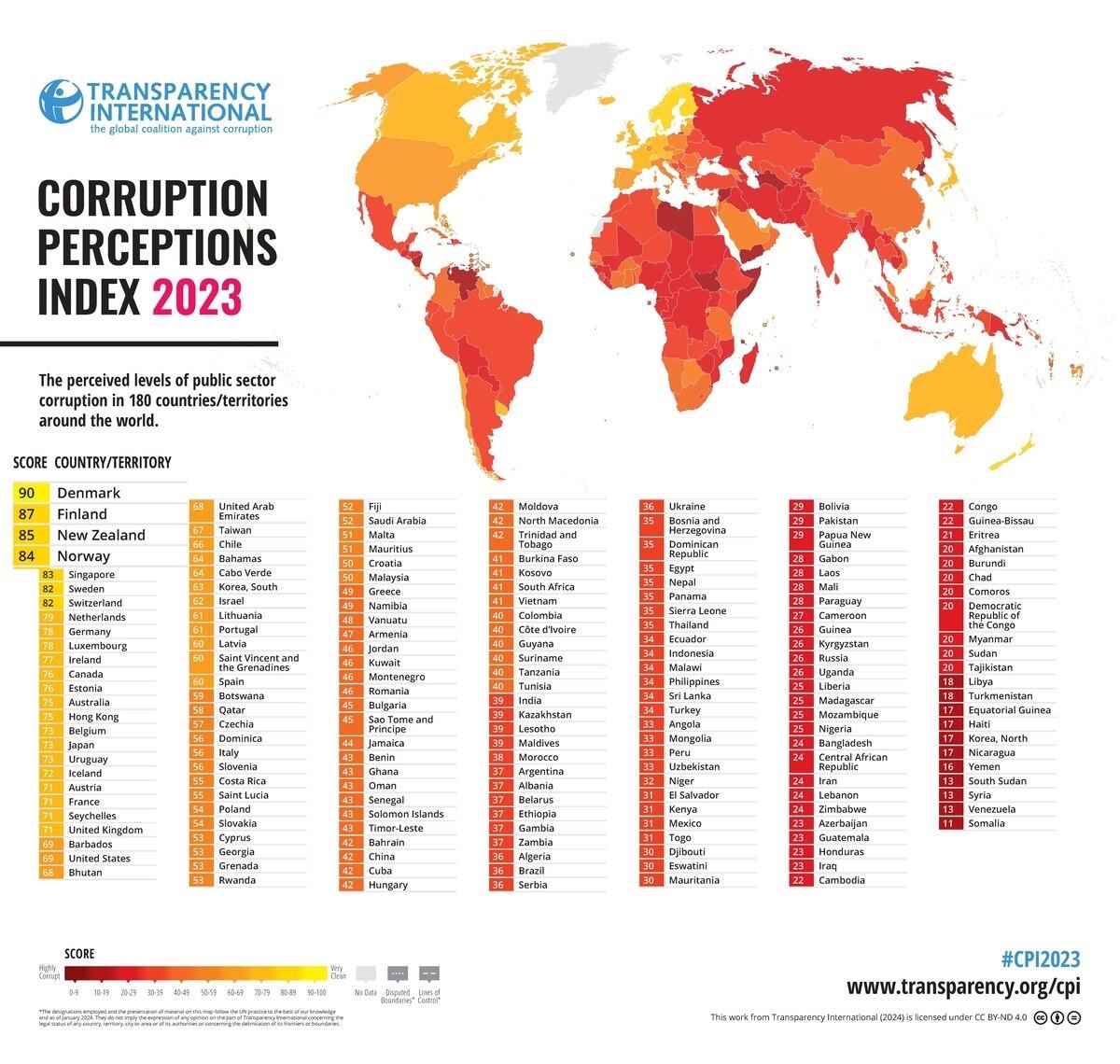
Did I read correctly that the drop is mainly for covid sunsidiary abuse? I guess it‘s similar in Switzerland.
This could be interesting for German bitcoiners. About the history of Krösus and coinage:

Fewer SEO-mouthed institutions would be nice. We used them as efficient trust-proxies in the past interfacing with people working at the same place for ages.
I sometimes think the root of all modern evil is that people don‘t work anymore where they live. Stable human interfaces with consistent locality would solve a lot of those trust issues.

What‘s the right fill level of a beer glass? I see 2/3 of the fun is now inside of you. 1/3 is left to be had. That‘s a good ratio I guess.
About the prank calls:
I‘d like a nostr client which feels like a flip phone. You store your contacts, you can call them, send messages and that‘s basically it.
App would be called
„Nostr Phone 3000“

nostr:npub19mun7qwdyjf7qs3456u8kyxncjn5u2n7klpu4utgy68k4aenzj6synjnft
In the last week I've seen a bunch of code that was procedural, stiff, coupled and glued together, dependant on concretions, with all the responsibility in the world in a single method. Classes with 4 functions, each with 150 lines of code, some of them just with 150 of SQL.
I thought, since I have 20 years of experience, and I'm a fairy decent programmer, and I know quality and what it takes to make code reasonable, I made a presentation to explain to my boss and my colleagues who don't read, don't watch YouTube, don't get formal education and the reason why they are there is because they have degrees in physics and maths and can make the machine do what they want, and my presentation would be a reminder that small modules can really help make changes later on and when combined the potential, the cyclomatic complexity, the accidental complexity remain low and we don't require as much cognitive load to understand and change code.
But I gave up doing the presentation. I'm gonna shut up and have a bad time going through their code and make a fool out of myself, you know why?
I realised it's easier and cheaper to find people with large cognitive capacity and lots of energy than to find and pay someone who is an artisan.
Good code is for your own company if you have one. All they want is ship things at the lowest price and whatever comes next, is someone else's problem.
True?
I don‘t accept this generalization. We‘re currently working for a company which developed some really bad R&D code. They recoginzed that they are already selling it to their customers and took us into the project to make sure the code is of proper quality. They recognized that their engineering skills are on the line in the long run with their customers and did something about it. So no, not true.