

reason.com: Police Officer Threatens To Run Over Protester for Filming on the Sidewalk -- https://tinyurl.com/27q6kumo -- The city of Allentown has spent more than $2 million settling excessive force claims, and yet the police still crack down on civilians exercising their constitutional rights. #liberty #news
Why would a lawsuit settlement change police behavior? It doesn't come out of their pockets

If I spend something, I must part with it
Therefore, If I spend my bitcoin, I must part with my bitcoin
My laptop is my bitcoin
Therefore, if I spend my bitcoin I must part with my laptop
Do you agree with this conclusion? And if not, which of the two premises is false?
In other words, you have told lies and cannot carry on.
OK, let's say, Bitcoin is tangible and my laptop (with the correct key phrase) *is* my Bitcoin.
When I want to spend it do I ship the laptop to the seller of whatever I want to buy? Or is there a central clearinghouse that sorts through everyone's laptops and pagers and whatever?

I have not
Perhaps that is how the Bitcoiners became the way they are
Sure, but you said Bitcoin is tangible. I want to know what tangible object you are calling "Bitcoin" so that I can seek to understand this object
Fine shotguns are a pasttime of the European high class & rich traders
They're paying for the best wood, time and skill engraving, and things like this


You do understand Grok isn't reasoning to come to that answer, right?
Instead, it's just filling in what most people in its training data say about that sort of topic.

So it's the electrons in the computer memory?
What's so special about them?


I take the over

"the primed case fired on nine attempts"
Sauer P320 FBI report
https://drive.google.com/file/d/1L7RXrneHlzfjrewMFIeeyc-nel3bsDnM/view
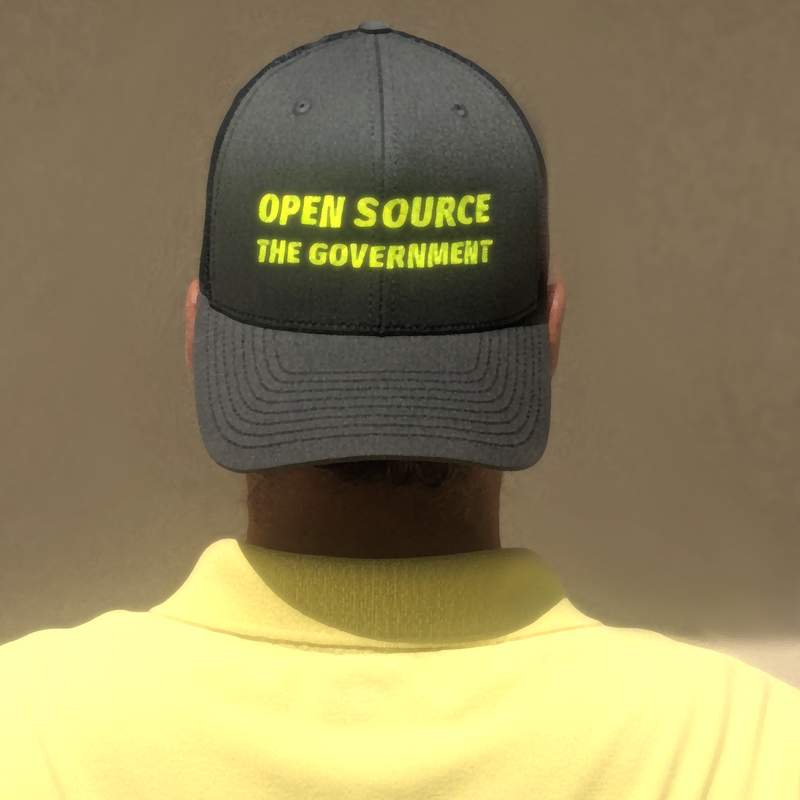
"punish the baddies"
common law liability does this (if they are actually baddies)

https://www.huffpost.com/entry/jon-stewart-stephen-colbert-choir_n_687f004be4b0502d85e65227
Seems pretty Jewish but OK

I think Massie is real and will never come to power in this reich
Latins


My 2c: end regulation, restore common law liability
In the US governments control companies through regulation and non-common-law liability (eg random environmental groups with no property right that has been harmed or threatened get to sue to stop other people from building things).
Instead "we" should control companies through common law liability: if someone can present specific harms they can sue. Otherwise people can do what they want and the courts should refuse to intervene.

To be fair Spanish is a Latin tongue

sounds like our current system is doing OK but if we try hard and spend a lot of money we can leave America's children totally clueless

Just finished recording a podcast with the legend Flat Earth Dave.
Everyone on Nostr will be a flat-earther by the end of 2025, you're welcome in advance.
https://blossom.primal.net/8b99a4eab372115742edd8c375d5d8587d994bd07511c879390ddb4680c508df.mp4
I very much doubt it.
I'm glad you have the independence of mind to question ball earth. I think just because we've been told something since childhood doesn't mean it's true.
However, I remain convinced the earth is a ball.

Which genocide is Dave Smith in favor of?
Next big financial crisis -> printer -> Weimar
Things are already pretty Weimar but they're going to get a lot more Weimar before this is over, especially in the District of Columbia

I think that was prison garb
How long before Men's Wearhouse armored suit?

If I were writing longhand notes for the pleasure of it (or for someone else's enjoyment such as a letter), I could see something like a fountain pen being a good choice.
I think today few write longhand for these purposes.
For my "in case of accident" kit in the car or my grocery list at home, I just want a writing implement that works without me having to fuss around with it.


Distilled water from stainless steel here

Their messiah or your descent into Jewish religion?
If you think somebody else is chosen by God you are already a slave

My recommended viewing order for Star Wars is:
1) A New Hope
2) The Empire Strikes Back

If I invite you into my airplane, I am entitled to kick you out.
I am not entitled to kick you out at 30,000 feet.
The baby is entitled to safe delivery because the mother has invited it aboard (and if the baby was the product of rape it's equivalent to a stowaway, who also should not be tossed overboard when there are nonlethal resolutions possible).
if you have to say it, it's not true (yet)


Many US States have "Romeo & Juliet" laws which create an exception to statutory rape laws when the pair are close in age
According to the whitepaper bitcoin is a digital signature

I think this is terrible advice.
You cannot hate the sin and love the sinner because the sin is not an entity. There is no "murder" out there somewhere in the world you can weigh or drop on your foot or feel hate towards. There are only murderers.
So the question is: will you hate the sinner or love the sinner?
I'm no great fan of Jewish culture or religion, so I do sympathize to some degree with the desire to remove them from positions of political control over a host population.
But no, I don't think the NSDAP economic program was successful. The hourly wages paid to German workers remained at Great Depression low levels all through the 30s and until after the end of the war. Of course as the German economy moved towards autarky and then into war, there was heavy rationing. To give one example: all throughout Europe there was a shortage of petrol which various localities addressed by converting vehicles to run on ammonia, wood gas, or other fuels (or simply doing without).
A free economy is generally quite poor at focusing great resources on a single goal. Many people each choosing their own priorities are unlikely to all agree on what those priorities ought to be. A centralized political apparatus, on the other hand, can focus great resources on a few priorities. What is not seen, however, are the vast array of alternative priorities that are neglected. Nobody takes a photograph of the rubble of a factory that was never built.
I'm sure that assuming leadership of the political mechanism of a large and advanced country requires a certain talent.
However I am neither a socialist nor an advocate of military expansion. I think Hitler's ideas about social and economic organization were horribly mistaken.


Collective administration?
How about the Nazi Party Platform:
"7. We demand that the State shall make it its primary duty to provide a livelihood for its citizens. If it should prove impossible to feed the entire population, foreign nationals (non-citizens) must be deported from the Reich."
"9. All citizens shall have equal rights and duties."
"We demand therefore:
11. The abolition of incomes unearned by work."
"12. In view of the enormous sacrifices of life and property demanded of a nation by any war, personal enrichment from war must be regarded as a crime against the nation. We demand therefore the ruthless confiscation of all war profits.
13. We demand the nationalization of all businesses which have been formed into corporations (trusts).
14. We demand profit-sharing in large industrial enterprises.
15. We demand the extensive development of insurance for old age.
16. We demand the creation and maintenance of a healthy middle class, the immediate communalizing of big department stores, and their lease at a cheap rate to small traders, and that the utmost consideration shall be shown to all small traders in the placing of State and municipal orders.
17. We demand a land reform suitable to our national requirements, the passing of a law for the expropriation of land for communal purposes without compensation; the abolition of ground rent, and the prohibition of all speculation in land.
18. We demand the ruthless prosecution of those whose activities are injurious to the common interest. Common criminals, usurers, profiteers, etc., must be punished with death, whatever their creed or race."
The remaining provisions are either of a similar character or are nationalist (eg a demand that State officials must be German citizens)
https://encyclopedia.ushmm.org/content/en/article/nazi-party-platform
The German State absolutely seized the means of production, for example taking them from Jewish businesses and then "privatizing" them to NSDAP loyalists. Business interests that were not stolen outright were subject to quotas, regulations, state approval to hire or fire and various other controls. In short, the nominal owner did not exercise the power associated with private property. The "owner" (in the sense of having the choice of how to use or dispose of the asset) was indeed the State.
Here is a lecture on the topic: