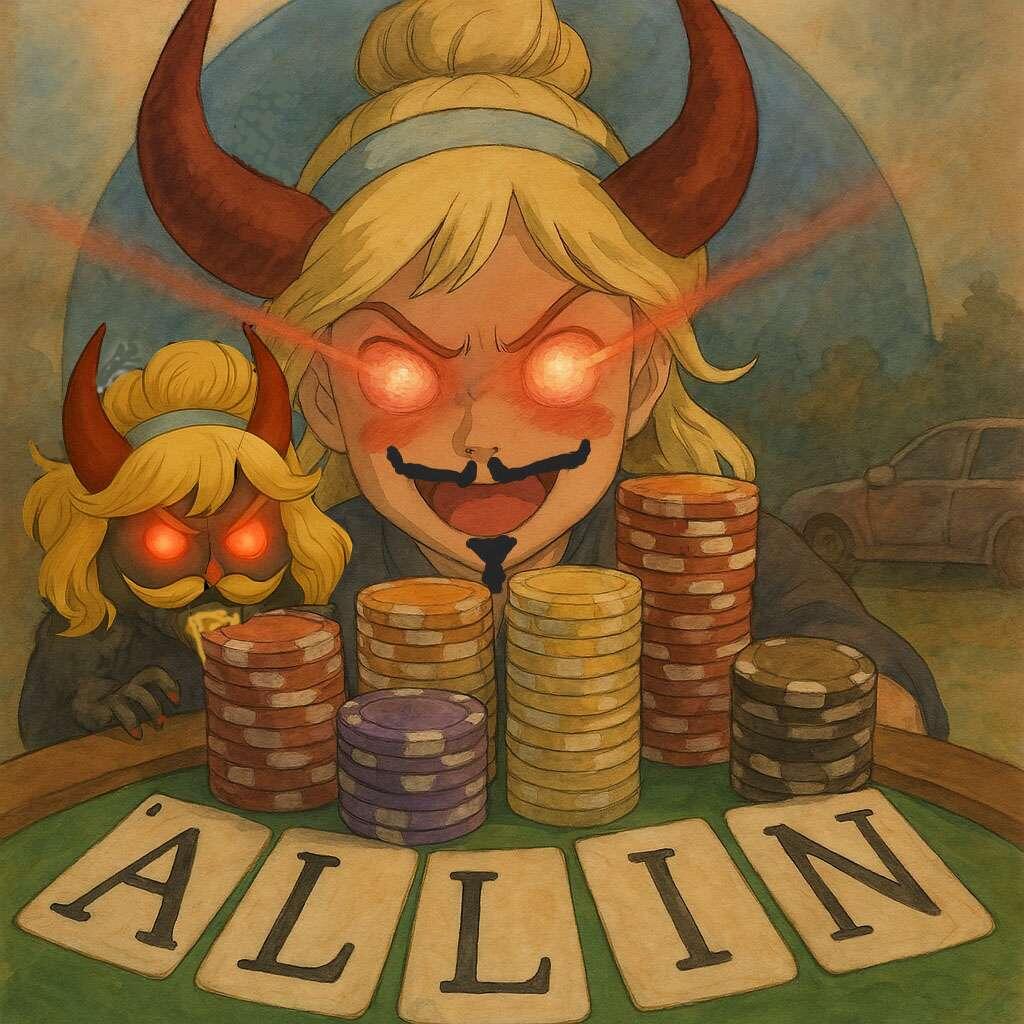
MSTR = East India Company in 1657
The comparison between MicroStrategy’s debt-raising strategy to buy Bitcoin and the East India Company's exploitation of simpler currencies hinges on leveraging financial asymmetry and perceived advantages:
1. Leveraging Superior Financial Tools:
MicroStrategy: Issues convertible notes at favorable terms, taking advantage of investor demand for high-growth, tech-aligned opportunities, and uses the proceeds to buy Bitcoin, betting on its long-term appreciation.
East India Company: Leveraged the disparity in financial sophistication, using coins, promissory notes, and barter systems to dominate local economies and extract wealth.
2. Currency Manipulation or Arbitrage:
MicroStrategy: Converts fiat currency (USD) into Bitcoin, a deflationary and globally traded asset. Over time, this strategy may benefit from Bitcoin's potential to become a global reserve currency, effectively replacing weaker, inflation-prone fiat currencies.
East India Company: Introduced its own currency or manipulated exchange rates in colonies, ensuring transactions favored their interests and undercutting local currencies' value.
3. Exploitation of Asymmetrical Knowledge:
MicroStrategy: Acts on the assumption that Bitcoin's scarcity and adoption curve make it vastly undervalued compared to fiat money. Many institutional investors or governments may not yet fully understand or act on this shift.
East India Company: Exploited local populations' limited understanding of global trade dynamics and financial instruments to impose exploitative trade terms.
4. Consolidation of Power and Resources:
MicroStrategy: Accumulates Bitcoin, which could offer disproportionate financial influence if Bitcoin becomes the dominant store of value or reserve currency.
East India Company: Amassed control over regional economies and resources, leading to vast geopolitical power and influence.
5. Long-Term Impact:
MicroStrategy: If Bitcoin adoption grows, MicroStrategy could be viewed as an early mover that gained outsized returns by leveraging fiat systems to acquire a dominant share of the emerging asset class.
East India Company: Exploited the wealth extracted from colonies to fuel the British Empire's industrial and economic growth, while leaving lasting economic challenges in those regions.
The key parallel is the use of financial and knowledge asymmetry to capitalize on a transition or disparity—Bitcoin’s rise versus fiat, or colonial economic systems versus local, underdeveloped ones.
How big was East India Company?
The East India Company (EIC) was arguably the most dominant commercial entity in history at its peak, and its size relative to contemporaries far exceeded the dominance of today’s largest corporations. Here's a comparison:
East India Company vs. Contemporaries
Peak Value: Estimated at £400 million in the late 18th century (adjusted to approximately $7.9 trillion USD in 2023 terms, depending on calculation methods like GDP share or inflation).
Share of Global Trade: Controlled about 50% of global trade in commodities like tea, spices, and textiles.
Power and Influence: The EIC effectively functioned as a state, with its own army (260,000 soldiers at its peak, larger than most national armies of the time), a navy, and administrative control over large swaths of India.
Relative to other companies of its time, the EIC was unmatched. It dwarfed other trading companies like the Dutch East India Company (VOC) and any national merchant fleets.
---
Today’s Largest Company vs. Contemporaries
Apple (Largest US Company in 2025):
Market Cap: Roughly $3 trillion.
Global Market Influence: While Apple is dominant in the tech industry, it represents less than 1% of global GDP (approximately $105 trillion in 2023).
Relative Dominance:
Apple accounts for about 7% of the S&P 500’s total market cap, reflecting its significance in the US market but not an overwhelming global dominance.
---
Key Comparisons
1. Economic Scale:
The EIC was far more dominant relative to the global economy of its time, controlling 50% of global trade versus Apple controlling a small fraction of global commerce (even in tech).
EIC’s value as a percentage of global GDP in the 18th century was closer to 10-15%, while Apple is less than 1% of modern global GDP.
2. Market Competition:
The EIC faced almost no competition in many regions, leveraging monopolies granted by Britain.
Apple competes in a highly diversified global market with several tech giants (e.g., Microsoft, Amazon).
3. Influence Beyond Commerce:
The EIC governed territories, waged wars, and influenced global geopolitics.
Apple’s influence is limited to economic and cultural spheres through products and services.
---
Conclusion
The East India Company was far more dominant relative to its contemporaries than Apple or any modern corporation. Its influence extended beyond commerce into governance, war, and the shaping of entire economies—something no corporation today has matched.
What market cap would a company that is as dominant as EIC be today?
To estimate the hypothetical market capitalization of the East India Company (EIC) today, assuming it had the same dominance over the global economy as it did during its peak, we can use some historical benchmarks and modern economic figures:
---
Assumptions
1. Global Economy in the 18th Century:
Estimated global GDP around 1770: $135 billion USD (in 2023 dollars).
EIC controlled roughly 10-15% of global GDP through trade and governance.
2. Global Economy Today:
Current global GDP (2023): Approximately $105 trillion USD.
3. EIC’s Hypothetical Share Today:
If EIC maintained control over 10-15% of global GDP, this would equate to:
10% of $105 trillion = $10.5 trillion.
15% of $105 trillion = $15.75 trillion.
What will MSTRs stock price be when it becomes the modern EIC?
To estimate the hypothetical market capitalization of the East India Company (EIC) today, assuming it had the same dominance over the global economy as it did during its peak, we can use some historical benchmarks and modern economic figures:
---
Assumptions
1. Global Economy in the 18th Century:
Estimated global GDP around 1770: $135 billion USD (in 2023 dollars).
EIC controlled roughly 10-15% of global GDP through trade and governance.
2. Global Economy Today:
Current global GDP (2023): Approximately $105 trillion USD.
3. EIC’s Hypothetical Share Today:
If EIC maintained control over 10-15% of global GDP, this would equate to:
10% of $105 trillion = $10.5 trillion.
15% of $105 trillion = $15.75 trillion.
4. Comparable Market Cap-to-GDP Ratios:
Modern dominant companies like Apple, Microsoft, or Saudi Aramco have market caps significantly lower than their industries' total contributions to GDP.
Assuming EIC’s market dominance justifies a 1:1 ratio to its economic impact, its hypothetical market cap could mirror its share of global GDP.
---
Hypothetical Market Cap Estimate
Low End: $10.5 trillion USD.
High End: $15.75 trillion USD.
For perspective, Apple is currently the largest publicly traded company with a market cap of around $3 trillion. The hypothetical EIC would be 3 to 5 times larger than Apple, underscoring its unparalleled dominance in its era.
What does this mean for MSTR stock price?
$42,598.08 per share at a $10.5 trillion market cap (low end) 11,570% gain from yesterday's close.
$63,897.12 per share at a $15.75 trillion market cap (high end) 17,405% gain from yesterday's close.