

Wow.
So drama.
Such popcorns.

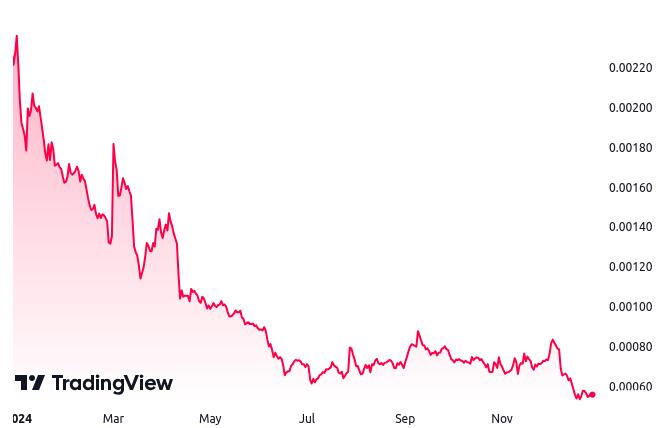
It is perhaps the shittiest shitcoin of all.
People thought it was a bitcoin fork when in fact it was a retarded ethereum copy.

Id give you a ride, but... ha. I am waaaaaaay over here.

It's a little comical to me to see devs/fans of one app that KYCs you and you have to copy and paste your PRIVATE KEY into --+ argung with devs/fans of an app only available for iPhones.
Lol drama.

Lost my mom just barely a year ago after a long road with alzheimers.
The grief surprised me with it's strength.
The thing I learned was not to fight it, wrestle with it or deny it. When I remember just to feel it, allow it and accept it I do much better.
God bless you on this journey sweet girl bat. ❤️
THE BEAUTY OF NOSTR IS USERS CAN CREATE INFINITE IDENTITIES (PRIVATE KEYS) AND USE THEM IN ANY APP THEY WANT.
COMPLETE USER CONTROL OVER OUR DIGITAL EXISTENCE.
https://cdn.satellite.earth/8de427b037d581c91db189541d1827278649384d467c87810691afc70f989818.mp4
I wonder why we have not yet adopted HD keys for nostr yet... there would be many applications. (It will also pose challenges)

I also work in healthcare. There are legal documentd that can seriously help here as well. Living will, DNR, advance directive, and medical POA for example.
As a fellow Christian i also find this topic important. All heathcare, but especially end of life care is aiming limited resouces (all the docs, nurses, meds, proceedures, beds etc) at an infinate problem... death.
At some point we MUST cease trying to preserve life at all costs. But technology continues to extend that ultimate limit.
"Just because we can" is a terrible and sometimes hellish driver.
I believe first it is critical to honor their wishes. And to do that you must know them (the person and the wish). And you should be as clear as possible before they are no longer able to communicate well.
Just walked through this with my now passed mother.
I think most of us do not want life at all costs. But it important to me to honor the will of my elders. I will not choose for them until i have to, and then as their truted proxy as much as i can.


Bull Bitcoin becomes the first mobile Bitcoin wallet that allows users to send and receive asynchronous Payjoin transactions without needing to run their own server, using BIP77!
I am very excited about this new and bleeding-edge feature, because it has been a long-standing ambition of Bull Bitcoin to become the first Bitcoin exchange to process Bitcoin withdrawals via Payjoin (Pay-to-Endpoint) transactions.
However, it was hard to justify Bull Bitcoin investing time into building this feature since there were no commercially available end-user Bitcoin wallets that were able to receive Payjoin payments.
Indeed, in order to receive Payjoin payments (BIP78), a Bitcoin wallet needed to be connected to a full node server and be online at the moment the payment is made. This means in practice that only merchants, professional service providers and advanced full node users had the capacity to receive Payjoin payments. This is, we believe, one of the major reasons why Payjoin had failed to gain significant traction among Bitcoin users.
For this reason, the Payjoin V2 protocol (BIP77) was conceived and developed by Dan Gould, as part of the Payjoin Dev Kit project, to outsource the receiver's requirement to run his own server to an untrusted third-party server called the Payjoin Directory. In order to prevent the server from spying on users, the information is encrypted and relayed to the Payjoin Directory via an Oblivious HTTP server.
Bull Bitcoin’s Payjoin ambitions had been put on hold since 2020, until there was more adoption of Payjoin receiving capabilities among end-user Bitcoin wallets…
But it turns out that in the meanwhile, Bull Bitcoin developed its own mobile Bitcoin wallet. And it also turns out that the open-source Bitcoin development firm Let There Be Lightning, which we had collaborated with in the past, had itself collaborated with Dan to build a software library for Payjoin that was compatible with and relatively straightforward to integrate into our own wallet software. All that was missing was to put the pieces together into a finished product.
Thanks to the collaborative open source effort of the Payjoin Dev Kit team, Let There Be Lightning team and the Bull Bitcoin team, the Bull Bitcoin wallet has now become the first commercially available end-user mobile wallet on the Google Play store to implement the BIP 77 Payjoin V2 protocol.
Moreover, the Bull Bitcoin wallet has also implemented asynchronous Payjoin payments, which means that a Payjoin transaction can be “paused” until the receiver or the sender come back online. This way, the receiver's mobile phone can be “turned off” when the sender makes the payment. As soon as the recipient’s phone is turned back on, the Payjoin session will resume and the recipient will receive the payment. This is a major breakthrough in the mobile Payjoin user experience.
We would like to thank the Human Rights Foundation for allocating a generous bounty for the development of a Serverless Payjoin protocol and its implementation in a mobile Bitcoin wallet, as well as OpenSats and Spiral for supporting the work of Payjoin Dev Kit, which made this all possible.
Why does this matter?
Payjoin, also known as Pay-to-endpoint, is a protocol which allows the Bitcoin wallet of a payments receiver and the Bitcoin wallet a payments sender to communicate with each other for the purpose of collaborating on creating a Bitcoin transaction.
I first heard about Payjoin (then called Pay-to-endpoint) in 2018 and it completely blew my mind. What I liked most about it was that it was not a protocol change to Bitcoin, but rather it was an application-layer protocol that allows wallets to communicate in order to create smarter and more efficient Bitcoin transactions.
Whereas in a normal Bitcoin payment the transaction is created by the sender, and all the inputs of that transaction belong to the sender, in a Payjoin payment both the sender and the receiver contribute coins as inputs.
In the Bitcoin whitepaper, Satoshi wrote:
"some linking is still unavoidable with multi-input transactions, which necessarily reveal that their inputs were owned by the same owner"
With Payjoin, this assumption is no longer true. With Payjoin, we have fixed one of Bitcoin’s most fundamental privacy problems... without changing the Bitcoin protocol!
In a Payjoin transaction, the output amounts visible on the blockchain does not necessarily reflect the value of the payment that was actually exchanged. In other words, you can’t easily tell how much money one wallet sent to the other. This is great for users that are concerned a malicious third party may be attempting to obtain sensitive information about their finances without their consent. This does not however pose an accounting problem for the Bitcoin wallets involved in that transaction: since both wallets are aware of which coins they used as inputs and outputs, they are independently able to calculate the "actual" value of the payment that was sent even if the payment on the blockchain appears to be a of a different amount.
Payjoin breaks the common input ownership heuristic, an assumption used by hackers and fraudsters to track ownership of addresses on the blockchain. The neat thing about this property of Payjoin is that it benefits everyone on the network, not just the Payjoin users themselves.
It allows the receiver of a payment to opportunistically consolidate his utxos when he is receiving funds, in a way which does not necessarily appear to be a consolidation transaction on the blockchain. Depending on the configuration of a payment transaction, it can also make a regular payment look like a consolidation.
In addition to these benefits, the introduction of collaborative peer-to-peer transaction protocols opens up exciting opportunities for the creation of Lightning Network channels, as well as efficiencies for transaction batching.
How to use Payjoin in the Bull Bitcoin wallet:
It’s so seamless, you may not even realize you are using it!
To receive via Payjoin, simply navigate to the “Receive tab” using the network “Bitcoin” and you will see a Payjoin invoice. When you want to get paid, send this invoice to the payer, or show them the QR code. If the sender’s wallet is compatible with Payjoin, it will be up to the sender to decide whether or not they want to use Payjoin.
To send via Payjoin, simply paste the receiver's Payjoin invoice, or scan the associated QR code, in the Bull Bitcoin wallet. If you decide that you don’t want to pay with Payjoin, simply turn off the Payjoin toggle.
Original post: https://www.bullbitcoin.com/blog/bull-bitcoin-wallet-payjoin
Download the wallet: https://play.google.com/store/apps/details?id=com.bullbitcoin.mobile&hl=en-IN


So difficult. But on both sides of the polarity.
Trust is still a valid tradeoff in many circumstances.
The revolutionn is not that we MUST eliminate trust in our uses of bitcoin, but that we CAN.
I think of Hal Finney's very early "bitcoin banks" post on BCT.
Ah.. i see
Yes
Why did you choose the latter?

Big fan of the #blockstream #jade as well as the #seedsigner to this end.


See if your model is here... https://wiki.galliumos.org/Hardware_Compatibility


Use the same AI to make 5 tougher dudes.
Look. As an old bitcoinner i have no real problem with the general idea of your point. My wallets are paper and multisig. The etfs are not bitcoin. I have seedsigners (which nvk attacks) and jades for my QR codes so my family can recover the bitcoin when i die.
I have found the actions of the coinkite owner distasteful and anti foss.
I dont want to show you disrespect. Your contributions to people who need knowledge have been extremely valuable.
And self custody is hard as fuck.
I know. I was using a single address in 2011.
But its not a binary.
And NOTHING is more secure than an actual cold wallet.
Jack does not support ten31?

So dumb people use the gizmo from a company that pays you.
Smart people use the (NOT OPEN SOURCE) gizmo from another company that pays you.
I am going to avoid your false binary altogether.


Merry Crimbo to you too sir. I raise my flute of Chateau de Vinegar in your direction! *clink*

It looks like you forgot to turn the smoker on? 😃
Best ever christmas bat.



I believe we will see prominent "maxis" backing the idea of a tokenized dollar.

A lot of smart foolish humans prove your point.

I don't need people to care about many things *I* find value in.
I think you will find many people consider Chaumian mints run by a single entity as such counterparty risk that it is even like shitcoining. I can make a fairly iron clad argument that holding a small amount of a "privacy coin" to be less risky than ecash since at least I hold the keys.
But do I need someones approval to do either of those? Nope. I don't care what people think about my choices.
For what is worth running ecash on a federated system like #liquid would be a very good idea. ( hat tip nostr:nprofile1qqsfy229w70e8lgtxavlz9t78k06yrel6fxyhreteafqet8kfxhhwmg2c6av2). Then you benefit from a distributed trust model on top of bitcoin and lawyers of privacy with less chance of fraud or loss.
2 sats.