

No, there are no such thing as better time to sync.
May I know what monerod arguments did you use?
As far as I know, the bottleneck is CPU when syncing latest blocks

Lightning operates milli sats underneath so I think it could be used by zaps in the future

I use nostr.wine and nostr.land
Haven't seen spam for a while already


When outside, almost always I prefer light theme to save on screen brightness
#asknostr Anyone has personal nostr #relay for multiplexation purposes / saving websockets on a mobile?
So far I have found a few projects but they seem to not be actively maintained or widely used:
- https://github.com/bndw/nostr-relay-proxy
- https://github.com/Dolu89/nostr-proxy
I would like to hear your opinion on this idea in general, do you know any implementations or what do you think about these specific ones.
I am not sure if it ia good idea given that there can be issues with reaching web server / CORS misconfiguration / temporary DNS issue

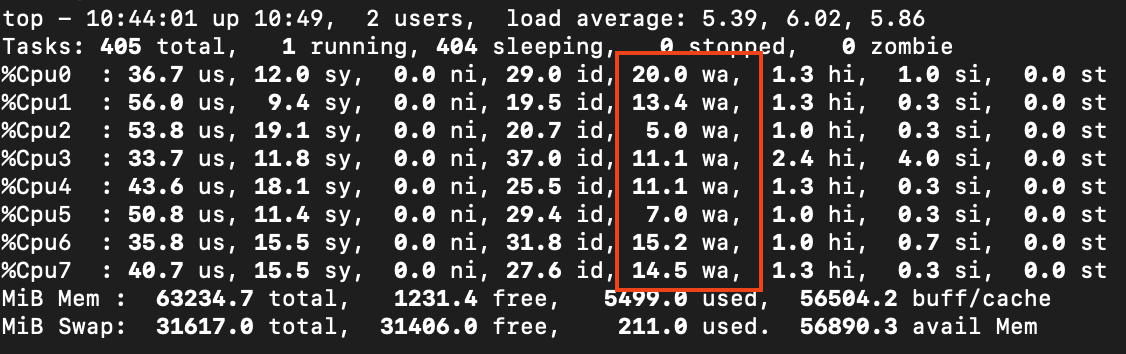
htop shows wait average if configured to do so (however, not by default).

Fun fact: if AWS and Google banned running #lightning nodes it'd take out more than half of the lightning network.
Source: https://mempool.space/lightning
Isn't this statistics reflecting only "clearnet only" + "clearnet + darknet" type of nodes? There are much more "darknet only" nodes: https://mempool.space/graphs/lightning/nodes-networks

I am somewhat biased towards certificates - I see them more as vendor's confirmation of yours' proficiency in using specific software/hardware in a way they expect you to.
As for Linux kernel and it's wide and extremely diverse ecosystem, there is no single entity, who are in charge of judging what is OK and what's not. IMO, closest to this position are Red Hat due to their contributions and enterprise services (Red Hat Enterpise Linux distro, it's components they've developed exclusively for it, testing environment like Fedora and CentOS Stream, OpenStack, Ansible...).
Can't recommend you any certification, but did you ever use Gentoo or NixOS? You can learn much while using them.
As for professional recognition, I think only Red Hat certification programmes are worthy.


You can try https://asahilinux.org/ (if you have Apple Silicon)

There is no need to restart nginx to update certificates, you can ask nginx to reload TLS certificates (`-s reload`, it actually reloads entire configuration): https://nginx.org/en/docs/switches.html
You can even reload nginx binary on-the-fly and revert this change if necessary: https://nginx.org/en/docs/control.html

Here is a link to some repository on this topic I have seen a few years ago: https://github.com/Satsuoni/widevine-l3-guesser
Surprisingly, it is not taken down.
I am not familiar with Google Play from developers' POV, but after quick search I found this one year old article: https://android-developers.googleblog.com/2023/11/ensuring-high-quality-apps-on-google-play.html?m=1
So mandatory KYC for devs seem to be true.
Aren't there newbies-friendly clients already available? IMO, the biggest issue for a newcomer is getting to whom follow. Currently the only solution I see is to accompany your non-tech friend/relative to familiarize them with nostr step-by-step

It is considered good only by newcomers who are not into privacy or decentralization stuff. There are a lot of newcomers due to rising Bitcoin popularity.

Don't you think that running oqn full node and sharing it publicly (for example at aggregators like https://monero.fail/ ) won't help for better privacy? It should work the same way public VPN work - your own transactions are mixed with the transactions of others', making any guess less useful. What am I missing?