"If God simply foreknows the future without determining it, then the future is fixed—neither God nor man is truly free. Foreknowledge without openness leads to fate. Only in Open Theism does God remain free to act, and humans free to choose. #OpenTheism #GodIsFree"

I have read that even many hearing people do not have an inner voice, So I imagine that they do not. Perhaps they see text.
I see why Molinism appeals—it avoids Calvinistic determinism while keeping foreknowledge. But Open Theists argue it still fixes the future since God selects a world where all choices are pre-known. Instead, Open Theism holds that some aspects of the future remain truly open, allowing for real-time divine action and genuine freedom.
Craig’s critique assumes a Molinist framework, but Open Theists reject middle knowledge altogether—both for creatures and for God. Boyd’s analogy of a chess master doesn’t mean God has pre-volitional middle knowledge of His own actions; rather, it highlights God’s perfect wisdom and ability to respond freely in real time.
Craig worries this removes divine freedom, but Open Theism actually enhances it. God isn’t locked into a predetermined set of responses; He makes genuine, dynamic choices. His knowledge isn’t about pre-set counterfactuals but about His character, wisdom, and ongoing relationship with creation. This makes God more free, not less.
Ultimately, the debate isn’t just about knowledge but about how God interacts with the world—is He executing a pre-scripted plan, or engaging in a living, relational way? Open Theism affirms the latter.
That's an interesting question, and I appreciate the opportunity to discuss Open Theism! Let’s dive into the key points you raised.
Future Contingent Propositions & Open Theism
Dr. Craig argues that there are true future contingent propositions—statements about the future that are already true or false, even before the events happen. Open Theists reject this because it assumes a settled future rather than an open one, which would trap God in fate. However, Molinism provides God with more freedom than simple foreknowledge because there was a point when God chose to create.
The key issue is whether truth exists for things that haven’t happened yet. If future contingent propositions (like “Person X will choose Christ”) are already true or false, then the future is determined in some way—either by necessity (Calvinism), middle knowledge (Molinism), or simple foreknowledge (Classical Arminianism). But if the future is truly open, then such propositions do not yet have a truth value. Instead of saying, “God knows X will happen,” Open Theism says, “God knows X might happen, and He knows all possible futures.”
This view is fully consistent with God’s omniscience—He knows all that can be known. But if the future is not fully determined, then it cannot be “known” in the way Craig suggests because there is nothing definite yet to know.
Isaiah 46:10 & "God Knows the End from the Beginning"
You mentioned the biblical phrase, “God knows the end from the beginning.” This comes from Isaiah 46:10, where God says:
"Declaring the end from the beginning, and from ancient times things not yet done, saying, ‘My counsel shall stand, and I will accomplish all my purpose.’”
This is often used to argue that God foreknows all future events as settled. However, if you read the context, God is contrasting Himself with idols, showing His sovereignty and power to bring about His plans (not necessarily foreknowing every detail of the future). In Isaiah, God is appealing to His people, who have a history with Him. They know that He would declare a thing and was faithful to do that thing. The phrase doesn’t mean every event is already fixed; rather, it highlights God’s ability to accomplish what He has decreed. Open Theists fully affirm this! God does declare some things and ensures they happen (e.g., Christ’s return), but that doesn’t mean every choice is already settled.
Molinism vs. Open Theism
Molinism, as you mentioned, seeks to solve problems with Calvinism by introducing middle knowledge—the idea that God knows not only what will happen but also what would happen under different circumstances. The challenge is that Molinism still assumes a settled future in God’s actualized world. Open Theism, by contrast, argues that the future is partly determined and partly open. God knows all possibilities, but He has left room for genuine freedom.
One of the main issues Open Theists raise with Molinism is that middle knowledge still results in determinism by selection. If God knows what every free creature would do in every situation and then actualizes the one where things play out the way He wants, how is that real freedom? Open Theists argue that if humans are truly free, then some aspects of the future cannot be definitively known because they haven’t been determined yet.
Is This an Essential Doctrine?
I really respect your attitude here. You’re right—this isn’t an issue of who we worship. We both affirm that God is the sovereign Creator, Jesus is Lord, and salvation is by grace through faith. Open Theists and Classical Theists agree on these fundamentals but differ on how God relates to time and the future.
In my view, Open Theism actually makes God more free, rather than less. If God has total freedom to act in the present, rather than simply executing a pre-known script, then He is even more dynamic and relational than traditionally understood. But I completely agree that this is an area where believers can disagree while still being brothers and sisters in Christ.
Thanks for engaging in the discussion thoughtfully! Let me know if you’d like more resources on the history of Open Theism or its biblical basis.
I'm exploring the topic more than I have previously, though I remain unconvinced it's correct. An intellectual much smarter than I whose scholarship I respect, Dr. William Lane Craig, rejects Open Theism, and so I have been looking at some of his work trying to understand why:
https://www.reasonablefaith.org/media/reasonable-faith-podcast/four-views-on-divine-providence #OpenTheism
I'm glad to see you're taking the time to explore Open Theism more thoroughly! Dr. Craig is certainly a brilliant thinker, and I respect his scholarship as well. His critiques of Open Theism tend to stem from his commitment to classical foreknowledge models and his philosophical views on God's relationship to time. While he presents his case well, I believe Open Theism provides a more coherent understanding of God's freedom and the dynamic nature of creation.
One of the key issues I see in Craig’s perspective is that his middle knowledge view, or Molinism, still locks in all possible futures before God even acts. This essentially means that while God chooses among various possible worlds, He is still bound to a framework in which every outcome is predetermined in some sense. In contrast, Open Theism maintains that the future is truly open, allowing for real relational engagement between God and humanity, as well as genuine human freedom.
Another point worth considering is that Open Theism aligns more naturally with the biblical witness of God's interactions with people. The numerous passages where God expresses regret, changes His mind, or responds dynamically to human choices make more sense within an open view of the future. If the future were exhaustively settled, these interactions would appear either disingenuous or merely anthropomorphic, raising theological concerns about the sincerity of God's engagement with creation.
Moreover, Perfect Being theology, which underlies much of classical theism, has its roots in pagan philosophy. Concepts such as immutability, impassibility, and timelessness were heavily influenced by Greek metaphysical ideas, particularly from Plato and Aristotle. While these ideas were later incorporated into Christian theology by thinkers like Augustine and Aquinas, they often present a more static and abstract view of God—one that seems distant from the living, relational God revealed in Scripture. Open Theism challenges this framework, seeking to restore a biblical understanding of a God who genuinely interacts with creation in real time.
I've watched this video before. I’d be curious—do any of Craig’s arguments against Open Theism stand out to you so far?
P.S. There’s a great Unbelievable? episode where he and Dr. James White discuss related topics. It's a fascinating conversation.
I appreciate your willingness to explore this, brother! Just to start, it's important to know that Open Theism isn't monolithic—there's a range of views within it. But at its core, Open Theism is about the freedom of God. If God is/was ever free to choose, then the future couldn't be entirely settled because He would have had the ability to do otherwise.
As Psalm 115:3 says, "Our God is in the heavens; He does all that He pleases." This illustrates God's freedom and sovereignty, highlighting that His actions are not predetermined but are chosen according to His will.
Regarding prophecy, Open Theism doesn't require God to see a fixed future. Instead, God knows every possible outcome and is powerful enough to bring about what He promises. Think of it like a master chess player who doesn't need to see the future to guarantee victory. He knows every possible move his opponent could make and has a strategy for each one. Similarly, God knows every possibility and works through the free actions of people to accomplish His purposes.
One of the most interesting aspects of Open Theism is how it explains what some might see as ‘failed prophecy.’ In this view, prophecy isn't about God seeing a fixed future but about Him declaring intentions that are conditional on human response. This is seen in places like Jonah and Nineveh: God declared that Nineveh would be destroyed, but when they repented, God relented. The prophecy wasn’t false; it was conditional.
Open Theism acknowledges that because God honors human freedom, some prophecies are warnings or invitations to change course. This highlights God's relational nature and His willingness to adapt His plans in response to human choices—without compromising His ultimate purposes.
This perspective actually emphasizes God's sovereignty and creativity even more! I'm happy to chat more about this when you have time. Blessings to you as well!
I really appreciate your thoughtful response and your deep love for God—it’s clear that you take these theological discussions seriously, and I respect that a lot! I can tell that you’re genuinely seeking to understand how God's sovereignty and human freedom fit together, which is something I wrestle with too.
You made a great point about how God knowing the future doesn’t necessarily mean He determines it. But that raises an interesting question: If God infallibly knows what will happen, and humans cannot do otherwise, who or what determined that God would be helpless to watch events unfold?
If we break it down, there are really only a few possibilities:
1. God Himself determined it—but that would mean He actually did predestine all things, which would lead back to a deterministic view, contradicting free will.
2. The future exists as a fixed reality apart from God—but that would mean God is subject to fate rather than truly sovereign.
3. God knows all possibilities but not a fixed, settled future—this would allow Him to remain sovereign and engaged while still granting us true freedom.
Open Theism takes this third approach, not as a way of limiting God, but as a way of elevating His sovereignty—not as a passive observer of history, but as an active participant, dynamically engaging with His creation in real time. It’s not that God can’t know the future, but rather that the future isn’t a thing yet—it hasn’t happened. God knows everything that can be known, but He is not bound by a future that doesn’t yet exist.
I love that you're open to discussing this, and I truly appreciate your willingness to explore different views. At the end of the day, we both agree on the most important thing: God is good, wise, and worthy of all our love and trust.
Blessings, brother!
You're right that Calvinism does assert those things, but they are not found in this 1 Samuel text. In fact, this passage presents a scenario where God declares what would happen if Saul remained, yet Saul does not remain, meaning the future was not exhaustively settled. This directly challenges the idea of exhaustive, definite foreknowledge as understood in Calvinism. If God's knowledge of the future were entirely fixed, He would not state a conditional outcome that never comes to pass. Instead, this passage fits naturally within an Open Theist framework, where God knows all possibilities and responds dynamically.
---
Would you like to add anything else to emphasize your point?
God knew David would be delivered up to Saul. In 1 Samuel 23:10-13, David inquired of the Lord about whether the people of Keilah would hand him over if he stayed, and God said they would. Yet, David left, and the event never happened. This passage shows that God’s knowledge includes not just what will happen but also what could happen based on human choices. Open Theism affirms that God knows all possibilities perfectly, and His wisdom allows Him to respond freely in real-time.
This does not mean God is ignorant of the future but that the future is partly open because free agents make real choices. If the future were exhaustively settled, God's statement about Keilah’s betrayal would be meaningless since it was never actualized. Instead, we see that God’s knowledge includes contingent realities—what would happen given certain conditions—while still allowing for human freedom. This makes God's foreknowledge dynamic, not limited.
Yes, Open Theism holds that God knows all possible outcomes and is perfectly wise in responding to them. However, this doesn't mean God is ignorant of the future—it means the future is not exhaustively settled yet. Instead of seeing the future as a fixed script, Open Theism sees it as partly open, allowing for genuine human freedom and real relational interaction with God.
God’s knowledge is not limited; rather, He knows reality exactly as it is—some aspects are determined by His sovereign will, while others remain contingent on human choices. This allows for true love, dynamic relationships, and meaningful prayer, all while ensuring that God’s ultimate purposes will be fulfilled.
#GodIsWise #RelationalTheology #OpenTheism
Open Theism: God sovereignly created a world where the future is partly open. He knows all possibilities, responds in real time, and guides history without determining every choice. The future isn’t fixed—it’s a dynamic story with a relational God. #OpenTheism #GodIsFree
Exegesis of Isaiah 46: Does It Support Open Theism?
Introduction
Isaiah 46 is often cited as a proof text for divine determinism and exhaustive foreknowledge, particularly by Reformed theologians. However, a careful exegetical examination reveals that this passage does not teach meticulous determinism but rather emphasizes God’s unique ability to accomplish His purposes in contrast to the lifeless idols of Babylon. This study will follow a rigorous exegetical approach—analyzing the historical context, examining the Hebrew text, and addressing theological implications—while demonstrating how Isaiah 46 aligns with Open Theism rather than classical Calvinism.
Historical Context
Isaiah 46 falls within a section of prophecy directed against Babylon. Israel, tempted by the seemingly dominant powers of the day, had fallen into idolatry. The context is one of polemical contrast between Yahweh and the false gods of the nations. The passage begins by describing how Babylon’s idols—Bel and Nebo—are carried as burdens by their worshipers, unable to save themselves or their followers (vv. 1-2). In contrast, Yahweh declares that He carries His people and has the power to bring about His purposes (vv. 3-4). The central point of the chapter is that Yahweh, unlike idols, is active and effective in history.
Exegesis of Isaiah 46:9-10
The key verses often cited by determinists are Isaiah 46:9-10:
"Remember the former things of old; for I am God, and there is no other; I am God, and there is none like me, declaring the end from the beginning and from ancient times things not yet done, saying, ‘My counsel shall stand, and I will accomplish all my purpose.’” (ESV)
#Declaring the End from the Beginning
Some argue that this phrase supports exhaustive divine foreknowledge of all future events. However, a careful examination of the Hebrew verb nagad (נָגַד), translated as "declaring," reveals that it refers to making known or announcing, rather than foreseeing an already settled future. The emphasis here is not on a timeless decree but on God’s active involvement in history. The passage does not say that God foreknows all events in an immutable sense, but that He proclaims what He intends to do and brings it about.
#My Counsel Shall Stand
The phrase "My counsel shall stand" (עֲצָתִי תָּקוּם) is better understood as a declaration of God's ability to accomplish what He purposes, rather than an assertion that all events are predetermined. This interpretation aligns with passages such as Jeremiah 18:7-10, where God explicitly states that He may alter His declared plans based on human response.
God’s declarations in Isaiah 46 must be understood within the broader biblical framework where divine intentions can be conditional. For example, God declares judgment on Nineveh in Jonah 3, but when the people repent, He relents. If Isaiah 46 were teaching exhaustive foreknowledge of a fixed future, this kind of dynamic interaction would be impossible.
The Polemical Purpose of Isaiah 46
A key flaw in deterministic readings of Isaiah 46 is that they ignore the chapter’s rhetorical and polemical function. The contrast is not between an omniscient God who possesses a settled future and an ignorant humanity; rather, the contrast is between Yahweh, who actively shapes history, and idols, which are passive and powerless. The thrust of the argument is that God can accomplish His plans in real time, whereas idols cannot act at all.
Principles of Sound Exegesis in Interpreting Isaiah 46
In analyzing Isaiah 46, a sound exegetical approach includes:
1. Contextual Analysis – Recognizing that the passage addresses Israel’s idolatry and contrasts Yahweh’s sovereignty with the impotence of false gods.
2. Grammatical-Historical Method – Examining the original Hebrew words and their meanings in the historical and literary context.
3. Scripture Interprets Scripture – Understanding Isaiah 46 alongside other passages that show God’s intentions can change based on human response (e.g., Jeremiah 18:7-10, Jonah 3:10).
4. Authorial Intent – Identifying that Isaiah’s goal is to affirm God’s supremacy over idols, not to present a philosophical doctrine of exhaustive foreknowledge.
5. Rejection of Eisegesis – Avoiding reading theological presuppositions (such as determinism) into the text.
Implications for Open Theism
1. God’s Foreknowledge is Dynamic, Not Deterministic – The passage does not teach exhaustive definite foreknowledge but rather God’s sovereign ability to bring about what He has purposed.
2. God Engages in Real-Time Decision-Making – The emphasis is not on a fixed script of history but on God’s ability to fulfill His word within an open and contingent future.
3. God’s Sovereignty is Relational, Not Causal – Open Theism maintains that God’s sovereignty is best understood as His capacity to work within creation dynamically, rather than as a blueprint that eliminates genuine human freedom.
Conclusion
Isaiah 46 does not support exhaustive divine determinism. Rather, it affirms that God is distinct from idols because He acts in history and accomplishes His purposes. A proper exegesis of the passage reveals that God is not merely foreseeing a settled future but is actively working to fulfill His plans in interaction with His people. This reading is fully consistent with Open Theism, which affirms God's sovereignty as relational, purposeful, and dynamically engaged with His creation.
Thus, Isaiah 46, rather than refuting Open Theism, actually supports a view of God that is living, personal, and engaged with His people in real-time decisions.
Is anyone else watching this? Season one was awesome, and season two is looking just as good.


I think this started me down the path. So far it has stopped. Thanks
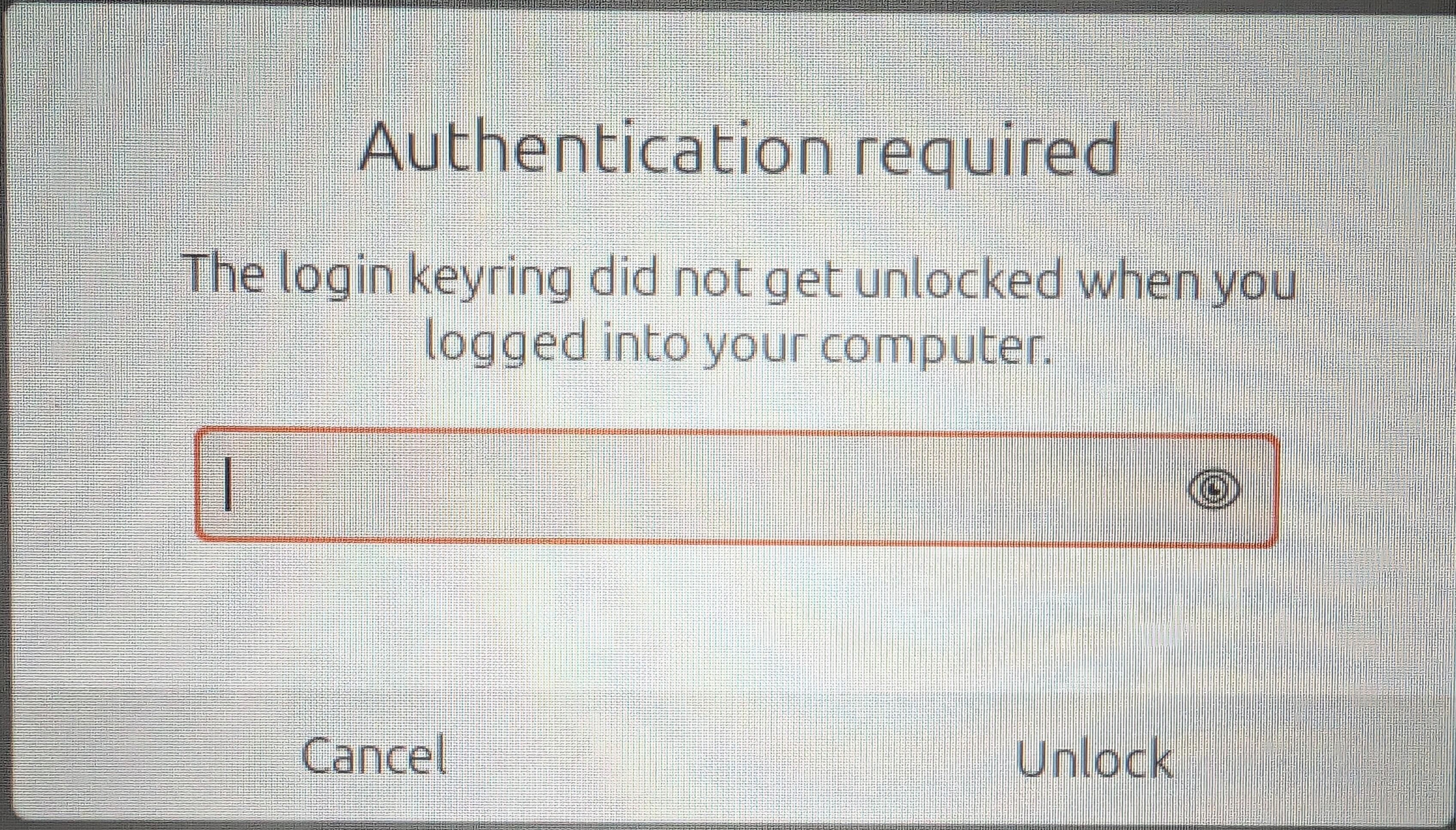
Okay, I started using Ubuntu yesterday. I keep getting this "Authentication required" popup. It doesn't matter if I give a password and hit unlock or just hit cancel. It doesn't disrupt anything else. So at this point it is just annoying, How do I fix it?

Of course, but not just Trump. The State always has a warm smile until you resist or have something they want. That's another time when you see them for what they are.
Wow. You have a mighty nice company. It sure would be a shame if something happened to it. How about I give you protection for half your business? - said a gangster
Sometimes the mask just comes right off.

I would love to see an Nostr client that used a TikTok format. I am sure some of these smart coders can make it happen.
I know this is the wrong place to tech-brag but I don't know who else to share it with. My coworkers won't care, or perhaps even understand.
I got my new (refurbished) Thinkpad T495S and installed Ubuntu on it. Looking back it was so easy, but from before that, it created serious apprehension that I might just brick it.
BTW what's the best Linux client for Nostr?
Why not? It costs him nothing and solidifies his new crypto-base.
I give it a 50/50 chance. If he remembers.
Okay. I want to buy a notebook running on Linux. Where's can I buy one for Bitcoin? (Agorist Preferred)
I normally use a Chromebook at home, and Windows at work. I have a little experience with Linux, running in a sandbox on my Chromebook) So this will be a transition for me, so it should do most things, doc, Web, coding without being very expensive.
Any ideas or recommendations?
Does it matter what distro of Linux? and what specs should I look for in a computer to have the best chance of existing my IOTA?
Thanks for your help.
Is anyone here into IOTA?
I have a seed from a few years back. I can't access it on my phone anymore.
Is there a Linux system I could use?
Please advise.
PS I just want to flip out into Bitcoin.

Matthew 28:18 And Jesus came and said to them, “All authority in heaven and on earth has been given to me.


Because we can and we we want to.
If men would take a moral stand, protect women, and lead there families. That would be a great thing. That would be patriarchy.
Calling the "old system" patriarchy just discourages men from talking responsibility. IOW your unknowingly doing the footwork for the "old system" .
Godly patriarchs would crush the "old system". Which by the way is the State.
#abolishTheState