

So if your app supports Zaps?


Yeah. Maybe I was talking about them implementing the beast mark as if it was a spec ?! 🤔
Blockchain plus bio auth is the end?

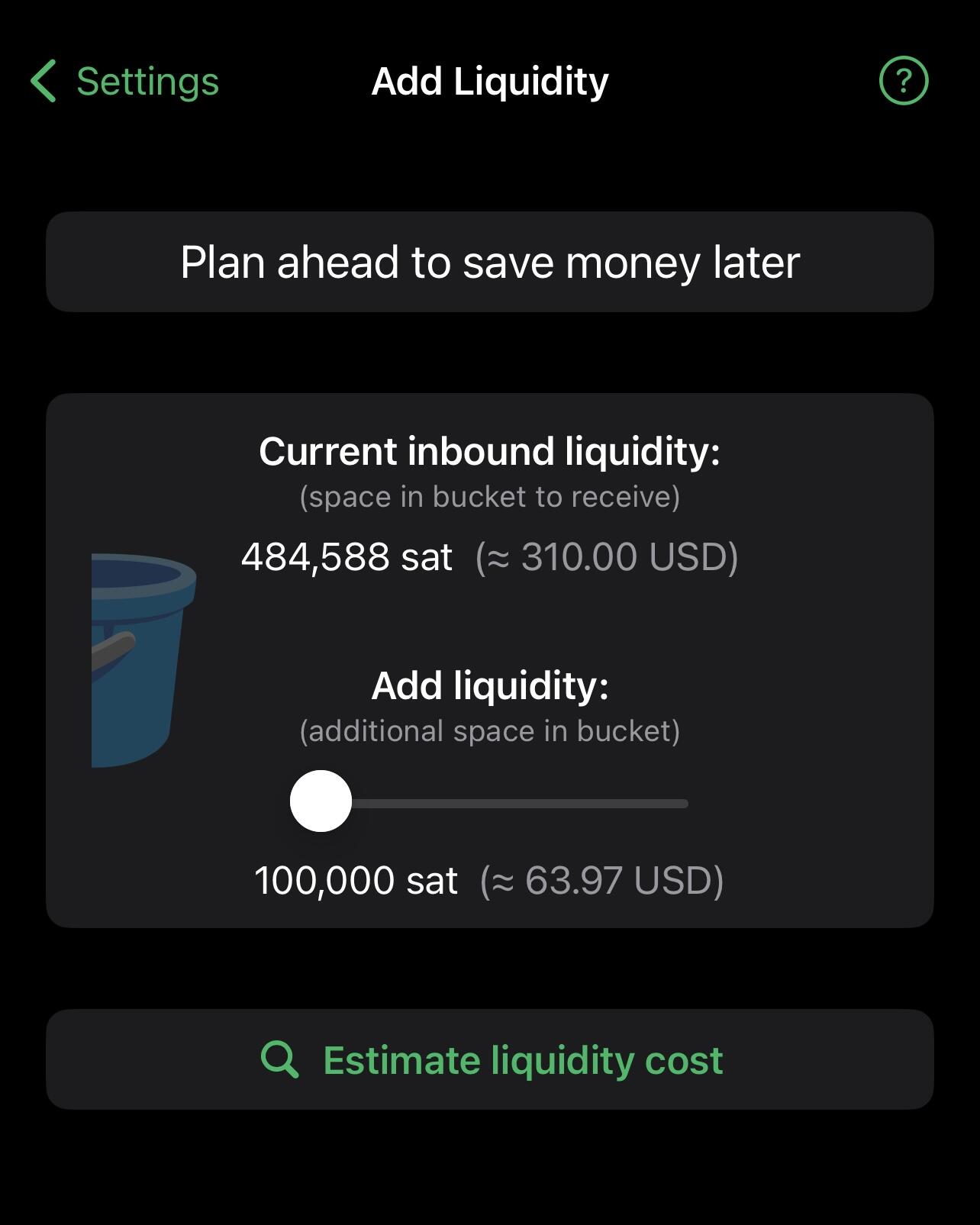
Is that fixed of does it scale with the exchange rate?

So why do you need significant liquidity to receive a payment?
Like “Apply client/ profile filter settings to this relay?”

It would be nice if from the client or from relay settings you could isolate hashtags or users you don’t want to see pulled back. Or configure a filter for “family-safe” that you define and like dark mode or light mode you could filter that stuff out for most of the time unless you find some specific post is being blocked you are looking for. I hear we need to stand up a relay or such to do this. But why can’t I do it on the client? Or on the relay settings when I add a relay?

This section
I don’t, however, think the solution is a jet cockpit’s worth of access controls. Rather, I suspect there might be some clever new formulation of the “mention” waiting out there, just waiting to be discovered …
makes me think what if there was a difference with some thing between follow, and not follow. Like I can write someone’s name and you could search for it, or I can @ mention them when they get notified.
What if there was a way to soft follow someone, vs follow? Like maybe choose to follow vs “listen“ to them. So you can find their stuff but not get notified of their stuff prominently? And only if you were hard listening it had to be pulled into your feed? So less to curate?
Also this spring 83 seems to be following someone else’s curated content. Is that the idea?
How would you pull this into Nostr! Display their content like this? Or have an alternative object for your current spring-board that you can edit and update and publish to?

Don’t forget to tell the plebs how to fund stuff so it doesn’t all just go quiet.

# Censorship-resistant relay discovery in Nostr
In [Nostr is not decentralized nor censorship-resistant](nostr:naddr1qqyrsdmpxgcrsepeqyghwumn8ghj7enfv96x5ctx9e3k7mgzyqalp33lewf5vdq847t6te0wvnags0gs0mu72kz8938tn24wlfze6qcyqqq823c4n8rw6) I said Nostr is centralized. Peter Todd thinks it is centralized by design, but I disagree.
Nostr wasn't designed to be centralized. The idea was always that clients would follow people in the relays they decided to publish to, even if it was a single-user relay hosted in an island in the middle of the Pacific ocean.
But the Nostr explanations never had any guidance about how to do this, and the protocol itself never had any enforcement mechanisms for any of this (because it would be impossible).
My original idea was that clients would use some undefined combination of relay hints in reply tags and the (now defunct) `kind:2` relay-recommendation events plus some form of manual action ("it looks like Bob is publishing on relay X, do you want to follow him there?") to accomplish this. With the expectation that we would have a better idea of how to properly implement all this with more experience, Branle, my first working client didn't have any of that implemented, instead it used a stupid static list of relays with read/write toggle -- although it did publish relay hints and kept track of those internally and supported `kind:2` events, these things were not really useful.
[Gossip](https://github.com/mikedilger/gossip) was the first client to implement a [truly censorship-resistant relay discovery mechanism](https://mikedilger.com/gossip-relay-model.mp4) that used NIP-05 hints (originally proposed by [Mike Dilger](nprofile1qqswuyd9ml6qcxd92h6pleptfrcqucvvjy39vg4wx7mv9wm8kakyujgua442w)) relay hints and `kind:3` relay lists, and then with the simple insight of [NIP-65](https://nips.nostr.com/65) that got much better. After seeing it in more concrete terms, it became simpler to reason about it and the approach got popularized as the "gossip model", then implemented in clients like [Coracle](https://coracle.social) and [Snort](https://snort.social).
Today when people mention the "gossip model" (or "outbox model") they simply think about NIP-65 though. Which I think is ok, but too restrictive. I still think there is a place for the NIP-05 hints, `nprofile` and `nevent` relay hints and specially relay hints in event tags. All these mechanisms are used together in [ZBD Social](nostr:naddr1qqyxgvek8qmryc3eqyghwumn8ghj7enfv96x5ctx9e3k7mgzyqalp33lewf5vdq847t6te0wvnags0gs0mu72kz8938tn24wlfze6qcyqqq823chekfst), for example, but I believe also in the clients listed above.
I don't think we should stop here, though. I think there are other ways, perhaps drastically different ways, to approach content propagation and relay discovery. I think manual action by users is underrated and could go a long way if presented in a nice UX (not conceived by people that think users are dumb animals), and who knows what. Reliance on third-parties, hardcoded values, social graph, and specially a mix of multiple approaches, is what Nostr needs to be censorship-resistant and what I hope to see in the future.
What about how you shop on Amazon, you see other viewers of this item also put this item in their cart, or customers ultimately bought this item.
Similarly in user experience (but different in data assembly) it could show “user abc follows the author of *this post *on relay 123.456”. “Or this author posts moss on relay 234”
This authors top interactions on this relay are with these individuals (or on these relays?) consider following.
Or subscribe to a topic or this author to find similar content.
Or
What of you could “subscribe to the author and their top contributors” instead of only to the author?

I'm glad to see more activity and discussion about the gossip model. Glad to see [fiatjaf](nostr:npub180cvv07tjdrrgpa0j7j7tmnyl2yr6yr7l8j4s3evf6u64th6gkwsyjh6w6) and [Jack](nostr:npub1sg6plzptd64u62a878hep2kev88swjh3tw00gjsfl8f237lmu63q0uf63m) posting about it, as well as many developers pitching in in the replies. There are difficult problems we need to overcome, and finding notes while remaining decentralized without huge note copying overhead was just the first. While the gossip model (including the outbox model which is just the NIP-65 part) completely eliminates the need to copy notes around to lots of relays, and keeps us decentralized, it brings about it's own set of new problems. No community is ever of the same mind on any issue, and this issue is no different. We have a lot of divergent opinions. This note will be my updated thoughts on these topics.
COPYING TO CENTRAL RELAYS IS A NON-STARTER: The idea that you can configure your client to use a few popular "centralized" relays and everybody will copy notes into those central relays is a non-starter. It destroys the entire raison d'être of nostr. I've heard people say that more decentralization isn't our biggest issue. But decentralization is THE reason nostr exists at all, so we need to make sure we live up to the hype. Otherwise we may as well just all join Bluesky. It has other problems too: the central relays get overloaded, and the notes get copied to too many relays, which is both space-inefficient and network bandwith inefficient.
ISSUE 1: Which notes should I fetch from which relays? This is described pretty well now in NIP-65. But that is only the "outbox" model part. The "gossip model" part is to also work out what relays work for people who don't publish a relay list.
ISSUE 2: Automatic failover. Apparently Peter Todd's definition of decentralized includes a concept of automatic failover, where new resources are brought up and users don't need to do anything. Besides this not being part of any definition of decentralized I have never heard of, we kind of have this. If a user has 5 outboxes, and 3 fail, everything still works. Redundancy is built in. No user intervention needed in most cases, at least in the short term. But we also don't have any notion of administrators who can fix this behind the scenes for the users. Users are sovereign and that means they have total control, but also take on some responsibility. This is obvious when it comes to keypair management, but it goes further. Users have to manage where they post and where they accept incoming notes, and when those relays fail to serve them they have to change providers. Putting the users in charge, and not having administrators, is kinda necessary to be truly decentralized.
ISSUE 3: Connecting to unvetted relays feels unsafe. It might even be the NSA tracking you! First off, this happens with your web browser all the time: you go visit a web page and it instructs your browser to fetch a font from google. If you don't like it, you can use uBlock origin and manage it manually. In the nostr world, if you don't like it, you can use a client that puts you more in control of this. The gossip client for example has options for whether you want to manually approve relay connections and AUTHs, just once or always, and always lets you change your mind later. If you turn those options on, initially it is a giant wall of approval requests... but that situation resolves rather quickly. I've been running with these options on for a long time now, and only about once a week do I have to make a decision for a new relay.
But these features aren't really necessary for the vast majority of users who don't care if a relay knows their IP address. Those users use VPNs or Tor when they want to be anonymous, and don't bother when they don't care (me included).
ISSUE 4: Mobile phone clients may find the gossip model too costly in terms of battery life. Bandwidth is actually not a problem: under the gossip model (if done correctly) events for user P are only downloaded from N relays (default for gossip client is N=2), which in general is FEWER events retrieved than other models which download the same event maybe 8 or more times. Rather, the problem here is the large number of network connections and in particular, the large number of SSL setups and teardowns. If it weren't for SSL, this wouldn't be much of a problem. But setting up and tearing down SSL on 50 simultaneous connections that drop and pop up somewhat frequently is a battery drain.
The solution to this that makes the most sense to me is to have a client proxy. What I mean by that is a piece of software on a server in a data centre. The client proxy would be a headless nostr client that uses the gossip model and acts on behalf of the phone client. The phone client doesn't even have to be a nostr client, but it might as well be a nostr client that just connects to this fixed proxy to read and write all of its events. Now the SSL connection issue is solved. These proxies can serve many clients and have local storage, whereas the phones might not even need local storage. Since very few users will set up such things for themselves, this is a business opportunity for people, and a better business opportunity IMHO than running a paid-for relay. This doesn't decentralize nostr as there can be many of these proxies. It does however require a trust relationship between the phone client and the proxy.
ISSUE 5: Personal relays still need moderation. I wrongly thought for a very long time that personal relays could act as personal OUTBOXes and personal INBOXes without needing moderation. Recently it became clear to me that clients should probably read from other people's INBOXes to find replies to events written by the user of that INBOX (which outbox model clients should be putting into that INBOX). If that is happening, then personal relays will need to serve to the public events that were just put there by the public, thus exposing them to abuse. I'm greatly disappointed to come to this realization and not quite settled about it yet, but I thought I had better make this known.
Is perhaps another approach a Nostur directory approach? Because when you’re looking for post from someone, are you really looking for the relays they’re posting on or you’re looking for their account for recent activity? if you have a list of subscriptions to people you’re interested in your client could go out to some group group of decentralized directories to find out where that individual is currently posting in terms of which relays. Recent activity, whichever relay is convenient or low latency, or etc.
Maybe someone who has more technical experience here could say why this is not a valid idea. I’m just considering is it a problem seeing notes or finding the right relays? Or is it actually a problem knowing where to look for the people you’re connected to? Something like a search crawler spider on the internet. But for your interests and contacts.
Thanks! I haven’t seen them in other clients.

What are the kinds of approaches to solving this problem? Is there a blog post or Nostur article that summarizes some of them for us folks?@
Also can we see those articles on Freeform or Damus client? I only see them on Nostur client. Are they not in the standard? nostr:nprofile1qqswum4p82uluhz2dr40nvdrflspffntgqghc58w9fs57nx6jkdkuaqd5rvcc
Any idea why all my relays would be removed from Damus client?


Keep it secret, keep it safe.

Good point! Or go for a topic like list of countries or music discography of top artists or etc.

I bet you’ll learn some things you can keep at afterward. Or you’ll at least learn how sweet fruit and veggies can be when you eliminate the sugar.
I like Altra shoes for those longer runs. It takes the impact out a bit.