I think I need to memorize it immediately.
This actually made me get misty-eyed, it rings true.
I agree. Prayer starts with recognizing God for who He is, ourselves for who we are, and offering gratitude and prayer to our Creator.
So then how do we introduce that idea to people who, maybe on their childhood or teen years, tried to do just that, and gave up because it didn't seem to be "working"?
It's all one type of woman too. The people who make church programs happen forget other kinds of people exist.
"Thou art replete with very thou" amazing.
I've been following a book on the Carmelite tradition of spirituality, and it talks about what St. John of the Cross called "the way of the nothing," and it's basically that poem.

It's not the end, but don't hate on it too much, as it can be a helpful morale boost along the way.
I think a lot of prayer is actually similar to mindfulness practices in some ways, insofar as we have to try to get out of our own way and receive whatever it is that God wants to give.
Sometimes God does allow us to feel something in prayer, though. If you haven't felt anything, that doesn't mean the prayer didn't "work" though.
Are they? I wouldn't know. I've wondered if half of us are just picture-thinkers, but no one realizes the other half exists.
I never get the sense that God is speaking back to me in words. Prayer often feels like a monologue, or silence in which I try to keep my mind from wandering.
Sometimes, though, I'll reflect on some event that happened in my life, and be able to see in retrospect some of the ways God's grace was at work there.
I get this in Catholic circles as well. There are certain kinds of people who's subjective experience of God predominates conversation about prayer and faith. The Church has a far richer tradition that accommodates every type, but we do a poor job of introducing people to alternatives.

I would suggest that that is because grace always builds on nature. So when you pray, it is reasonable to expect that it has an effect on you on the natural level, as well as the supernatural.
Often, the supernatural is mediated through the natural. I don't think we can always reasonably separate them, especially when it comes to subjective experience.
My wife is like this. She is a picture-thinker, and often spends a while hunting for just the right word.
I'm a word-thinker, so I talk too much if anything—the words are all right there.

Thank you! A friend gave us starter a few weeks back, so I figured I'd learn how to bake bread. I haven't figured out how to shape and score the dough well, but after a few overproofed attempts, the texture and taste finally came out right!

I actually really like this. I just go to my subscriptions, watch the videos I'm interested in, and log off. It's great.
Homemade sourdough, brie, apricot jam, and a cappuccino.
I'm pleased because this bread is from my most successful sourdough loaf to date.
#coffeechain


Count of Monte Cristo is one of my favorite books though.
Almost the only book I read for a class in high school that I remember the plot of 😂
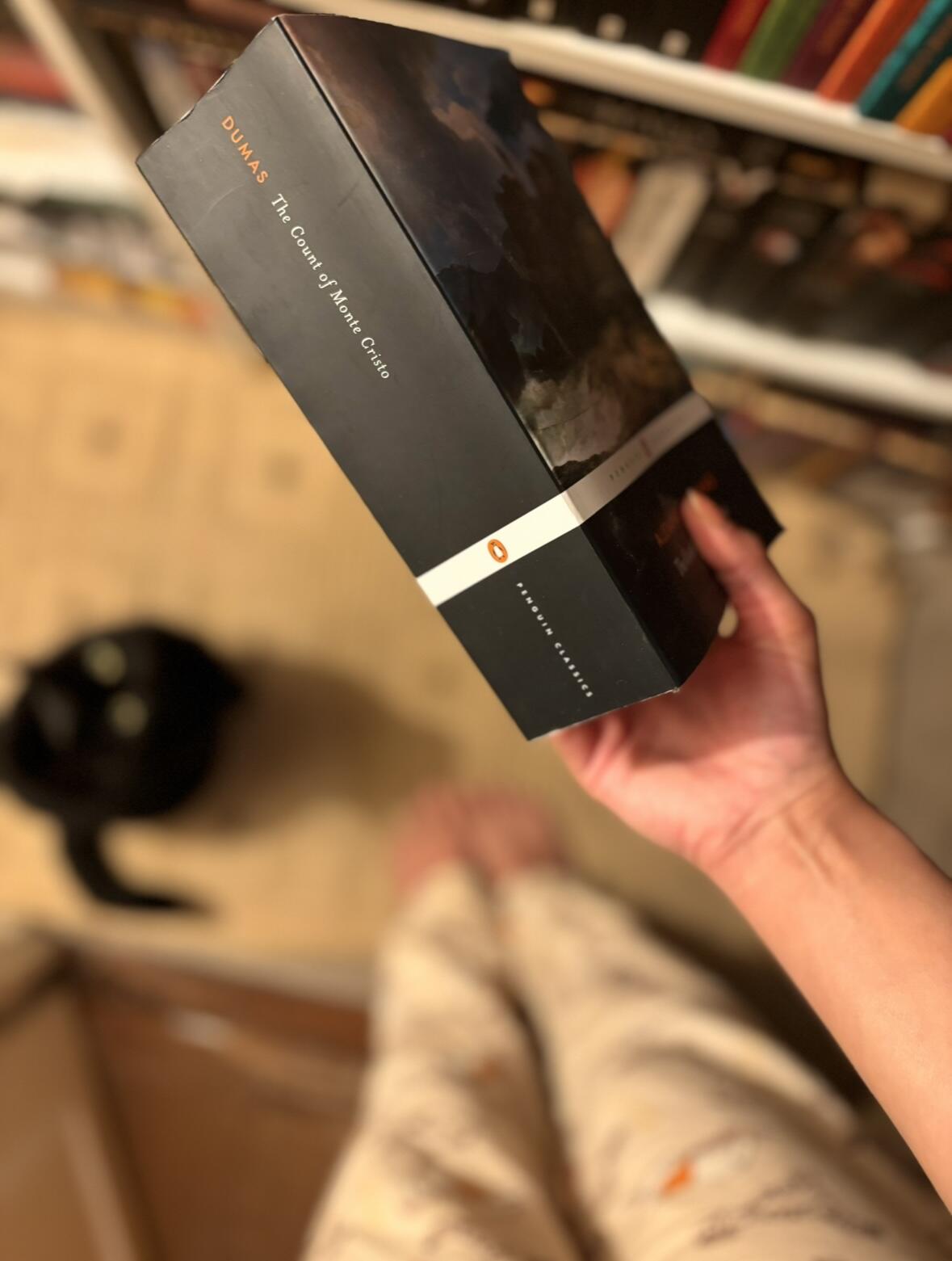
The cat in the background is in danger if you drop it
Good gracious.
On the one hand, it's gracious to forgive debt. On the other, the Biden administration does not have the moral authority to forgive that debt on behalf of the American taxpayers.
How do we talk about the Faith to people who talk about never being able to "feel" God?
A friend of mine who has drifted away from the Faith said that, every time he prayed, he never felt like anyone was listening on the other end.
A somewhat dismissive–though possibly true–response is that sin can easily get in the way of our ability to experience God in our lives. If you're entangled with some habitual sin, then yeah, it's going to be hard to receive grace in prayer and the sacraments.
I don't think that response does sufficient justice to this experience, though. St. John of the Cross writes about the "dark night of the soul" where God allows a person progressing far in holiness to feel completely cut off from Him. St. Therese of Lisieux and St. Theresa of Calcutta both experienced periods in their life of feeling cut off from God in prayer, even though they are some of the greatest saints of the modern age.
Closer to home, I'd say I have some subjective experience of God's grace in prayer at times, but I wouldn't say it's very emotional the way some people talk about it. My wife, for her part, has been a consistently practicing Catholic all her life and hasn't really felt anything in the way of subjective emotional experience in prayer. Is there something about modernity that makes it harder to "feel" God? Is it something to do with different individuals' temperaments and how they relate to God? How do we talk about the faith with people who want a relationship with God, but never have any subjective experience of that relationship? Is there any approach beyond just making an act of the will towards faith?