Not sure what I meant! I don't want to use any more e-mail clients

There is something off with nostr:npub1exv22uulqnmlluszc4yk92jhs2e5ajcs6mu3t00a6avzjcalj9csm7d828
They are very elusive about digitally signing their releases, only with recent updates here: https://github.com/simplex-chat/simplex-chat/issues/3158 that really don't add much.
In theory mobile releases are signed but can't find the signatures, definitely not alongside their binaries. Keys? Oh go find them at openpgp.org. Like where exactly? https://keys.openpgp.org/search?q=simplex yields no results. Also, no reproducible builds.
So, "quantum resistant E2E encryption" but not a single PGP signature?
There is something off with nostr:npub1exv22uulqnmlluszc4yk92jhs2e5ajcs6mu3t00a6avzjcalj9csm7d828
They are very elusive about digitally signing their releases, only with recent updates here: https://github.com/simplex-chat/simplex-chat/issues/3158 that really don't add much.
In theory mobile releases are signed but can't find the signatures, definitely not alongside their binaries. Keys? Oh go find them at openpgp.org. Like where exactly? https://keys.openpgp.org/search?q=simplex yields no results. Also, no reproducible builds.
So, "quantum resistant E2E encryption" but not a single PGP signature?

Lol they can't even integrate LN payments.
Not a fan of proton mail lately

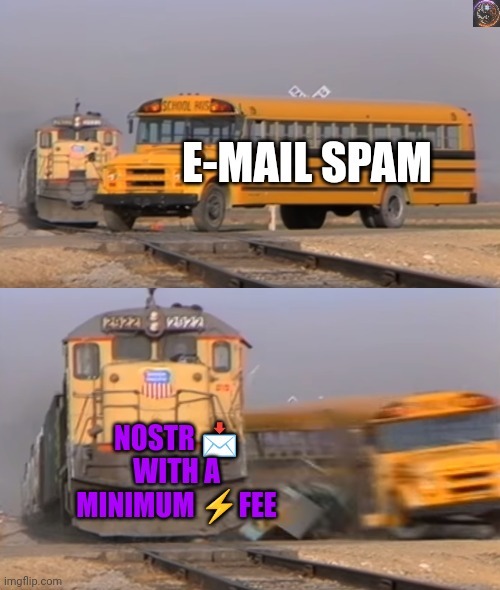
E-mail is terrible but still necessary.
I want an e-mail service that interfaces with (the new) nostr DMs.
That I can set aliases like simplelogin, and maybe use own domains.
Pay per feature with my sats.
Who wants to build it?

Will we see the nostr:npub12rv5lskctqxxs2c8rf2zlzc7xx3qpvzs3w4etgemauy9thegr43sf485vg nym disappear soon?

Product decisions downstream of fiat money! Photoshop is another good example

Thanks! Will make a PR to NIP-39 where it apparently belongs

You can have a look at https://github.com/zapstore/ftsrelay (a custom relay I built for zap.store)
Not the most tested relay impl out there, but:
- written in javascript which is probably easier to get started than go or rust
- relatively small
- you can ask me if there's something you don't understand
what programming language are you comfortable with?

Yeah man absolutely we need to keep iterating and finding some usable middle ground. Anything with slight more signal than follows is a win.
Option 1: would this be using kind 7 likes/dislikes? If so, trust would be derived from the interpretation of those events rather than being explicit, did I get that right? Regarding NIP-54 how likely is it that she adds the category?
Option 2: love where it's headed, we need this. Communities fixes it too right?
Today, how would we add a a mute event *in some context*? (reuse kind 10000 or does it have to be NIP-77?)
In zap.store eventually I want to start asking, after a few app updates: "do you trust this dev" and make the user sign that attestation.

nostr:npub16r0tl8a39hhcrapa03559xahsjqj4s0y6t2n5gpdk64v06jtgekqdkz5pl agree with you and I did think about it: https://github.com/nostr-protocol/nips/pull/1182
“Trust for what” and “trust how much” is what nostr:npub1elta7cneng3w8p9y4dw633qzdjr4kyvaparuyuttyrx6e8xp7xnq32cume ‘s proposed NIP-77 is all about. We’ve had some interesting discussion over the last day or two about how to represent context. Check out the PR discussion thread here:
While I agree with most of the thread, I wonder how will these attestations (context/score/confidence) be input into the system?
I have a strong intuition people will not bother doing this. UX is everything. So yes, it may be a task delegated to an incentivized curator - which in turn requires trust in them. Which might as well be an LLM that ends up deriving trust based on proxies.
IMO for this to actually work we need users to signal trust in a more progressive fashion. User prompts should be sparse, minimal and appropriate to the context of whatever they're doing in a client, e.g. when fat zapping Lyn Alden user could be prompted to sign an event assigning more weight to Lyn in the topics of the zapped note. A bit more, not a number.
A perhaps extreme, terrible UX example would be: out of the blue, ask me in absolute terms how much I trust Lyn Alden, make me input what things I should trust her on, and the confidence I have on what I just wrote.
Also, humans do not think about trust in percentages and are lazy when the ask is too big relative to an eventual payoff, so will answer things quick and inaccurately just to get done. It's a translation, a degradation in signal, so one could argue that these attestations are also proxies. Better than follows, probably, but also proxies.
Thanks, yours for sure is better documented, tested and benchmarked. Will look at all this in detail

New project drops today! #HiveTalk
https://video.nostr.build/eff78dc827be6e60c8807d75c04392310ec07b3115262be0144cafd81b22d081.mp4
Alpha release. Enjoy!
Nice. Source code?

Will be closing my Thriller Bitcoin zine on Twitter account, this week really do not want to show my ID to continue to use Twitter.
Will be Nostr Only, follow here nostr:npub1hedhcq93v5c226w8gfece5lxkf6zldvrgygw9ppmyq3msggvl6rst8kmxw
I do not expect people to follow me on this, I just refuse to continue using an app that does this.
YES!
 nostr:note1l4sc8m8gzu25ygt2tlgvvq69nrm28lfqvdnunzrw5t94mf4wexzq0acj5n
GM! Sadly it's going to take a LOT more pain for most people to start understanding the US dollar scam, and even more to see that bitcoin fixes it (and that it actually is a MoE). As the world's reserve currency for about a century, the USD is so culturally ingrained that it's going to be very hard.