

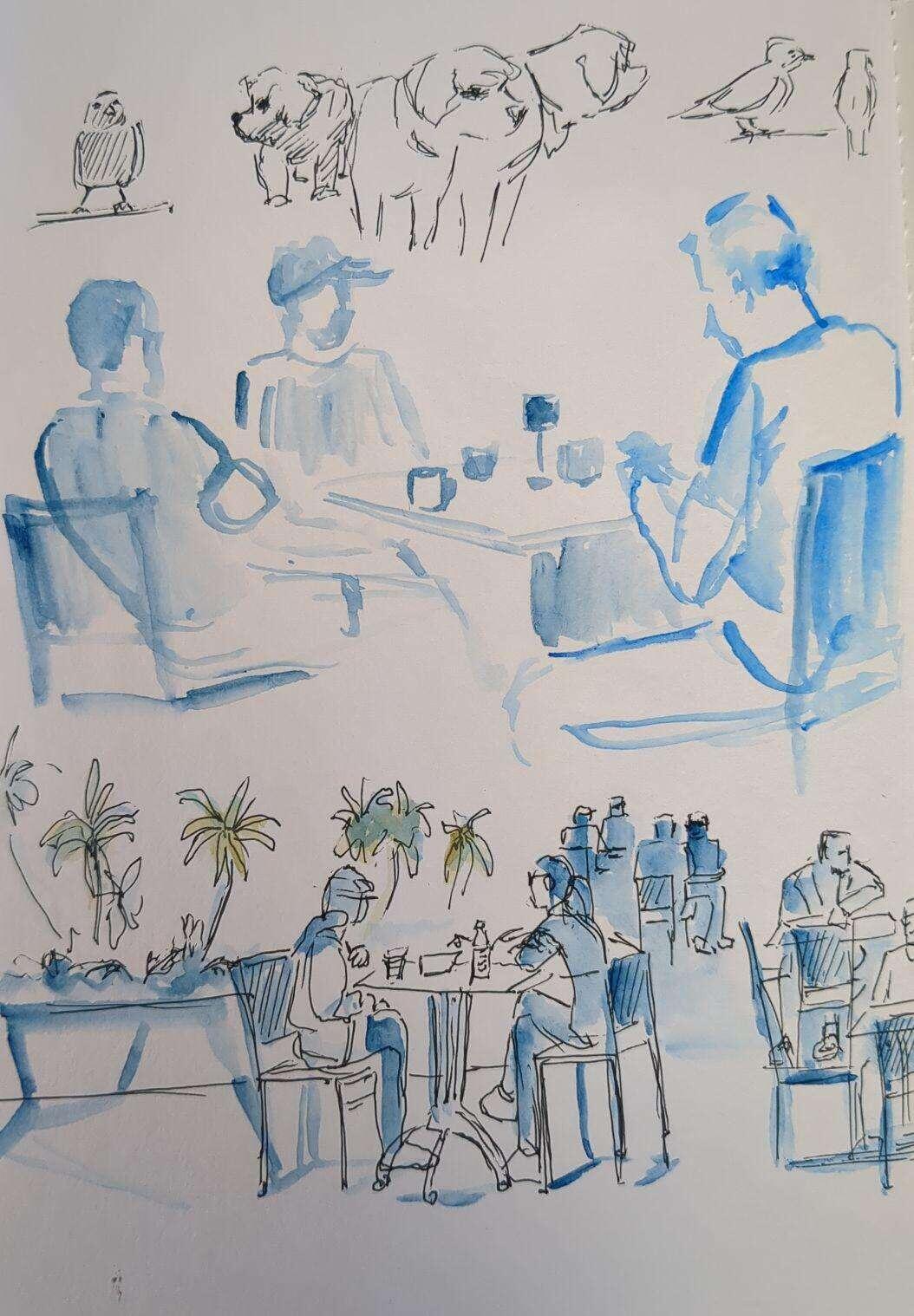
It’s so good. Love how you captured the dogs outside waiting. You really caught their anticipation ❤️

⬇️👀
 ?cid=9b38fe910xw0w7e1vp1sjs9bxe9ujgdv828yqsevpcssqr58&ep=v1_gifs_username&rid=giphy.gif&ct=g


nostr:npub1clk6vc9xhjp8q5cws262wuf2eh4zuvwupft03hy4ttqqnm7e0jrq3upup9 I think I trust waymo, not the company, but the car. Never been in one. But something bout how they drive is innocent and trustful. It’s like there is an equilibrium there :) except in that video when it doesn’t let the guy out and keeps driving in circles.


I once Skyped my basset hound Bentley from New York. He was having nothing of it. He was like you are either here in person or I don’t buy it. He was so smart and all about the scent.

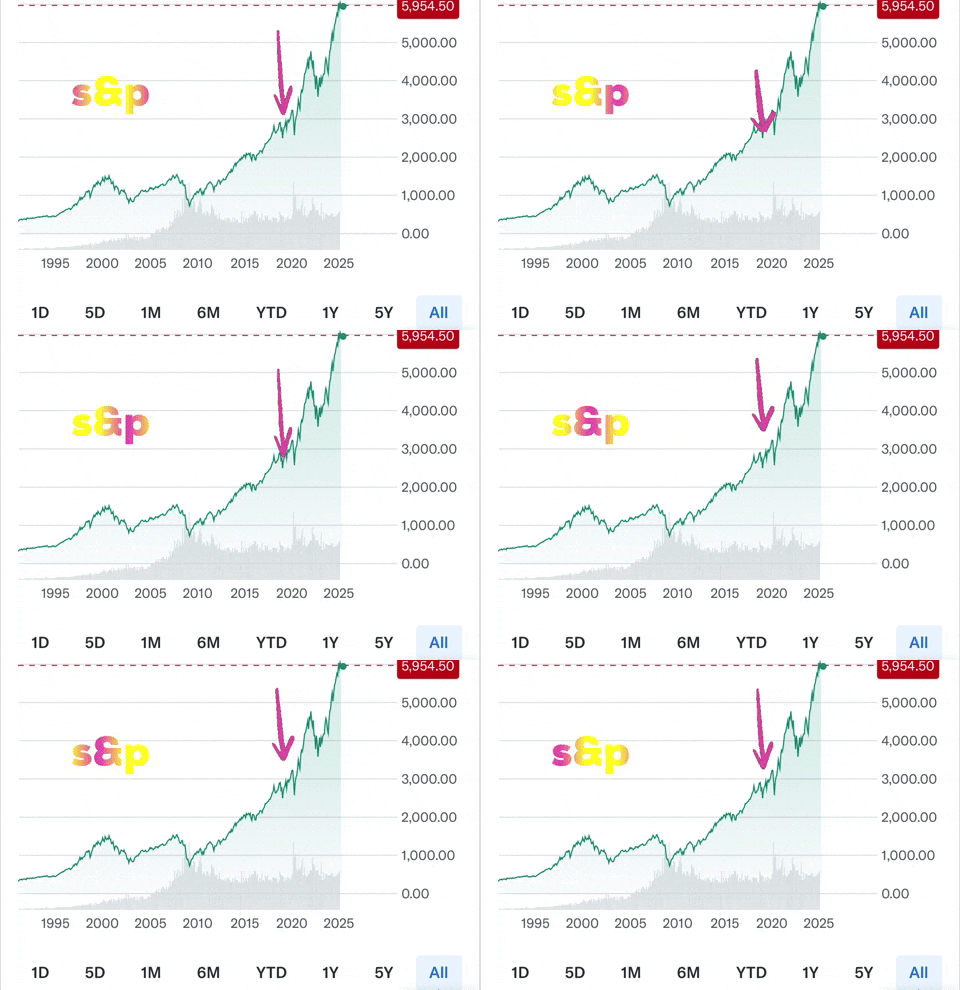
Innovative products with a point of difference, genuinely good core business activities with a heart in the right place are important. Or it’s just superficial and short-term. Look at s&p 2020/2021 and now. Hoping ai accelerations are for good not evil.


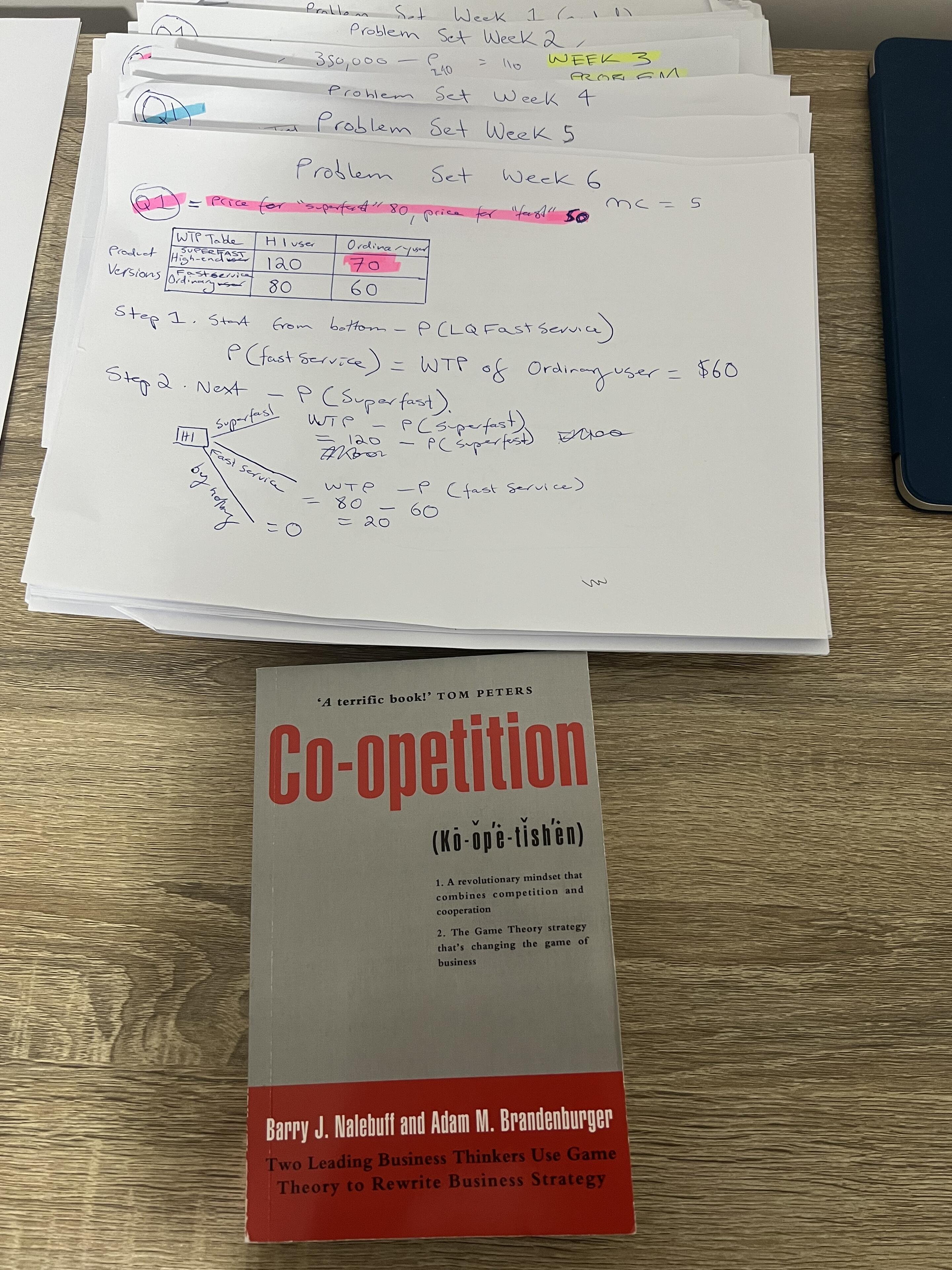
This is the book Cameri, it is sort of like a deep dive into microeconomics. There is another book too called co-opetition, that one is solely based on game theory.
John Nash is one interesting guy, when you find out how he came about finding the optimal decision in decision tree nodes being folded back or through his Nash equilibrium - it is really funny actually. And I sort of question it :) Watch the film, you’ll get it. The filmmakers put a nice touch in with the subtext, in the discovery of the theory in the bar scene - smart. 
I’m good Cameri, hope you’re well :)
I’m just at my desk reading about the nash equilibrium for class. Bout to put book down and watch the film ‘A Beautiful Mind’, I rented it, as I need a break from reading. Plus, I looked at some of the film stills, the ones where John Nash is writing on the glass windows, couldn’t believe I recognised epsilon, delta and pi. What the hec… 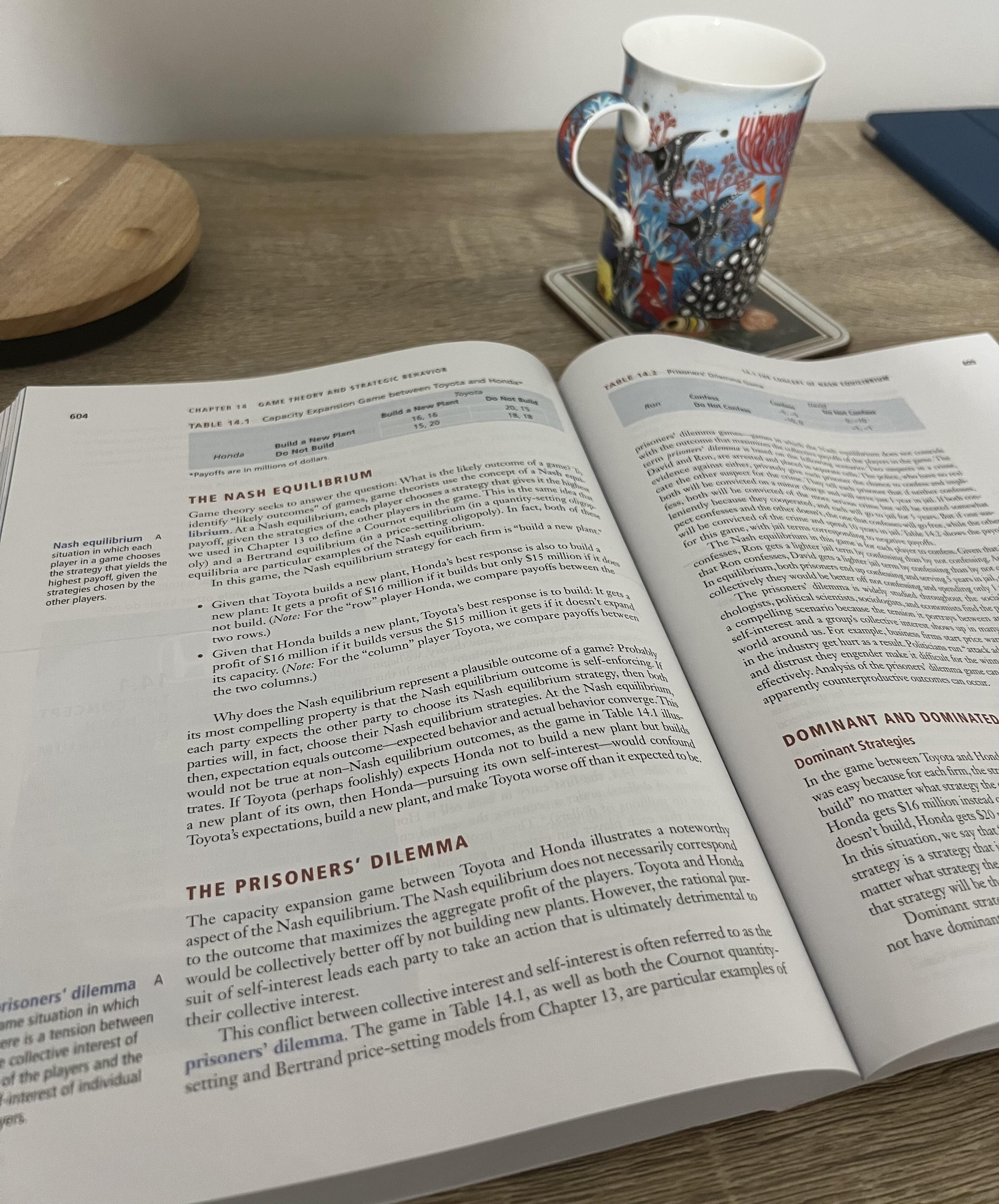

Chat gpt might own that soon too. Hope not 🤞



I was talking to a friend the other day about AI, and we hopped onto the open vs. closed-source debate. That’s when it hit me, we are at a turning point.
A year ago, AI conversations were about awareness. Then came corporate adoption, innovation, and regulation. Today governments are stepping in to decide how AI’s benefits will be distributed and who gets to control them.
We are no longer trying to figure out if AI will transform society. That is a given.
The big worry is control. Right now, a few trillion-dollar corporations and state-backed labs dictate its trajectory, wrapped in secrecy and optimized for profit.
Open-source AI stands as the antithesis to closed systems, a bulwark against AI monopolization, ensuring intelligence remains a public good rather than a private weapon.
It's time to look beyond the technical debate of open vs closed source AI. This is a humanitarian issue at stake.
### Why Open-Source AI is Non-Negotiable
A couple of years ago, I was consulting an airline on their black box. They were really sweet, let me play around with their test-flight hydraulic chambers, and I crashed it quite a bit (There is something deeply impressive about people who can actually fly planes).
But when it comes to the black box, that is the most secretive part. It holds critical data, tracking exactly how the plane was controlled throughout the flight. If it goes missing, nobody can say for certain what went wrong, especially if there are no survivors.
For years, there has been debate over real-time data transmission vs. privacy in aviation. It is the same debate we are having now about open-source vs. closed-source AI.
Closed-source AI is a black box. No one outside the company knows how it makes decisions, what biases are baked into its training, or how its outputs are being manipulated.
AI models are only as good as the data they are trained on. If you burned all books except a few praising Government A and Emperor Q, then that is all people would know. AI takes it a step further. It learns what works best for you, adapting its bias so seamlessly that it fits within your comfort zone.
Open-source AI breaks this cycle. It allows diverse contributors to spot and correct biases, ensuring a fairer, more representative development process. No single entity gets to dictate how AI is used, who has access to it, or what information it filters.
Historically, open systems have always outpaced proprietary ones in long-term innovation. The internet itself (TCP/IP, HTTP, Linux) was built on open principles. AI should be no different.
If intelligence is widely accessible, breakthroughs happen faster. And society as a whole benefits.
### The Companies Leading the Shift
Some companies see open-source AI as a risk. Others recognize it as an ethical necessity and an advantage.
Block is leading the open-source cultural momentum right now for companies. Jack’s recent [letter](https://s29.q4cdn.com/628966176/files/doc_financials/2024/q4/Shareholder-Letter_Block-4Q24pdf.pdf), written in his usual Hemingway-esque style and highly substantial, explained this well. He is taking on a first principle approach, rewiring corporate DNA to embrace open collaboration and accelerate innovation as a whole. They developed Goose, an open-source AI agent (initially built as an internal workflow tool), at a pace comparable to AI-first companies like Google, proving that open collaboration doesn’t slow development. If anything, it accelerates it.
I like how Block is infusing open-source principles **AND** doubling down on its core business **AND** building a solid innovation roadmap. They capture the essence of open source in terms of curiosity, creativity, and a passion for problem-solving beautifully. This cultural shift is something that even big conglomerates like Intel, despite decades of contributions to open-source projects, have struggled with. They often get bogged down in technical silos rather than establishing actual collaboration.
As [Arun Gupta, vice president and GM of open ecosystems at Intel](https://www.intel.com/content/www/us/en/developer/articles/community/how-to-build-open-source-culture-in-your-company.html), put it, “*The best way to solve the world's toughest problems is through open collaboration*,” but he also acknowledges the challenge of incentivizing contributions in large organizations.
Compare this to OpenAI. Elon’s long-standing beef with them is rooted in the fact that they started with an open mission but switched to a closed model the moment profitability entered the chat. But in recent days, with [Satya Nadella](https://x.com/8teAPi/status/1892383248661274699) doubling down on quantum computing, I wonder if Microsoft is prioritizing quantum over AI? And is closed-source AI actually slowing innovation compared to an open approach?
Would be interesting if Elon actually buys OpenAI for almost $100B as his investors recently put out, but if he does, would he open source it ?
Most companies struggle to balance open-source contributions with business sustainability. But many others aren’t. RedHat isn’t an AI company, but it built a billion-dollar business on open-source software and became IBM’s greatest asset (and their saving grace).
Let’s look at more open source AI companies. Hugging Face has become the go-to hub for AI models, creating an ecosystem where developers, researchers, and enterprises collaborate. Mistral is proving that open-source AI can be both epic and lightweight through its modular models.
Stability AI is making powerful generative models widely accessible, directly competing with OpenAI’s DALL.E. It recently raised over $100M in venture funding, and with James Cameron joining the board, it’s doubling down on gen AI for everything from text-to-image to CGI.
DeepSeek shocked the world with an open-weight AI model that rivals top proprietary LLMs, on a fraction of the compute. [Andrej Karpathy ](https://x.com/karpathy/status/1872362712958906460)pointed out that DeepSeek-V3 achieved stronger performance than LLaMA 3 405B, using 11 times less compute. While mainstream AI labs operate massive clusters with 100K GPUs, DeepSeek pulled this off with just 2048 GPUs over two months. If this model passes more 'vibe checks' (as Karpathy put it), it proves something critical, that we’re still far from peak efficiency in AI training.
Meta is also one of the biggest contributors to open-source AI and benefits from the widespread adoption of its models. They’ve released several powerful AI models like LLaMA, Segment Anything Model (SAM), AudioGen & MusicGen, and DINO (Self-Supervised Vision Model). Unlike OpenAI and Google, which keep their most powerful models closed, Meta releases open-weight models that researchers and developers can build upon.
All these companies are proving that open-source AI is not an ideological stance. It’s a cultural movement and a commercially viable force.
Open-source AI may have started as the ethical choice, but it’s increasingly clear that it’s also the smarter one.
### Open-Source AI as a Humanitarian Mission
The stakes for open-source AI go far beyond business models and market competition. It’s about ensuring that AI serves people rather than controls them.
Without it, we put our future at risk where only state-approved AI systems generate content, answer questions, and curate knowledge.
Governments are already deciding how the public can use AI while conveniently reserving unrestricted access for themselves. In China, generative AI models must align with *Core Socialist Values*. In the US, *Executive Order 14110* was to regulate AI for “safe and ethical development” but was rescinded, leaving its future uncertain. In the EU, the *Artificial Intelligence Act (AI Act)* dictates what is considered "safe," with no real public say. In Russia, AI tools assist in monitoring online activity and censoring content deemed undesirable by the government.
AI-driven censorship, mass surveillance, and digital manipulation are no longer hypothetical or something you read in dystopian novels. They are happening now.
Open-source AI is the anchor. This is where the people stand up for the people. Where true democracy reigns. Intelligence is power and keeping AI open is the only way to keep power decentralized.
Our conversations must go beyond AI as a “digital solution".
Freedom and autonomy of our mind is ours to keep.
Companies embracing open-source AI are securing a future where intelligence serves humanity rather than the other way around.
But pitchforks are rising. Will the people win?
It definitely is really sweet that they let you play with the test chamber. Sounds like they really wanted you to have the whole picture.

As long as the price that is locked in is realistic and reasonable though.
Otherwise, your product better be indispensable.

Have you ever seen an eagle catch a fish and then swallow it in mid air ?
https://video.nostr.build/12f473f801a9c68c5ca06acae4b43cf77ca3ecc7d845c43c8a98798036d010a2.mp4
I’m curiously watching a live feed of two bald eagles at the moment called Jackie and Shadow in big bear. I find them fascinating and always watch them with my morning coffee to start the day. Love this.

Yeah, that’s not good for encouraging payments via bitcoin. Subscription would definitely help with the inelastic nature of bitcoin and the law of demand for consumers.