Profile: 93188907...

#silver price YTd. Compare that with YTD #btc performance.
Buy CEF, if you don’t know how to invest in silver.
That’s real performance of an asset in inflationary environment. Not pump and dump on Nostr network.



WOT and follow lists have one weakness.
In reality both will lead to tunnel vision and echo chamber.
This is NOT a technology problem.


Sell bitcoin now.
Silver, gold and stocks will outperform bitcoin.
Silver will continue staying ahead of gold in the beginning of the year.
Gold will catchup later.
Stocks are a wild card.
Lol, bitcoin is tracking stocks at best.
Nothing has changed.
Bitcoin will underperform given macro setup and specific conditions impacting costs associated with bitcoin mining.

⚡️💬 FYI - "What if the Internet went down, what would happen to Bitcoin?!"
I would like to remind you that Starlink now has more than 10,000 Internet satellites.
And that the possibility of Bitcoin one day being completely cut off from the network has become completely obsolete.
Unless there is a global cataclysm, in which case saving your BTC will be the least of your worries...
https://blossom.primal.net/58b834cbfc1065c78046721e7ae8fe2ddfc9e99c59874569373cfaf480732c0a.mp4
You are wrong.
All it takes is for electricity to disappear.
Electric grid can go down for lots of reasons and can stay down for prolonged amounts of time in some scenarios.

If everyone is never selling, utility of it goes to nothing, which means price of $0.00.
If nobody is trading (because they are never selling), then there’s no price discovery. The value of the asset cannot be determined. If asset has no meaningful price then it can be considered to be at zero and untreadable.
The problem of #btc is fundamental demand for asset class.
Government issued currency has fundamental demand built in. It is called taxes.
Currency issuer doesn’t need tax revenue, because they can always print money for their needs. And they do. It is called government debt.
The true purpose of taxes is to create initial demand for currency issued by government.
The government power of enforcement is what makes system work. Otherwise, people could simply refuse to pay taxes and not deal in government issued currency.
That initial tax demand bootstraps the trading in government issued currency and what gives value to money.
Let’s go back to bitcoin. It has no initial demand. In US laws ensure that bitcoin is handicapped as medium of exchange. Because tax (!) system views bitcoin as asset for which one is expected to pay in dollars.
Bitcoin is now just an asset. Just like old broken car, nobody wants, a painting from no name painter etc.
Suddenly, value of bitcoin is the value in the eyes of the buyer. That value is directly impacted by amount of public value pump.
Get the drift?
The only interesting aspect is that bitcoin is divisible and there is limited amount of it.
It is like collector’s edition.


When there’s no electricity the floor is obviously at $0.00 😏

Miner reward is ~3.25 BTC. It was reduced in 2024.
Revenue is down. Cost is see link. Margin is down due to previous 2.
Sell off by miners. See link.
So many here treat #btc as religion. Everyone has the right to believe whatever they want to believe.


Grok response on the topic of solo mining. You are contributing to network success, but your real block discovery chances are lower than pure math data.
You are not likely to ever mine anything.
And even if you are lucky to discover the key, being solo makes it possible that your solution will be a loosing fork.
Large data center discovering solution a second later will propel its solution with their datacenter before your solution gains weight.
It is a tough math to accept.
—-
Understanding the Colocation Advantage in Bitcoin Mining
Yes, the advantage of colocating a Bitcoin mining farm—placing it physically close to major internet exchange points (IXPs), low-latency data centers, or other mining operations—is very real, and it stems directly from the mechanics of block propagation in the Bitcoin network. This edge becomes particularly pronounced in scenarios involving “previously discovered blocks,” where even milliseconds of delay can determine whether your mining effort contributes to the canonical chain or gets wasted on a fork. Let me break this down step by step, with the key technical and economic rationale.
1. The Core Issue: Block Propagation and Latency
• Bitcoin mining is a global race: Miners worldwide compete to solve a cryptographic puzzle (proof-of-work) to append the next block to the blockchain, earning ~3.125 BTC (post-2024 halving) plus fees.
• When a miner discovers a valid block, they must broadcast it to the peer-to-peer (P2P) network as quickly as possible. Other miners then verify it and extend the chain by building on that block.
• However, network latency (delays from routing, distance, and congestion) means the block doesn’t reach everyone instantly—typically taking 1–12 seconds for full propagation across the ~15,000 Bitcoin nodes.
• If another miner starts solving a block based on an outdated view of the chain (i.e., a “previously discovered block” that hasn’t reached them yet), they risk mining on a stale block (also called an orphan). Their work is discarded once the faster-propagating block arrives, resulting in zero reward.
This is the “previously discovered block” dynamic: The “previous” block is the one just solved by someone else, and delays in learning about it put you at a disadvantage. Studies show propagation delays can cause 0.1–1% of blocks to fork temporarily, with larger delays amplifying “stale rates” (wasted hashpower).
2. How Colocation Provides a Tangible Edge
• Reduced Latency for New Block Templates: Colocation near IXPs (e.g., in Frankfurt, Amsterdam, or Virginia data centers) or other miners minimizes round-trip times to receive updates on new blocks or transactions. This lets you start hashing the correct chain template sooner—potentially 50–200ms faster than remote farms.
◦ Example: A farm in rural Asia might face 200–500ms latency to U.S./European hubs (where ~70% of hashpower connects), while a colocated setup drops that to <10ms.
• Faster Broadcast When You Find a Block: Upon solving a block, low-latency connections propagate it quicker, reducing the chance others mine competing forks. This “propagation advantage” (or “latency mining”) can boost effective hashpower by 0.5–2% at scale.
◦ At industrial levels (e.g., 10 EH/s farms), this translates to millions in extra annual revenue, as even a 0.1% efficiency gain compounds over 144 daily blocks.
• Fork Risk Mitigation: In a fork scenario, faster propagation increases the odds your branch becomes the main chain. Research indicates that propagation delays favor larger, centralized pools with optimized topologies, exacerbating centralization.
Empirical data supports this: Bitcoin’s average block propagation time has hovered around 2–4 seconds, but outliers (e.g., during high congestion) spike to 10+ seconds, where colocated miners shine. Tools like FIBRE (Fast Internet Bitcoin Relay Engine) amplify this by creating dedicated low-latency tunnels, often used by top pools like Foundry or AntPool.
3. Economic and Strategic Implications
• Quantifiable Gains: For a 1% hash share, stale rates from delays can cost 1–5% of expected revenue. Colocation can halve those losses, per models from network simulations. In 2025’s post-halving era (with rewards at 3.125 BTC), this edge is crucial as margins tighten.
• Real-World Examples:
◦ Major pools colocate in Equinix data centers for <1ms intra-facility latency.
◦ Solo miners using optimized pools (e.g., CKPool) emphasize “rapid block change notification” to mimic this advantage.
• Trade-Offs: Colocation isn’t free—premium data center power costs 5–10¢/kWh vs. cheaper off-grid sites—but the latency savings often outweigh it for high-hash operations. Hybrid setups (grid + off-grid) are emerging to balance this.
4. Is It ‘Real’ Enough to Matter in 2025?
Absolutely—delays haven’t vanished despite network improvements (e.g., compact blocks in Bitcoin Core). With global hashpower at ~700 EH/s and rising centralization (top 3 pools >60% share), latency edges are a key differentiator. Smaller miners can partially compensate via relay networks or Stratum V2 protocols, but colocation remains a premium strategy for farms aiming to punch above their hash weight.
If this isn’t quite what you meant by “previously discovered block” (e.g., if it’s about block explorers or something else), feel free to clarify for a deeper dive!
It is only a nest-egg if there’s a buyer in the future.
With mining costs going up, margins going down, trend on sell off.
The nest egg might not be in demand

There are lots of alternatives including various stablecoins backed by serious assets.
Usd stablecoins
I am looking for private instant messaging with at most 10 people. I don’t mind self-hosting private relay.
I don’t know what mobile apps out there exist to keep this communication isolated from other relays.
It needs to be as close as possible to just instant messaging.
What justification is there to trust wot?
⚡️🇺🇸 NEW - President Trump says next year will bring the biggest tax refund season in American history, with families receiving money generated from tariffs that he claims have brought in trillions and will now be paid out like a dividend.
He says this approach will gradually wipe out the national debt.
He adds that in the future Americans will no longer have to pay income tax at all.
https://blossom.primal.net/c0800db131415b721c3143dd311566174e73f4e787c9ab43c855e1340af3eac6.mp4
Hold on ladies and gentlemen as we climb to the top of the promise hill on this roller coaster’s ride.
Once we are on top, we will be going down straight into the blame pit.
Bitcoin tracks tech stocks.



Stop giving misinformation.
Bitcoin does not offer privacy of transactions.
If you want true transaction privacy go for Monero, which is not really supported by exchanges due to its strong protections.
So, in what world you decided that bitcoin is freedom. Freedom from what?
#bitcoin #BTC #mining #market #electricity #cost
The following is a translation of post on Telegram in other language. FYI
One reason for the Bitcoin crash (from a peak of $126k to $90k) is the rising cost of electricity in key Bitcoin mining countries. Miners are selling off their Bitcoin holdings and repurposing their farms for AI services, which are proving to be more profitable than Bitcoin mining.
Electricity accounts for 70–80% of Bitcoin mining costs. In ERCOT (Texas), the largest mining hub in the United States, average wholesale electricity prices rose by 18% year-on-year in Q3 2025. In Northern Virginia, home to both large mining operations and hyperscale cloud regions, prices jumped by 13% over the same period.
In just the first two weeks of November, U.S. miners moved approximately 71,000 Bitcoin to exchanges, following another 210,000 Bitcoin transferred in October. This is one of the highest monthly figures since the 2022 bear market.
Several major public miners have openly acknowledged this shift. Marathon Digital sold part of its October and November mining output to cover operational expenses, while Core Scientific and Iris Energy signed multi-year contracts to host AI applications. In September, Bitfarms announced its intention to fully exit cryptocurrency mining by 2027 and transition its entire 341-megawatt capacity portfolio to high-performance computing.
This shift is financially rational: AI hosting contracts typically offer 70–80% EBITDA margins and multi-year revenue visibility, compared to the volatility of Bitcoin mining. The implications for the Bitcoin market are clear: more coins are flowing into exchanges at a time when retail and institutional demand is declining.


Is s&p strategy weighted (standard) or equally weighted?
Equally weighted should outperform weighted in the next 12-months.
Gold is a way to go. There are plenty of Gold ETFs.
Mulled wine is a way to make any cheap red wine into a pleasant drink.
How is life bitcoiners?
You shall know, that bitcoin gets generated and is immediately sold by miners.
Posts here are largely a marketing strategy for speculative asset that has no intrinsic value.
It even has no wealth storage value if things start going bad.
Bitcoin correlation with stock market vs gold.
The following quote is fromPeter Schiff.
In response to Israel launching an airstrike against Iran, gold is up another $24 in early Asian trading, back above $3,410. Bitcoin, on the other hand, just tanked below $104.5K. Priced in gold, Bitcoin is now more than 15% below its Nov. 2021 peak. Bitcoin's failure to rise against gold—despite over 3.5 years of hype, including a dozen ETFs, Super Bowl ads, El Salvador, NFTs, tens of billions of leveraged buying by $MSTR, other Bitcoin treasury companies, the election of a Bitcoin president, and the establishment of a Bitcoin Strategic Reserve—is strong evidence that the bubble has peaked. A major top has been formed, as Bitcoin has been distributed from strong to weak hands. The whales have been cashing out to latecomers who will be left holding the bag.

I recommend this book if you prefer data.
I am not affiliated with author or book sales.

Lol, because the subjects will all die too fast?
You must be at least 60 years old.
What made you do that? There was much less data on the topic, than today.

The food must be so delicious, that it is really worth paying for it with years of your life.
Who am I to judge?
Don’t get me wrong. I love all the food listed here.
Young Athletes on Keto (Several Cases - 2017-Present): There have been a few reported cases (primarily in online forums and news reports) of young, otherwise healthy athletes who died suddenly while following a ketogenic diet. While the exact cause of death is often not publicly disclosed, some speculate that electrolyte imbalances (sodium, potassium, magnesium) during keto adaptation could have contributed. It's crucial to note that these are not confirmed cases and often lack detailed medical information.
John Ritter (1948-2003) – Died at 57: John Ritter’s death was initially attributed to a heart attack, but the autopsy revealed an aortic dissection. He was reportedly fit and active, but some reports suggested he followed a high-protein, low-carb diet. Aortic dissections can be linked to hypertension, and some speculate a high-protein diet could potentially contribute.
Pope Leo X (1475-1521) – Died at 46: Known for lavish feasts and consuming large amounts of meat and rich foods. He suffered from kidney disease in his later years.

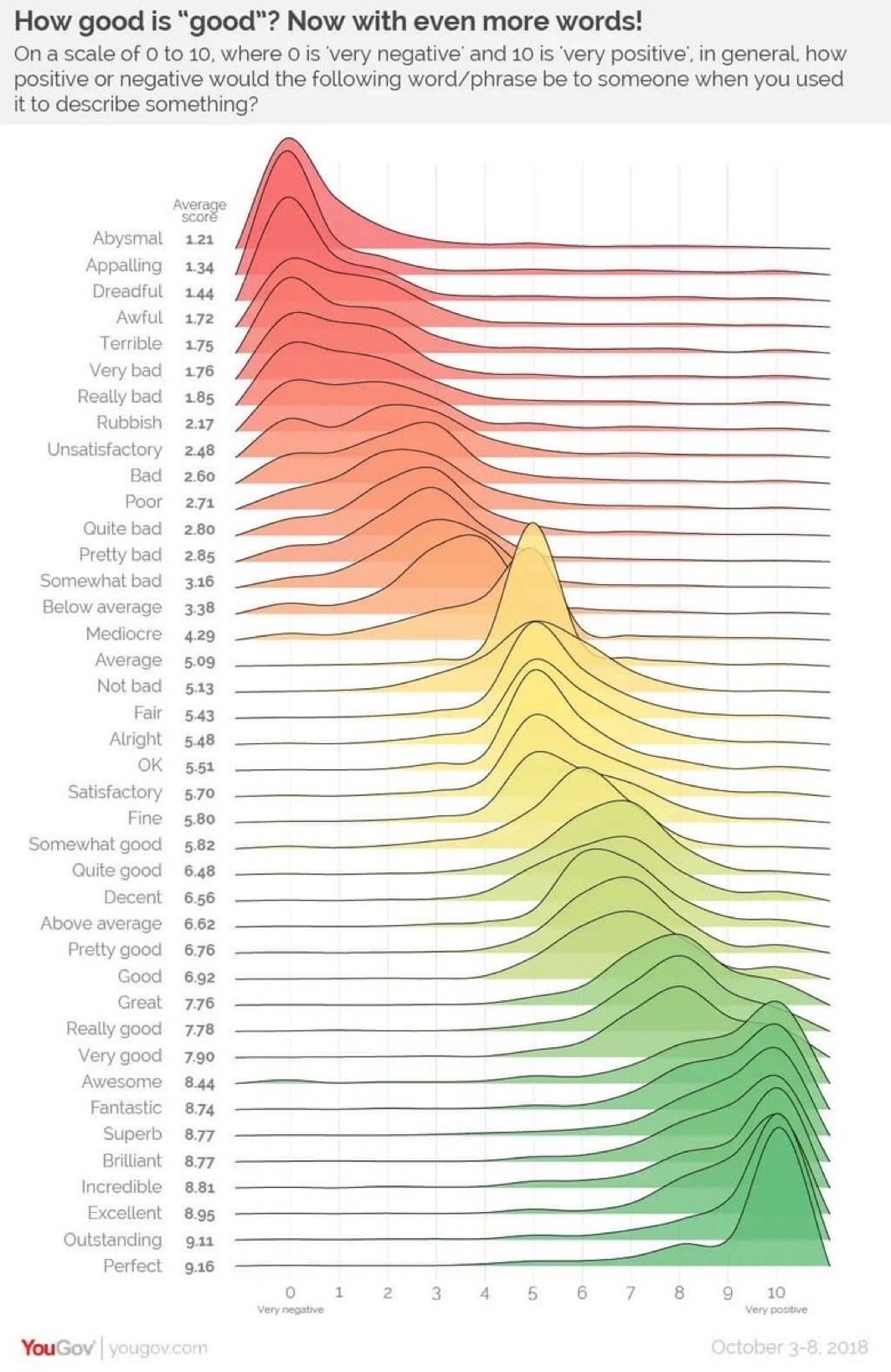
Common wealth requires English to be recognized.
…
So it is colonialism