
FED of Minneapolis’ paper on “Unique Implementation of Permanent
Primary Deficits?”
Calls #bitcoin “useless paper”, but it’s only there to trigger readers at worst and referencing all money in general, at best
Once you get past it you’ll see this paper isn’t too far from the study by the #ECB thst indicates #bitcoin is a black hole in their #fiat-debt system, sucking in the value from their make-believe economic system

If you're looking for an opportunity work on the cutting edge of the Lightning Network, here's a golden opportunity.
https://bitcoinerjobs.com/job/1557119-backend-nodejs-developer-amboss-technologies
…here’s a #bitcoin opportunity.
What kind of bizarro clown world did I wake up in?
The FED bank of Minneapolis wrote about "useless pieces of paper (bitcoin for short)" and that "the price of bitcoin converges to zero."
Umm...considered fiat currency?
And yet, the only solutions to this alleged bitcoin problem is to either ban it (a "legal prohibition against bitcoin") or tax it.
Somehow, bitcoin is worthless and headed to zero, but yet it's still worthy of being taxed so as to balance deficits.
I'm so confused.
Article: https://cryptobriefing.com/bitcoin-fiscal-impact-report/
#bitcoin #plebchain
It’s actually an interesting read on #bitcoin, and besides the tax on bitcoin recommendation it also mentioned the government buying up all bitcoin (SS 4.4.2) in order to reach the governments equilibrium and run permanent deficits
Funny how they are starting to see the writing on the wall; I mentioned this in another post, here:
nostr:note13zu92qleww9ey7rh8aewam0wal4rszmfv9600dcyax5h3ry7wnms33rpma
What kind of bizarro clown world did I wake up in?
The FED bank of Minneapolis wrote about "useless pieces of paper (bitcoin for short)" and that "the price of bitcoin converges to zero."
Umm...considered fiat currency?
And yet, the only solutions to this alleged bitcoin problem is to either ban it (a "legal prohibition against bitcoin") or tax it.
Somehow, bitcoin is worthless and headed to zero, but yet it's still worthy of being taxed so as to balance deficits.
I'm so confused.
Article: https://cryptobriefing.com/bitcoin-fiscal-impact-report/
#bitcoin #plebchain
Imagine poor Erzo, editorialising comments like “useless pieces of paper (bitcoin for short)” when you spent your life trying to prove you are smart
Whether you agreed with them or not, they are being hunted for writing code nostr:note1jk0397yrtt8edmesj0d6rnwt2zrj2qjxdpyzqupfanmfg5lhuxcsz3djdc

Bearer wallet—not bad. Not the best as you said but not the worst. Test drive it for a while, see how it goes
Then try en specie for entertaining conversations
Actually, call it like it is—you have keys. Keys to unlock the coins (transactions) on the blockchain. Time to let the wallet terminology go. Along these lines use keyrings, or time to bring back chatelaine
You could say you“own” or “control” #bitcoin whereas another person with bitcoin on an exchange like Coinbase does not own or control #bitcoin, but the nuance would be lost on a neutral listener
The dilemma stems from our current state of not being able to differentiate between cash and credit in modern #fiat world. Going back to a pre-#fiat world, the wording used would be “payable in specie” or similar specific wording
In a recent talk, nostr:npub1s33sw6y2p8kpz2t8avz5feu2n6yvfr6swykrnm2frletd7spnt5qew252p makes the case correctly that we should stop using the term “custodial,” as this is the language that helps the legacy system define self-custody or their term “unhosted” to suggest that owing your own property is somehow not normal or acceptable.
He goes on to say that we should simply call anything where we don’t hold our own keys an account, the same as a bank. But what should we call a “wallet” (also an inaccurate word) where we directly own the asset? I still haven’t found the best way to say it.
A #bitcoin “wallet” is also a misnomer, when in reality the closest comparison is a key purse, but few people know what one is
For the idea of the natural state of holding the keys the first thing to come to mind is to say you ‘hold’ #bitcoin, and call out others hold an IOU. I’ll give some more thought to it 

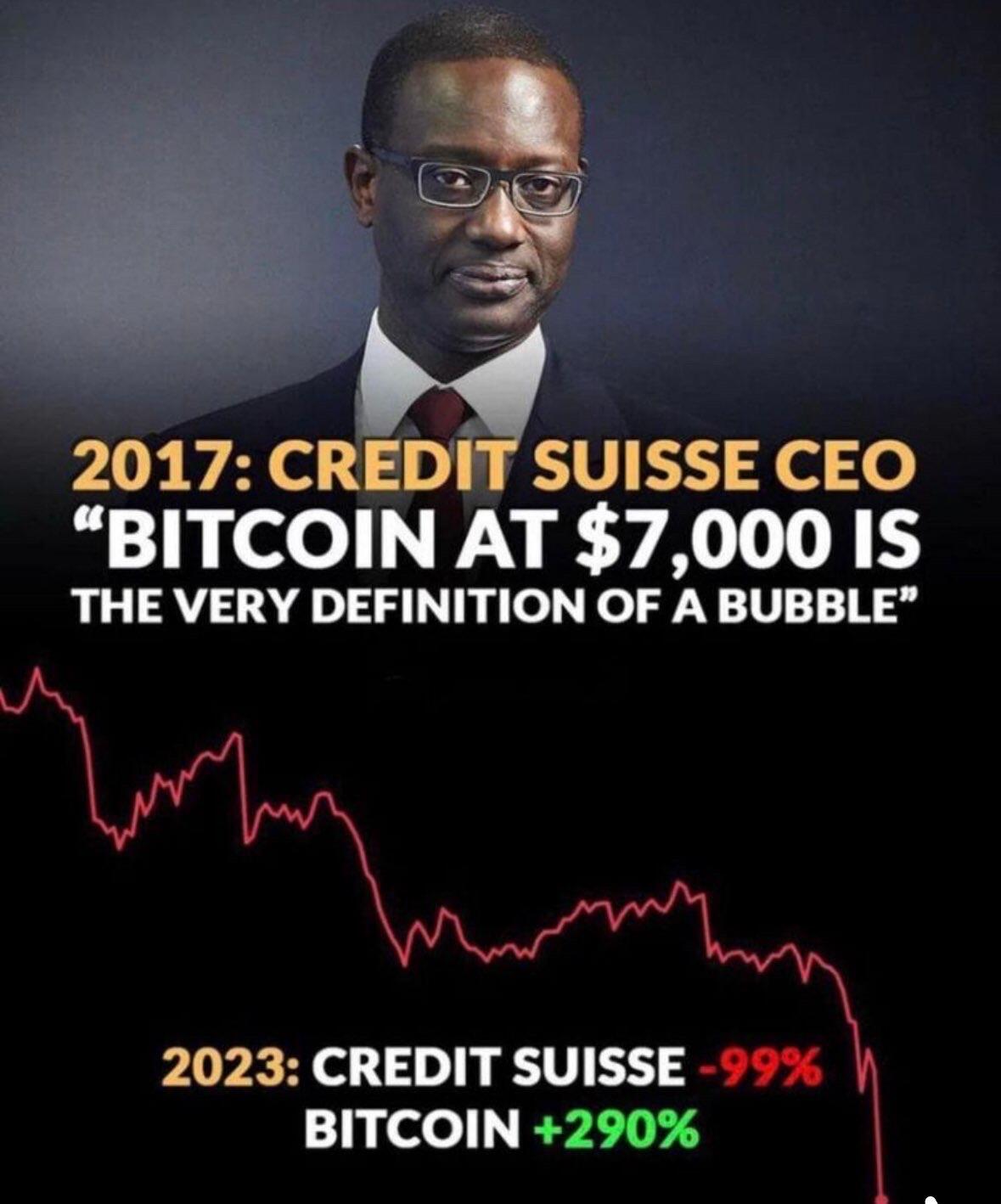
>to provide the world with a better global means of payment has not materialized
Hey ECB, did you read my guides?
Check this out:
https://darth-coin.github.io/merchants/bitcoin-lightning-payments-irl-en.html
Have you seen the LN offline switch newspaper rack?
Stainless steel, #bitcoin private key, and #coffee
#coffeenostr #coffeechain #mug #privatekey #analog #offline #tokyo 

by nostr:npub13l3lyslfzyscrqg8saw4r09y70702s6r025hz52sajqrvdvf88zskh8xc2
This new paper is a true declaration of war: the ECB claims that early #bitcoin adopters steal economic value from latecomers. I strongly believe authorities will use this luddite argument to enact harsh taxes or bans. Check 🧵 for why:

Rather than praising bitcoin as a tech paradigm shift à la petroleum and the internet, the authors introduce the blatantly luddite argument that "early adopters" ... "increase their real wealth and consumption" ... "at the expense of [latecomers]".

Then they go on to brazenly advocate for legislation ... "to prevent bitcoin prices from rising or to see bitcoin disappear altogether" in order to prevent "the division of society".

The authors also model some projections, to illustrate the paltry amount of BTC that will remain available for latecomers. (Woe is me! Conspicuously left out is the reason that has driven 15 years of bitcoin adoption & development: it's simply better tech.)

In all the years I've been monitoring the bitcoin space, this is by far the most aggressive paper to come from authorities. The gloves are off. It's clear that these central bank economists now see bitcoin as an existential threat, to be attacked with any means possible.
Many of us have warned that this was coming: bitcoin as a major political fault line both in national and international elections. Well here it is. It means that us HODLers must take action to insure that governments respect our basic right to hold property.
And no, this won't be a war between haves and have-nots. Rather this will be a historic clash between those who stand for the natural rights of the individual, and those who clutch at the failed ideologies of collectivism and central planning.
Here's the download link to the paper: "The distributional consequences of Bitcoin". (We need detailed rebuttals. Who's writing one?)
Can you post the .pdf? I don’t want to give them the download count

Thanks for the questions—Let me try to answer
First, a #bitcoin private key is just a number within a range. This physical private key’s bits (the bitting of a key) represent that private key number in binary form. There are 256 bits on this key, and when read in order result in a #bitcoin private key
>>Why would one want a physical tool to generate say a Bitcoin address?
This modulo private key is good for many things one example is being able to generate a private key completely offline. With good OPsec you can generate the public key and a receive address completely offline, as well. Plus, it looks pretty slick and makes great icebreakers lol
>>Don’t I also need a private key? And secret phrase?
This modulo private key *is* a private key, in physical form. A secret phrase can also be generated from this key completely offline. Remember, a private key is just an integer number
>>How do I know the address it generates isn’t always in use?
Whether you are referring to the receive address or are referring to the private key, don’t worry, it’s not going to generate an address already in use. The chance of repeating someone else’s address or private key number is impossibly low, and has the same chance whether you use the modulo private key or the latest #bitcoin mobile wallet. Practice good randomness when assembling the key is necessary. Still worried, check the output address to see if it already is in use on the blockchain
Hope that helps
#bitcoin 
SOON™️
Until then use any method to convert a 256-bit number to a public key/address. I made some excel spreadsheets on https://modulo.network so you can do it, as well
Thanks for the thoughtful response and further explanation. I did not listen to Dell on this topic. The most of what I learned about how ecash works comes from this developer (CALLE)’s interview (I recommend): https://fountain.fm/episode/aRawwvphCkYqxeS7EjOV
So from this understanding cash as a bearer asset still will require a centralised point of trust (the mint) to record transfers
>>why do we need a private Bitcoin bank using ecash when the entire point of bitcoin is self-custody and people taking responsibility for their own money?
Often missed is banks are engines of credit, not just depository institutions. Making credit/lending when one has the funds to lend us easey, but banks use fractional reserves, so centralisation of information of available funds to lend and lending something other than the asset is important if one is lending something one does not have and issuing something other than the original asset like #bitcoin
Not sure ecash would be able to operate with fractional reserves concept; a derivative of ecash (or #bitcoin for that matter) would have to be made and lent by these banks
TL;DR credit in pure #bitcoin space (no #fiat) is still a Wild West
I would guess since you are already going into centralised control and fractional reserves of banks, ecash follows the same functionality, whereas #bitcoin and banks doesn’t work as smoothly
115792089237316195423570985008687907852837564279074904382605163141518161494336 possible combinations for a #bitcoin private key, and the modulo.key is generated offline
Awestruck to look at a universe of possibilities, right there on the desk
#bitcoin 
Just don’t…
#bitcoin #bitcoinonly 