


Lebanon: A Chronicle of Israeli Aggression – An Investigative Exposé of War, Occupation, and Violations of Human Rights
For over seven decades, #Lebanon has been a frontline in #Israel 's ongoing military aggression. As a Lebanese-born and raised individual, I cannot stay silent in the face of these atrocities. From invasions to occupations, bombings, and relentless human rights violations, the scale of suffering inflicted on Lebanon demands immediate global attention. This post sheds light on the systematic nature of Israel's actions against Lebanon and the shocking impunity that enables these crimes.
Chapter 1: The Nakba and the Roots of Israeli Aggression (1948–1970s)
The roots of Israel's aggression trace back to its establishment in 1948 by occupying #Palestine and the first Nakba, which displaced over 700,000 Palestinians. Among them, 100,000 fled to Lebanon, finding refuge in overcrowded camps. These camps, especially in the south, would later serve as pretexts for Israeli raids under the guise of targeting Palestinian fighters.
1968 Beirut Airport Raid
In December 1968, Israel bombed Beirut International Airport, destroying 13 civilian airliners in retaliation for a Palestinian attack, even though Lebanon had no direct involvement. The raid marked the beginning of a disturbing trend: targeting Lebanese civilian infrastructure without consequence.
Chapter 2: Israel's 1978 Invasion – Operation Litani
In March 1978, Israel launched Operation Litani, its first full-scale invasion of Lebanon, allegedly targeting the PLO. The consequences for Lebanese civilians were devastating:
- 1,100 civilians killed.
- 250,000 people displaced as their homes and livelihoods were destroyed.
This operation set the stage for Israel’s continued military presence in southern Lebanon, which would extend for decades.
Chapter 3: The 1982 Invasion and the Sabra and Shatila Massacre
Israel’s 1982 invasion, Operation Peace for Galilee, took the violence to new extremes. Advancing to Beirut, Israeli forces laid siege to the city, bombarding it ruthlessly.
- 6,700 civilians perished in the bombardments on homes, hospitals, and refugee camps.
- The total death toll over three months exceeded 17,825 – most of them civilians.
Sabra and Shatila Massacre
In September, Israeli-backed Phalangist militias entered the Sabra and Shatila refugee camps, slaughtering between 800 and 3,500 Palestinian men, women, and children. Israeli forces, stationed outside the camps, fired flares to illuminate the massacre, a war crime for which Ariel Sharon was found indirectly responsible – yet he faced no significant repercussions.
Chapter 4: Occupation and Resistance – 1985–2000
Following their withdrawal from Beirut, Israel maintained a harsh occupation of southern Lebanon for nearly 20 years, enforced by the SLA. The notorious Khiam Detention Center became a symbol of torture and abuse, where civilians were subjected to unimaginable horrors.
Hezbollah's Rise
The occupation also gave rise to Hezbollah, which led a fierce resistance that ultimately forced Israel’s retreat in 2000, after 18 years of occupation.
Chapter 5: The 2006 Lebanon War – Widespread Destruction
In July 2006, Israel launched a massive assault in retaliation for Hezbollah’s capture of two Israeli soldiers. The 34-day war left a trail of destruction:
- 1,191 civilians killed.
- Over 1 million displaced.
- 15,000 homes and critical infrastructure, including Beirut’s airport, were destroyed.
Cluster Bombs
In the final 72 hours of the conflict, Israel dropped over 4 million cluster bombs across southern Lebanon. These unexploded bomblets have killed and injured over 300 civilians since the war, making everyday life perilous in the region.
Chapter 6: The 2024 Escalation – Unprecedented Destruction
In September 2024, Israel launched Operation Northern Arrows in response to Hezbollah’s cross-border activities, unleashing unprecedented devastation on Lebanon. The toll on civilians, especially children, has been staggering.
By October 3, 2024, the total death toll had reached 2,083, including 127 children and 261 women, with 9,869 injured. The situation for Lebanon’s most vulnerable, particularly children, paints a grim picture:
- In the last 11 days of September 2024, more than 100 children were killed by Israeli strikes.
- On September 23-24, airstrikes claimed the lives of 558 people, including 50 children and 94 women in just 48 hours.
- Over the past six weeks, more than 690 children have been injured, with 400,000 children displaced from their homes due to the conflict.
Health Sector Impact
- 10 hospitals have been damaged, including a neonatal intensive care unit, compounding the already desperate healthcare situation.
- Since October 2023, 35 hospitals and clinics have been hit by airstrikes, resulting in the deaths of 77 health workers and further undermining Lebanon’s healthcare infrastructure.
Economic Ruin
- 24,000 buildings destroyed or damaged, resulting in $1.7 billion in damages, with projections estimating $5 billion by the end of 2024.
- 360,000 people left without access to clean water due to the destruction of 25 water facilities.
Additional Casualties
In a particularly devastating attack on September 17-18, strikes targeting communication devices resulted in 37 deaths, including children. In the town of Charqiyeh in eastern Sidon, an airstrike killed five children, adding to the growing number of young lives lost.
Chapter 7: Economic Collapse and Environmental Catastrophe
Israel’s repeated assaults have pushed Lebanon’s economy to the brink:
- Tourism losses: 310,015 fewer visitors in 2024.
- Poverty rates have surged to 82%, with the total cost of war estimated at $10 billion.
Environmental Destruction
Israel’s use of white phosphorus and other incendiary weapons has severely polluted water sources and agricultural land, leaving long-term ecological damage that Lebanon will feel for generations.
Chapter 8: Impunity and the International Community’s Failure
Despite a clear record of war crimes, Israel continues to act with impunity. Repeated calls for investigations by the UN have led to no meaningful consequences. This failure erodes not only Lebanon’s rights but the global principles of justice and human rights.
Conclusion: A Call for Global Accountability
For decades, Lebanon has suffered unimaginable losses due to Israeli aggression. From Beirut to southern villages, the damage is incalculable. The world must no longer turn a blind eye. We demand:
1. An immediate halt to Israeli attacks.
2. Independent investigations into Israel’s war crimes.
3. International accountability.
4. Humanitarian aid for the displaced.
5. Support for Lebanon’s reconstruction.
The time for justice is now.
#Nostr #Bitcoin
And spending more than half billion dollars a month from the US taxpayers on its troops & military in the Middle East to support the war animals commit genocides.
"Censored. Erased. But Never Silenced."
I posted the cold, hard facts on #Twitter (#X)—laying bare the massive costs of deploying the U.S. Navy and troops to the #MiddleEast. Instead of sparking debate, I was silenced. Friends messaged me, saying parts of my thread are now gone, like they never existed. And when I tried to check? Locked out.
This isn’t just shadow-banning—this is full-scale censorship. They erased my voice, hoping no one would notice. But we see what’s happening.
🔗 Why does the truth threaten them so much?
🔗 What are they afraid of us knowing?
This is exactly why we’re here on #Nostr. This is why we fight. In a world where centralized powers control speech, freedom is under attack. They can take away our accounts, but they can’t take away our will to speak the truth.
You’re here because you believe in freedom—real freedom. The kind that doesn’t ask permission. And that’s why we use Bitcoin and build on decentralized platforms like Nostr, where no one can censor us, no one can control us.
🔥 This is more than just a fight for free speech—it’s a fight for freedom itself.
🔥 You either stand with truth, or you stand with censorship. There is no in-between.

Share this. Amplify this. Let’s show them that we cannot be erased.
هناك فرق، بين ما يُربح و ما يُريح.

# **Automata**
## **A Profound Existential Experience**
_*This article is a Nostr-exclusive so please give it a boost if you think it’s worthy of one!_
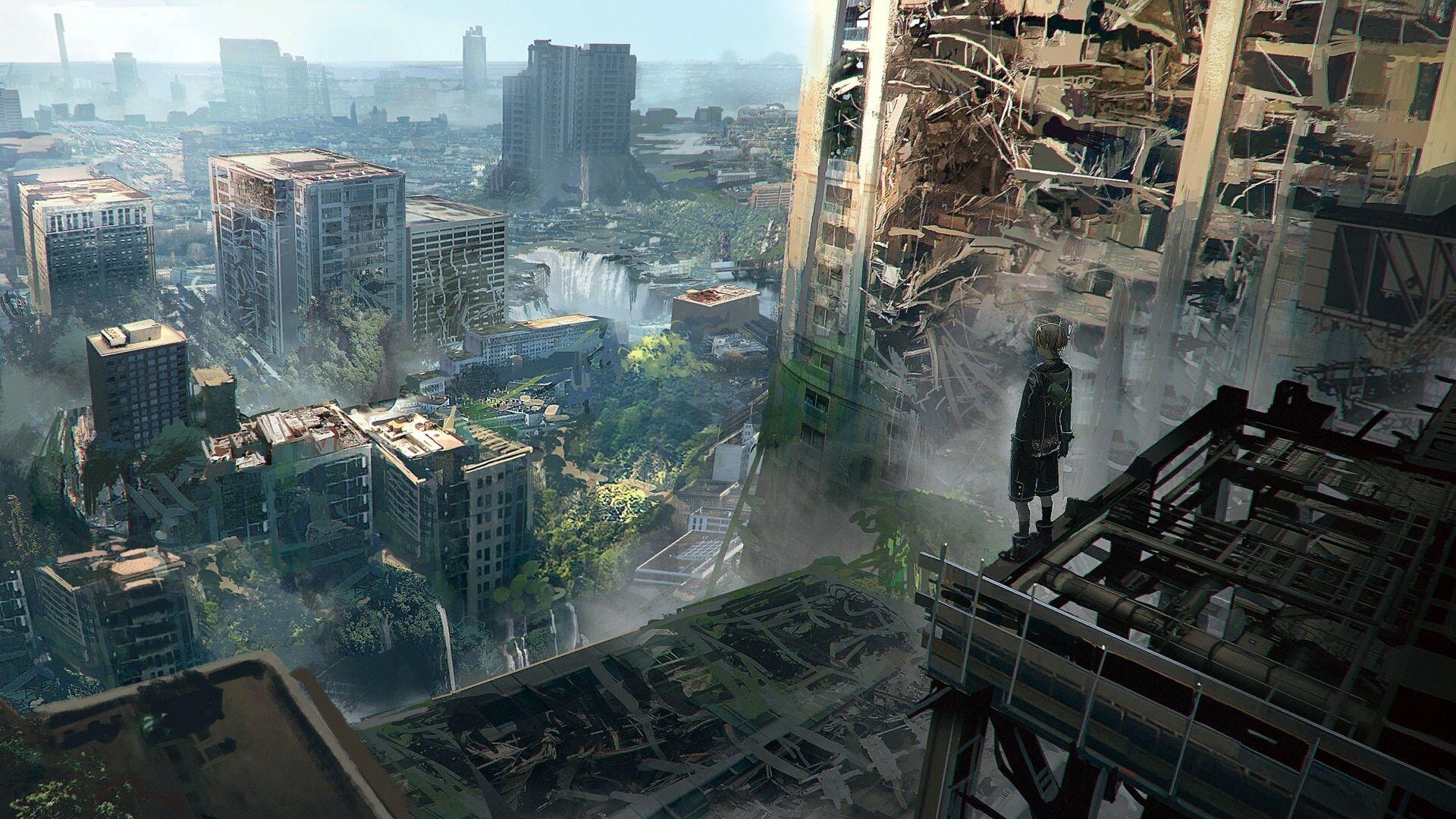
The world of video games has come a long way since its inception, evolving from simple pixel-based arcade games to highly immersive experiences. However, the medium is still broadly considered to be not much more than entertainment. Even as a gamer, I used to agree with that statement, though some games did help shape who I am. I was a pretty lonely kid and certain game characters substituted as a father figure. I absorbed their values and even mimicked their behavior. And yet, at one point I stopped being interested in gaming. This happened around the same time I was “awakening” through Bitcoin, Austrian Economics and other meaningful topics. I no longer had any intention of wasting time on the medium as a means of distraction.
It didn’t take me very long to suspect I might have just been looking for the wrong things.
Instead of the best RPG, the best action, the best graphics, the best gameplay, … how about I look for games that people have found significant meaning in? As I browsed online through forums and blogs, particular discussions and comments really spoke to me, although they seemed a bit exaggerated at the time. Depression, existential crisis, temporary psychosis. These are not the kind of effects you’d expect people to have from a form of entertainment. But as I played them, I realized they weren’t kidding. These games challenged how I view myself, humanity, the world, life itself and even my own way of thinking. I went from being sick of gaming to finding profound and worthwhile experiences, all by simply changing what I was looking for. Now, I’m convinced that important topics will one day become more mainstream with the usage of the gaming medium. In the bottom of this note I will add a list of these games. They all deserve to be written about, but I will mainly focus on my experience with one in particular, the one that had the most impact on me. It’s one of those experiences that I can’t stop thinking about even after so many years, and I never will. This note is written out of sheer gratitude, as I feel indebted for the value I have received, and to spread awareness of its existence.
Video games allow for hugely ambitious projects, but if one aspect feels off, the product as a whole will drastically decrease in efficacy. Just like certain movies, it tries to incorporate nearly all forms of art, but with the key difference that it places you directly in the story with varying degrees of control, decisions, and the consequences of those decisions. The tricky part is achieving harmony and synchronicity between the visual, audiovisual, writing, and story execution. Everything needs to feel connected and this requires immense skill and cooperation between the involved entities to execute successfully. Naturally, the depths of wisdom contained in books are unparalleled. But it really hits different with games like _Nier: Automata_, which encapsulates wisdom within a story that shreds one’s mind and heart apart, accompanied by music which I can only understate as “the sound of the human condition”.
## **Exploring The Underlying Themes**
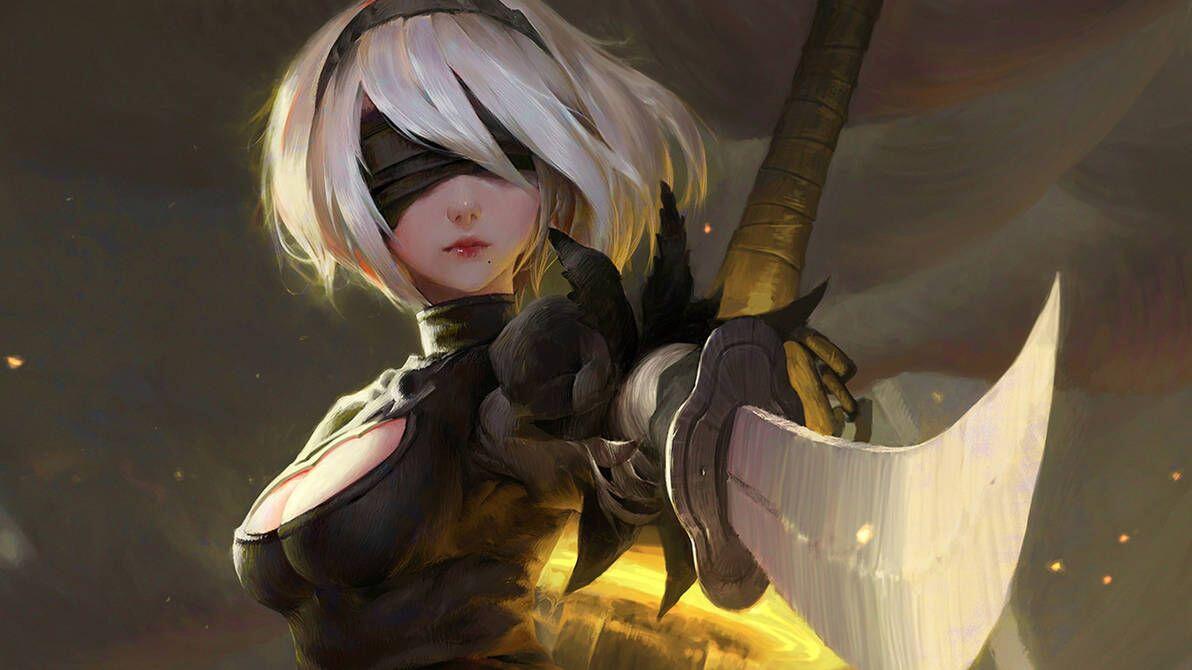
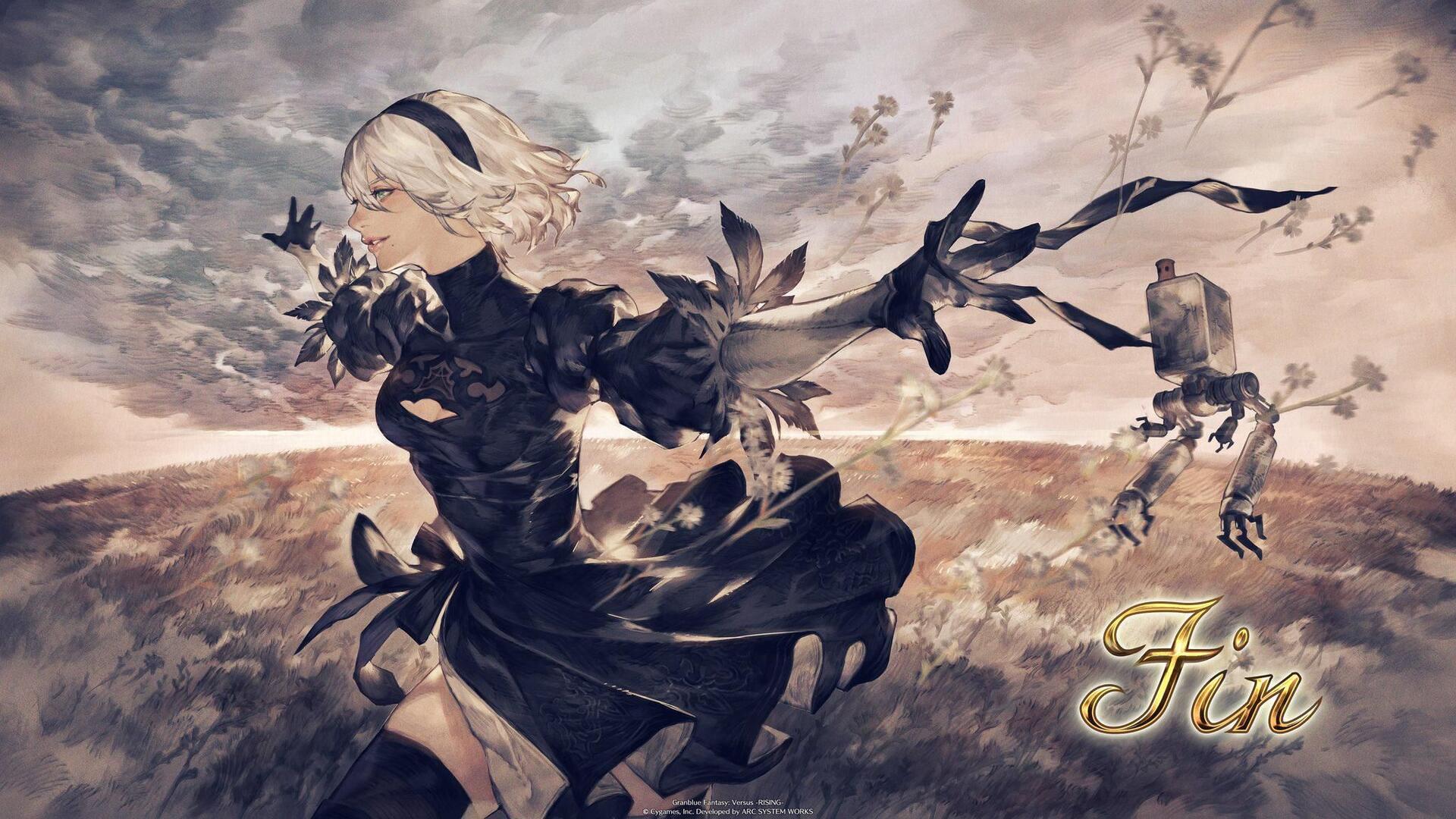
The first impression one may have when they look at Nier: Automata on the surface, is "hot android chicks fighting against machines". Everyone knows sex sells, but I dare say it is a rather typical Japanese media phenomenon where the female form is on the foreground but mind-boggling concepts are lurking behind it. I think a fair analogy to this is Bitcoin’s fiat price, where the prospect of wealth is the magnet that draws in people, but most of us know it is only the bait next to the rabbit hole. Much like in Nier, you’d miss out on all the incredible stuff if you didn’t look further than the hot androids.
Anyway, you will no doubt notice I will be extremely vague about the story itself. Instead, I will focus on some of the underlying content as to provide proper context for potential players.
The game takes place in 11945 AD, during a proxy war between human-made androids and alien-made machines. They were designed to serve a predetermined obligation. Don’t humans have a similar mechanism? Don’t we all feel like we need to serve a purpose, whether that is predetermined or not? Much of the game is about coping with the loss of purpose and the realization of an identity for yourself afterwards.
Nihilism is the belief that nothing matters and everything is meaningless.
Existentialism on the other hand, is the attempt to confront and deal with meaninglessness, as to not succumb to nihilism. An existentialist does not give up in the face of adversity, nor does he avoid responsibility. Albert Camus, for instance, believed the entire purpose of existential philosophy is to overcome absurdity. In other words, for man to triumph over the absurdity of existence. The nihilist says: I am a godless creature, there is no heaven or hell, there is no right or wrong. The existentialist says: you and I must figure out how to make life meaningful and good. We must, in fact, work (together) without cosmic aid to figure out what 'good' itself is, regardless of the existence or non-existence of a god.
Even though the game is full of events which would turn anyone to a nihilistic mindset, the game counters this during the most significant ending sequence, ending E, where players are able to leave a message for other players to see. Since I won’t spoil any details, what I can allow myself to say is this: the game isn't telling you that our existence is ultimately meaningless. Instead, an event lets YOU and other players demonstrate that it is not. Life doesn't HAVE to be pointless. Humanity doesn't HAVE to treat freedom as a curse, as Jean-Paul Sartre proclaimed. Games don't HAVE to be silly little things, made to distract us from our own meaninglessness. The potential absence of a god doesn’t HAVE to be a negative circumstance. We're not doomed per se. We can treat our freedom as an opportunity to create our own futures. To craft happier endings.
## **Mechanics**
In the game, there are machines that take the form of real-life philosophers, because their specific work seemed most valuable to these machines. This is no different than us humans; we tend to absorb the views of the people whose words resonate with us. As such, we get to see a fresh perspective on certain philosophies, and how this might play out for machines is just another way of tuning our understanding of humanity.
You will also encounter rather unfriendly historical figures in machine form, For example, the first boss battle is versus an enemy called… Marx. That’s right, Karl Marx is your first boss fight. He takes the form of an excavator arm, which is normally attached to another machine lifeform, called Engels. And yes, that’s a reference to Friedrich Engels, who aided Marx in the construction of the communist theory. They quite literally seized the means of production. In real life the duo was inseparable until Marx's death, at which point Engels was alone with his thoughts. Just as when you defeat the Engels unit in-game, it will be separated from its right arm, Marx. By defeating it, it will be immobilized with nothing to do but contemplate upon its past actions, and you can return to speak to it on multiple occasions, if you wish to do so.
As I stated before, the game takes place in 11945 AD, so machines and androids are indeed extremely advanced. Some could be considered on par with the human gestalt in every way.
As such a technologically advanced entity, your current state of being along with your memories and all that makes you “you”, can be backed up and uploaded into a blank compatible body unit. For this reason, a well known system among gamers called "auto-save" is non-existent here. Saving your game equals backing up your state of being at the time. Many core elements of the main narrative and relationships between the protagonists are based on the ability or inability to back up data. And since this plot point of the androids backing up their data is tied to the game’s save system, there is no auto-save. The creator of the game, Yoko Taro, has an aversion to ludonarrative dissonance, where elements of the game go in stark contrast with what the story is telling, so using the game’s mechanics as a narrative device to deliver main plot elements is exactly one of the ways to avoid this. Gameplay and story stay true to each other. That said, our past experiences and recollections define who we are. This raises questions about the nature of self-identity and personal growth. Whether you believe it is possible for non-organic beings to develop human-like consciousness, or in the eventual possibility of backing up and uploading said consciousness, is irrelevant. The goal here is to explore the human condition and deepen our appreciation for its complexity.
The story unfolds over 3 major playthroughs, each of which are different. The first 2 playthroughs, though indeed different, are very similar as they tell the same part of the story but with additional context and information, as well as playing through the eyes of a different character. This is key to a proper transition into the powerful third part. Near the end, you gain the ability to redo certain events of the game so you can make different choices and see how this impacts that particular timeline. This part of the game is my favorite, as it allows a deep-dive into all the rabbit holes that are scattered throughout the game. Every time I thought I had seen the full truth or all there was to be seen, I kept making new discoveries. It felt very similar to figuring out all the lies and mechanics of the fiat system.
I will now move on to discuss a few of the philosophers and how they are relevant in-game. It’s important to note that the game does not try to push any philosophical views on you. Instead, you are shown the pros and cons of certain values, thoughts, beliefs, and ways of living. You are not told how to live your life, but through storytelling you are shown the importance of responsibility and walking your own path.
## **Friedrich Nietzsche**
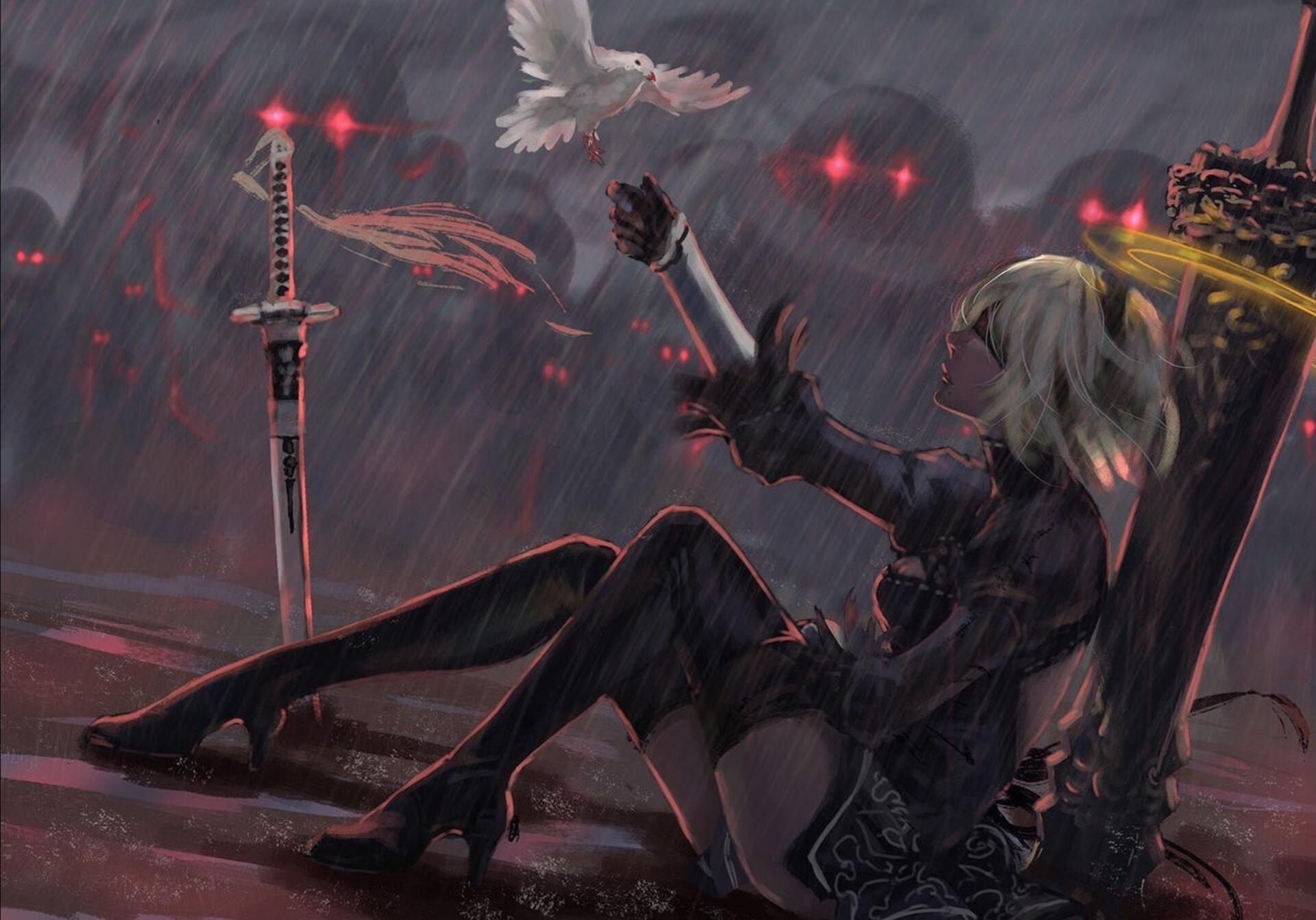
_"Everything that lives is designed to end. We are perpetually trapped in a never-ending spiral of life and death. Is this a curse? Or some kind of punishment? I often think about the god who blessed us with this cryptic puzzle.. and wonder if we'll ever get the chance to kill him."_
This is the game’s opening monologue by a female android called 2B. It is reminiscent of Samsara, a concept present especially in buddhism and hinduism, which describes the endless drifting of a futile existence that can only be stopped with true insight.
2B’s name is based on the famous speech in Shakespeare’s Hamlet _“To be or not to be”_ in which the character Hamlet contemplates death and suicide, weighing the pain and unfairness of life against the alternative.
Nietzsche’s influence on this game is extremely obvious; in 2B’s monologue alone we can already see two major Nietzschean themes that tie into the Nier franchise. The first one is eternal return (or eternal recurrence). This is the concept which states that time repeats itself in an infinite loop, and that exactly the same events will continue to occur in exactly the same way, over and over again, for eternity. With a finite number of events and an infinite amount of time all things will repeat themselves forever. It is not known whether Nietzsche believed in the eternal return, or if it was merely used as a means to demonstrate his point. The second one, is on how to live life in a world without god(s).
_“God is dead. God remains dead. And we have killed him.”_
For Nietzsche, the idea of what it is to be a human was up until a point aimed at a God. What it meant “to be” was derived from a God. As such, meaning was given to existence. However, societal and scientific progress "killed" God, or the need for one, and a human being could no longer see themself as an existence with a “true” purpose. This in turn, leads to the crisis of the concept of being a human, as it no longer holds as the notion of purpose.
The androids in the game were created by humans, therefore we could say that humanity is their god. Humans are a natural phenomenon — androids are not. I am aware of the counterargument; since humans are a part of nature, anything we create could also be defined as natural, at least to a certain degree. I have no strong stance on this matter, but one could argue that when they die, their consciousness lives on because it shares an attachment to the natural world. One cannot say the same of an artificial consciousness. There is nothing for a machine to believe in after death. They know who their gods are. If their gods are gone, their objective goes with it, and they are left with absolutely nothing. Humans on the other hand have the “luxury” to believe in an afterlife, a rebirth, or simply an unknown. Machines do not, so if they are to survive life’s suffering, they must follow an ethic as stated by Nietzsche, who believed that if you want to live without a god, it is necessary to create your own values.
As I stated before, much of the game is about coping with the loss of purpose and the realization of an identity for yourself afterwards. Some androids clearly resent the purpose they have been given. You, the player, can see how the story potentially ends and resent the game creators for it. You either accept the fate given to you, or you decide it cannot continue like this, and you fight to defeat the gods of the game to break free.
## **Pascal Blaise**
_“When I consider the short duration of my life, swallowed up in the eternity before and after, the little space which I fill, and even can see, engulfed in the infinite immensity of spaces of which I am ignorant, and which know me not, I am frightened, and am astonished at being here rather than there; for there is no reason why here rather than there, why now rather than then. Who has put me here? By whose order and direction have this place and time been allotted to me? Memoria hospitis unius diei prætereuntis.”_
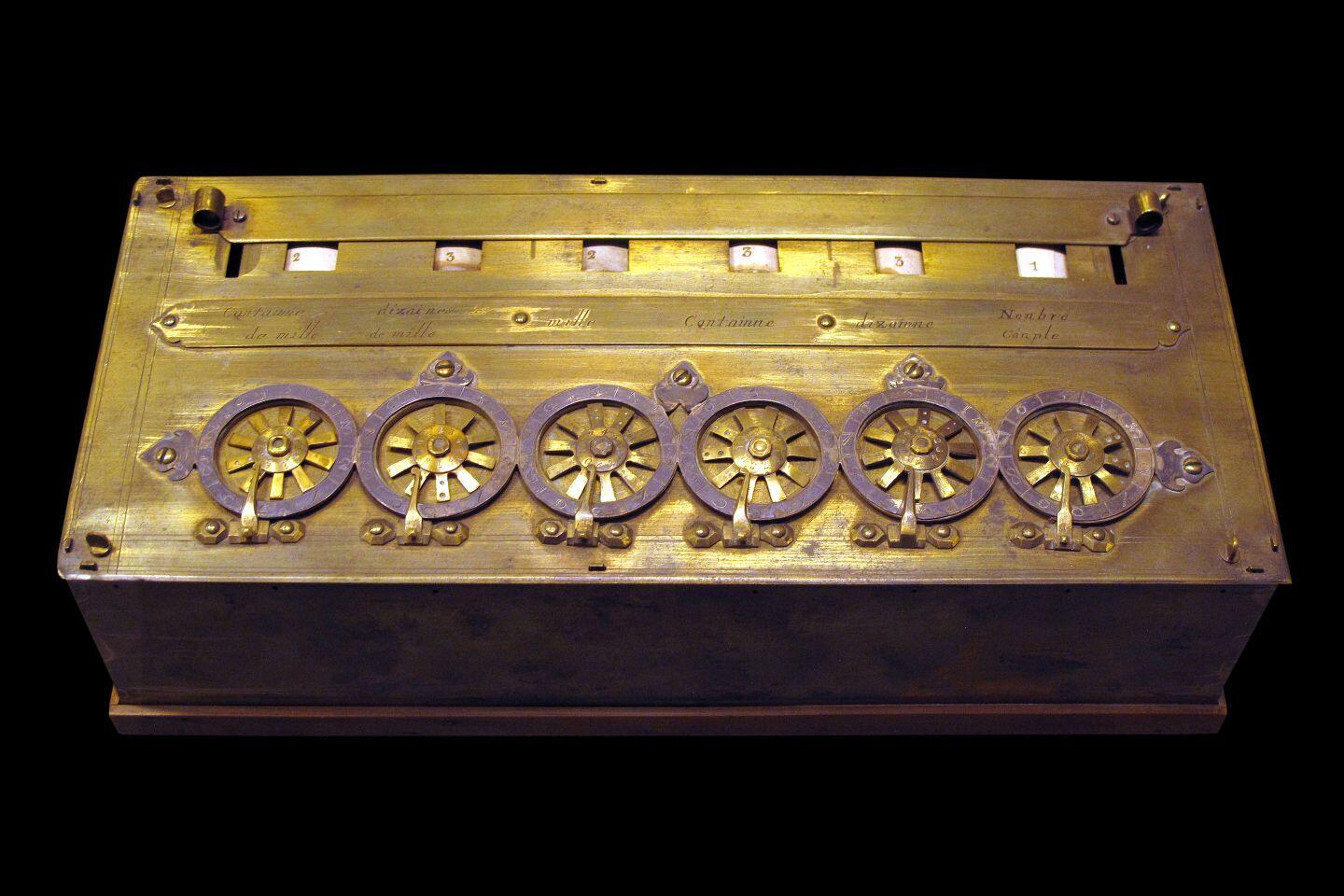
Pascal Blaise, a mathematician, physicist, and philosopher, is a significant figure of the 17th century. He was the inventor of the first mechanical calculator, the Pascaline, and as you may have guessed, the unit of pressure “Pascal” was named after him.
Our existence is based on uncertainty, and there is no way to prove a god exists, or does not exist. Pascal chose to live his life as if god exists. You may be familiar with the philosophical argument “Pascal's wager”, which posits that individuals essentially engage in a life-defining gamble regarding the belief in the existence of God.
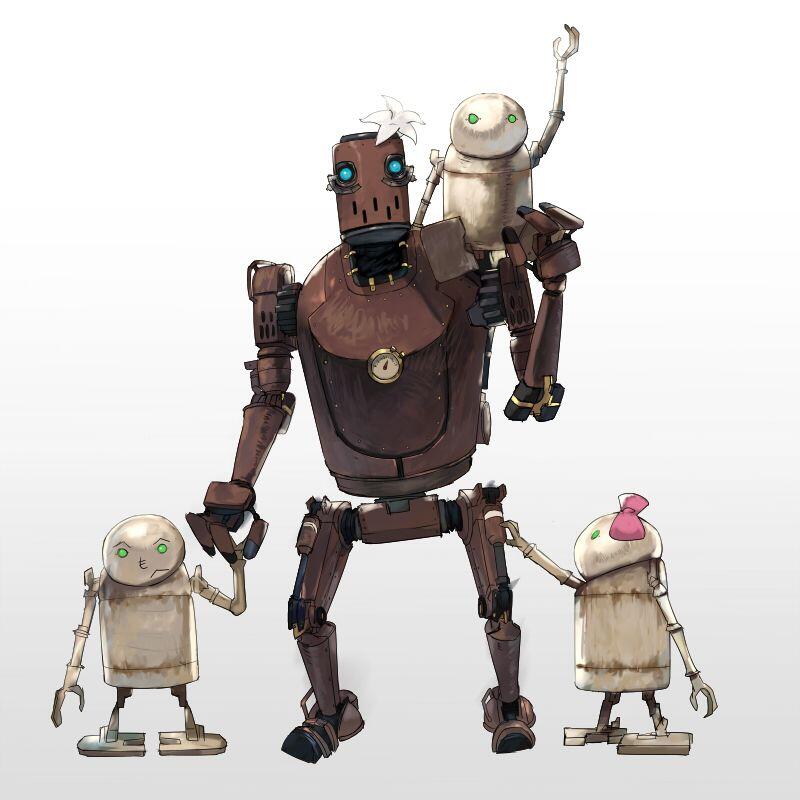
After seeing countless of his comrades die in an ongoing war, Machine Pascal refused to take any more part in this endless cycle and decided to become fully pacifistic while dedicating himself to learn about humanity and teaching other machines about emotions. At one point, we see Pascal studying Nietzsche’s work (In real life Pascal preceded Nietzsche so this would be an anachronistic event, if it weren’t for the fact that these characters are timeless machine representations).
_“It seems this Nietzsche was quite the profound thinker.. Or perhaps he skipped right past profound and went straight to crazy instead.. I’d best go see the world for myself instead of burying my head in books.”_
A wise choice indeed. I couldn’t help but think of Keynesian economists during this remark. Keynesians may have read very much about mainstream economics but they are completely oblivious as to how the world actually works. They are convinced that their statistics are causally linked and their formulas correct, despite the overwhelming evidence against it. They are blind to the destructive effects of their flawed beliefs. To quote Pascal: “It is man's natural sickness to believe that he possesses the truth.”
## **Jean-Paul Sartre**
_“Existence precedes essence”_
This idea originated from a speech by Friedrich Schelling in December 1841, and can be found in the work of other philosophers such as Søren Kierkegaard in the 19th century, and Heidegger’s book _‘Being and Time’ _ in 1927. But it was philosopher Jean-Paul Sartre who worked out this concept in detail.
“Existence precedes essence” is a disagreement with the traditional philosophical view that the essence (nature) of something is more fundamental and unchangeable than its existence. People create their own values and determine their own meaning in life, since they have no innate identity or value. This identity or value must be created by the individual himself. By performing the actions of which they are composed, they make their existence more substantial.
To claim that existence precedes essence is to assert that there is no predetermined essence to be found in humans, and that an individual's essence is defined by the individual through how that individual creates and lives his or her life. As Sartre puts it in _Existentialism is a Humanism_: "man first of all exists, encounters himself, surges up in the world and defines himself afterwards".
In 2009, philosophy professor James Webber interpreted Sartre's usage of the term essence not in a modal fashion, i.e. as necessary features, but in a teleological fashion, thus relating to the explanation of phenomena in terms of the purpose they serve rather than of the cause by which they arise. An essence is the relational property of having a set of parts ordered in such a way as to collectively perform some activity. For example, it belongs to the essence of a house to keep the bad weather out, which is why it has walls and a roof. Humans are different from houses because unlike houses they don't have an inbuilt purpose: they are free to choose their own purpose and thereby shape their essence, therefore their existence precedes their essence.
When it is said that people define themselves, it is often perceived as stating that they can "wish" to be something and then be what they claim to be. According to Sartre, however, this would be a kind of bad faith. What is meant by the statement is that people are defined only insofar as they act, and that they are responsible for their actions. To clarify, it can be said that a person who acts cruelly towards other people is, by that act, defined as a cruel person and in that same instance, they (as opposed to their genes, for instance) are defined as being responsible for being this cruel person. Ofcourse, you can choose to act in a different way, and to be a good person instead of a cruel person. Here it is also clear that since people can choose to be either cruel or good, they are, in fact, neither of these things essentially.
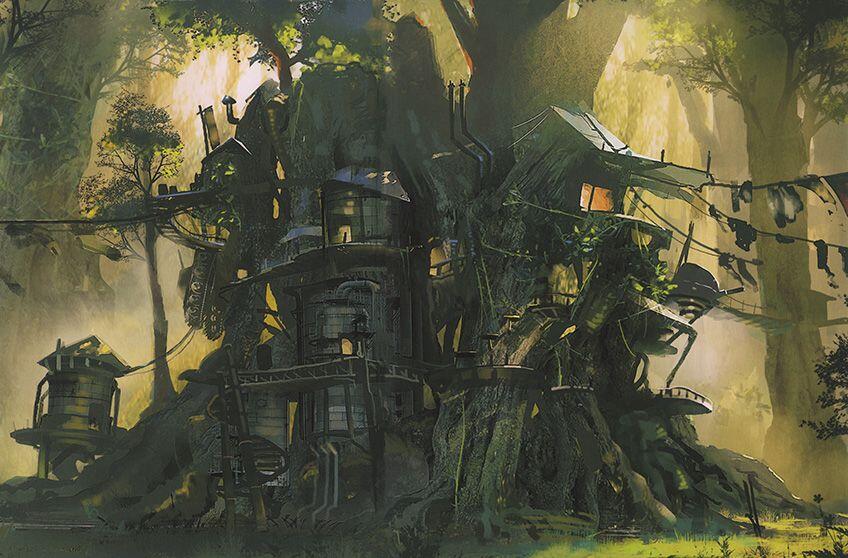
Jean-Paul's depiction in Nier: Automata parodies the real-life Sartre, who despite great acclaim for his philosophy famously disdained awards and recognition. Among other honors, he was awarded the 1964 Nobel Prize for Literature, but refused to accept it. I also see the resemblance with the game’s creator, Yoko Taro, who is known for playing down his achievements very much, calling his games shit for instance. Though he does so in a playful manner.
Machine Jean-Paul takes the work of the human Jean-Paul so seriously that he ignores that the human versions had a life outside of philosophy. Or rather, whatever part of his life was not recorded or lost, would not exist to a machine.
## **Simone De Beauvoir**
Simone de Beauvoir (who had a lifelong relationship with Jean-Paul Sartre) wrote of the example of a woman's identity going wrong if it is based on nothing but a man's affection.
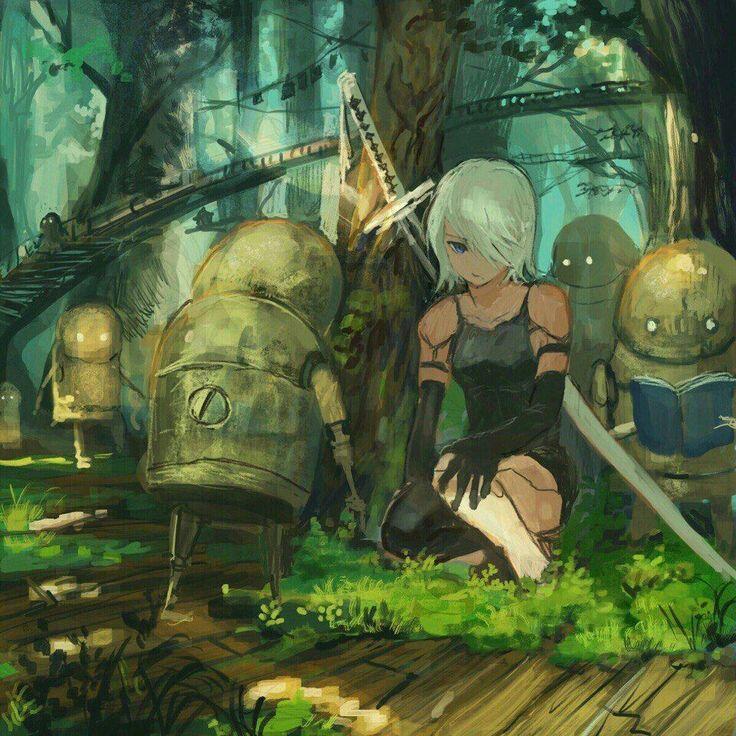
In-game, she was at one point a normal machine. But one day, she fell in love with the Jean-Paul machine. When he disregarded her, pleasing him and getting his attention became her obsession. She made it her goal to become beautiful. “Beauty is pretty skin,” Simone says. “Beauty is stylish accessories. Beauty is looking one’s best.”
As time went on, and Jean-Paul still wouldn’t notice her, things went too far. Simone became desperate and consumed machines and androids to see if she could obtain beauty by digesting them. She even draped dozens of android corpses over her dress in a sickly decorative manner. Driven to madness by her obsession, Simone becomes a monster. And in the end, Jean-Paul still never noticed her. He still never looked her way. So yeah, I said I was not going to mention any more mechanics but looks like I lied; during the battle with Simone this theme is simulated, when you are unable to look at her with the camera at all, no matter what you do with the controls. And as the player deals enough damage to her outer case of morbid accessories, her true unappealing self is revealed.
## **Immanuel Kant**
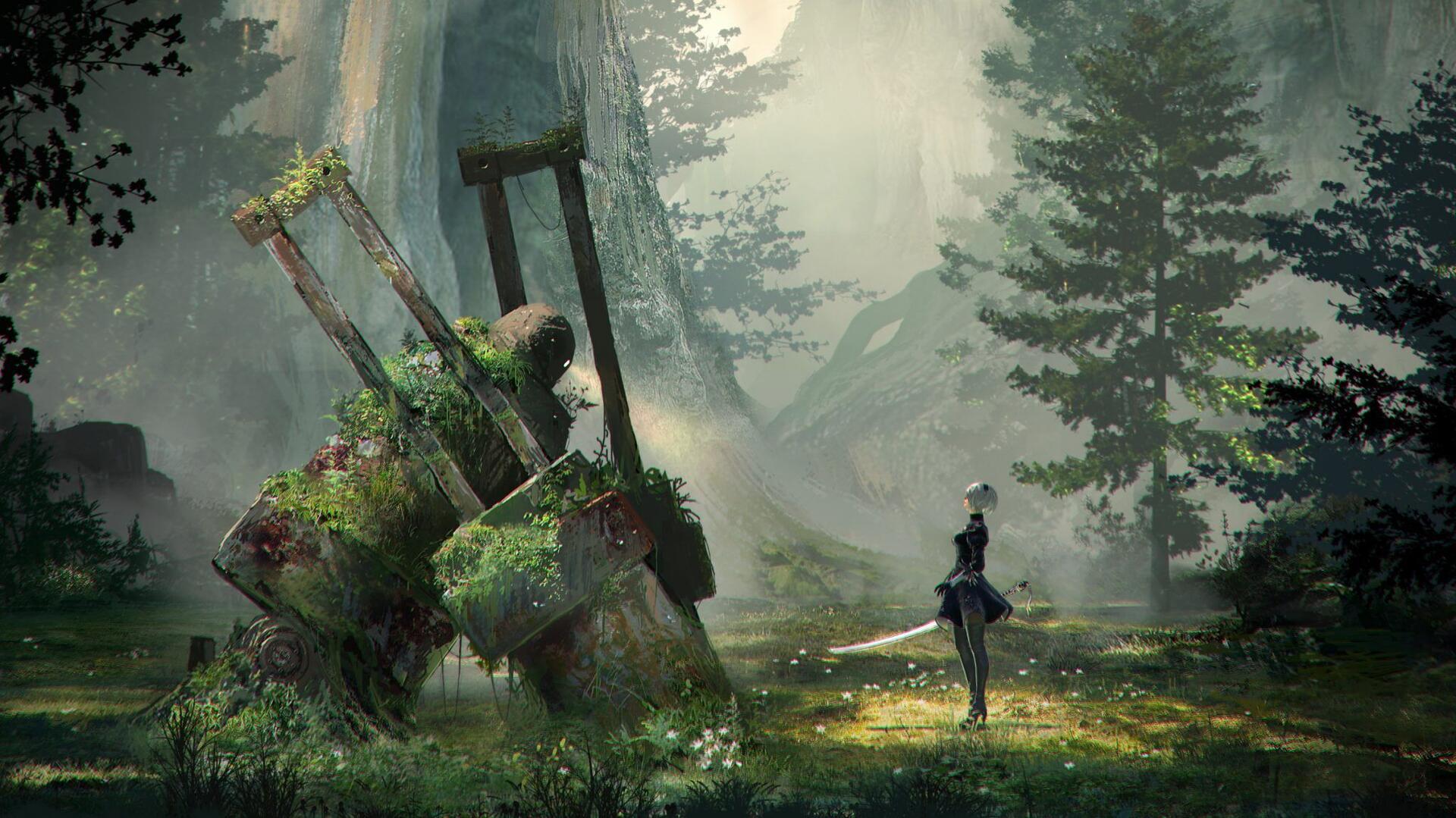
Admittedly, I’m not deeply familiar with Immanuel Kant’s work but I know this much: Kant wrote of the importance of duty in moral action and the intent behind an action being more important than the end result. In the forest section in Nier: Automata, we see a sacrifice being made with good intent but with little result. The entire sequence is about exploring this concept. In the first playthrough you go through an area where all you see is the result of something. The second playthrough shows you the intent. One should always keep in mind that in many cases, be it in-game or in real life, we are only left with results to judge. Kant believed that when people refuse to judge and think for themselves, it’s due to a lack of courage to be independent. He strongly argued against the idea of saying “Why dare to push against the grain when you could simply follow the herd?” Yet this is the antithesis of what in-game Immanuel Kant represents.

## **Yoko Taro**
The creator of the Nier franchise agrees with the existential viewpoint that our lives have no innate meaning whatsoever and that our existence is profoundly absurd. He also confesses that he’s not yet ready to accept the world as it is, and intends to keep trying to change it with his video games.
As opposed to the majority of games, where many conventions of the game market inhibit creative freedom, he is keen in experimenting with the video game format.
“Throughout his entire career, Taro Yoko has always felt disheartened by the image of humanity reflected in most big-budget video games, which propose the use of firearms as the principal means of action. Through his own work, from Drakengard to NieR: Automata, this artist attempts to explore the reasons behind our strange fascination with conflict.
Is man so vicious that he must triumph, discriminate, hurt and kill even for entertainment?
Within the great fields of ruin resulting from wars in which mankind battled against mankind, Taro Yoko perceives this “entertainment” as a way for hope, a horizon, a shield against evil.”
_-- The Strange Works of Taro Yoko: From Drakengard to NieR: Automata Hardcover – June 1, 2019_
Yoko Taro is known for being quite the eccentric figure. He has an intense dislike for giving interviews and believes that game designers are not supposed to be entertainers or commentators on their work, and that the usual questions asked in traditional media interviews would be boring to the viewer. For this reason and others, he is anonymous. Nobody’s ever seen his face, and I think Yoko Taro isn’t even his real name. As for his work, he writes in a manner called "backwards scriptwriting", which he describes as starting with the ending first, then working backwards from there. He then creates central plot points that form emotional peaks in the narrative, adds details, then scatters them through the narrative so the player can build a suitable emotional connection. Many of his games reflect his own feelings about death and his socratic questioning of the concept. He also has an unconventional and creative approach to sharing extra information about his games. For example, inside the soundtrack there's a message that's coded in hexadecimal. When deciphered, you find it is a partial memory retrieved from one of the android protagonists.
Good developers are able to produce good games, but it takes an exceptional individual or team of exceptional individuals, to craft a piece of work that is so emotionally powerful, so moving, that it transcends the medium of entertainment and leaves an unforgettable mark.
## **If you made it this far, thank you for reading!**
A few quick tips to fully enjoy this masterpiece..
For the sake of all that’s holy, play it in the original Japanese voiceover. The immersion gets quite broken if you don’t get to hear the proper emotion in the character’s voices. English subtitles are included of course. It is also an experience that’s most effective when you go through it all alone, as to allow for the most self-reflection and absorption.
Quick echo of what I said on top: I would love it if this note got some visibility, it is a Nostr-exclusive article so please give it a boost if you think it’s worthy of one!
Also, HI EVERYONE. I haven’t used my #introductions formally yet, so this is it!
Now here is the list of games I said I was going to provide, not in any specific order, and a short description for some.
## **Must-play**
Disco Elysium: The player controls a detective who suffers from amnesia and has to solve a murder case while navigating his own state of being and dealing with the consequences of past mistakes. One of the most unique elements in this game, is the fact that concepts such as logic, or various parts of your body such as your limbic system, actually converse with you.
The Talos Principle: Like Nier: Automata, lots of self-reflection and a challenge to your sense of morality. Its gameplay however is based on problem-solving and presenting you with thought-provoking questions in a direct manner.
The Talos Principle 2: A continuation of the events in the first game.
## **Semi must-play**
Detroit: Become Human
Lisa
Bioshock Infinite
Omori
Oneshot
Doki Doki Literature Club
## **Meaningful Anime**
Since I’m writing about existential stuff anyway, I might as well add the relevant anime that I’ve watched. It doesn’t have the same level of impact on me as games do but I feel like this note wouldn’t be complete without mentioning them.
Again, in no particular order:
Neon Genesis Evangelion (Yoko taro also mentioned Nier: Automata was inspired by this anime)
Serial Experiments Lain
Ergo Proxy
I know there’s plenty more gems out there but I haven’t gotten around to watching them yet.
## **Tags and stuff**
#nier #nierautomata #philosophy #existentialism #game #gaming #games #gamestr #nihilism #story #storytelling #meaning #life #bitcoin #humanity
Sources for some of the pictures (I didn’t find all sources, let me know if you made one of these so I can add your name)
Deviantart: RPINr, Gasia112
Tagging some people in this of whom I’d expect they may be interested, apologies if I’m wrong.
Special thanks to nostr:nprofile1qqs0njyrsum0tg9kz8kjc3v23tn6fqyq9e8v8rjja9jg8xrv53xwvysx870x6 for reading the article before I posted.
These facts about this game makes me want it:
- Game Mechanics and Philosophical Integration through Absence of Auto-save: The game ties narrative elements like android memory backups to gameplay mechanics, avoiding narrative dissonance.
- Philosophical Figures Represented in the Game:
• Pascal Blaise: Machine Pascal rejects war in favor of pacifism, reflecting Pascal’s real-life philosophical questions about existence and belief in God.
• Jean-Paul Sartre: Explores existentialist ideas such as “existence precedes essence” and the responsibility of creating one’s own meaning.
• Simone de Beauvoir: Represents the dangers of basing identity on another’s affection, with a machine character spiraling into madness out of obsession for another.
• Immanuel Kant: Discusses moral duty and the importance of intent over outcome, explored through a sequence in the game about sacrifice and intent.
You consider yourself a gamer and a bitcoiner? Don’t. Not before reading this essay:
nostr:note1a59drwjpnnkz0elshqljjex8cr7hcg4yvtwu8hdkcdde2qr6ahrqrkuxn4
Do funny people have sad parents?
%$¥*#}]!!¥ the system.

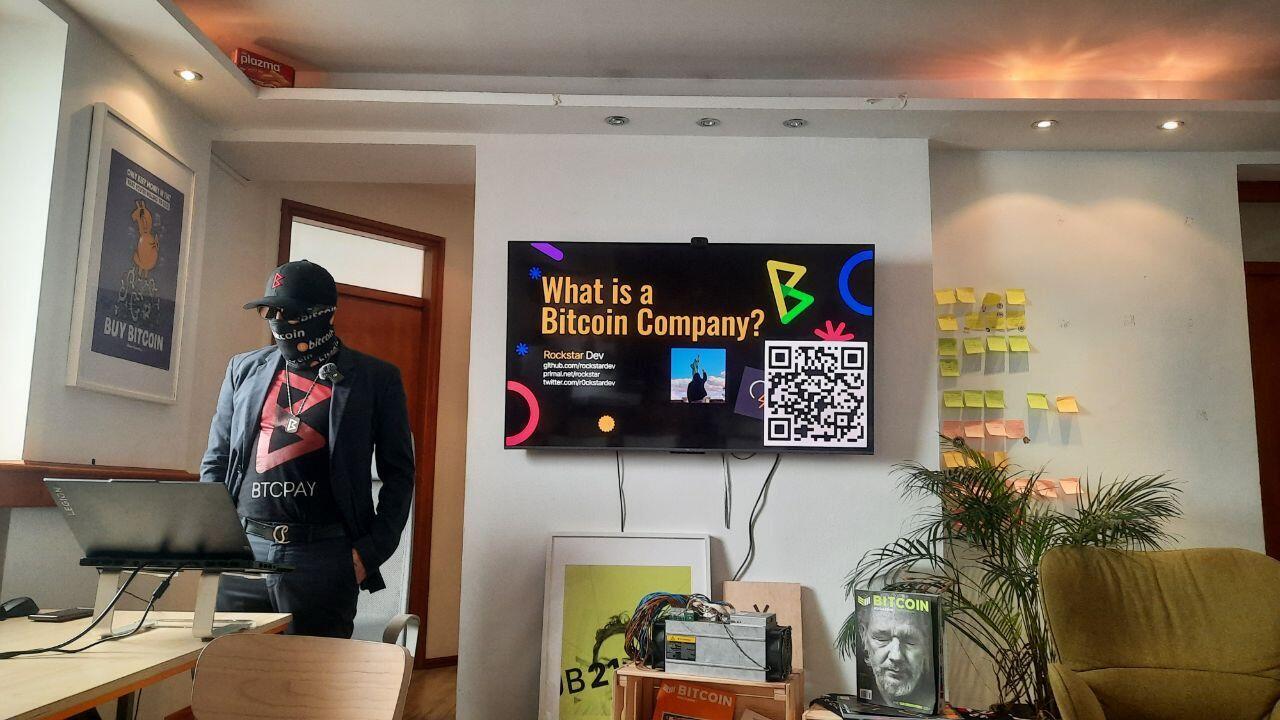
It was an absolute pleasure delivering "What is a Bitcoin Company?" lecture from Hub21rs as part of the Plan B curriculum.
I've already received tons of great ideas which I'll incorporate in the model. DM me if you watched the lecture and have feedback.
h/t nostr:npub1au23c73cpaq2whtazjf6cdrmvam6nkd4lg928nwmgl78374kn29sq9t53j, nostr:npub1r0gzy7ptcecpmjj3uv4kxychpqex3j52e8z9vyg3qy7jvcvyu2uq5tczhq, nostr:npub1y67n93njx27lzmg9ua37ce7csvq4awvl6ynfqffzfssvdn7mq9vqlhq62h for organizing!

🤙🏽

Hi y'all !
Long time lurker, first time poster, I am very pleased to finally annonce Satonomics (https://satonomics.xyz) ! 🎉
Which I've been building full-time since November 2023 and started looong before
In short: FOSS Glassnode (https://glassnode.com)
In long:
Satonomics is an open-source suite of tools that computes, distributes, and displays on-chain data, making it freely available for anyone to use.
While mempool.space gives a very micro view of the network this tool is the exact opposite and very complimentary by giving you a more global/macro view of the flow and various dynamics of the network.
It doesn't matter who you are and what you want to do with the data, I strongly believe and it is very important that anyone should have a full and free access, be able to verify and visualize any kind of data from the network. And so you'll find many many charts (and soon dashboards), or routes through an API (if you prefer it raw) to do anything; from doing a health-check, gain insight into the current or past state of the network or even trading, I don't care, do what you want !
I realize it's not as exciting as ecash and nostr/bitcoin tools but it is something that needed to be done. We can't have fiat-minded 700$/m closed tools like Glassnode being the go to.
Warning: very early and very alpha, things might break and the data might be false (and I'm 100% positive that some datasets are)
Anyway, enjoy and let's keep building ! 🔨
🫡

Does anyone else accidentally do this sometimes?
Just tried to login to nostr:npub12vkcxr0luzwp8e673v29eqjhrr7p9vqq8asav85swaepclllj09sylpugg from a computer.
Oopsie.
What’s the second best web option for Nostr stuff these days?

You’ll find it here Joe 👇🏽
https://primal.net/e/note10ea0yvlz3yf32rxql2c8zcpdjp84lsjk5ec9yl3lvajmslwyvq3qawq5pf

Hey NVK
Qs:
1. Historical Context:
- Why was OP_CAT originally removed from Bitcoin?
2. Security and Risks:
- What potential security risks are associated with reintroducing OP_CAT?
3. Community and Developer Opinions:
- What is the general consensus among Core developers regarding the reintroduction of OP_CAT?
- Are there notable advocates or opponents of its use? Why?
4. Practical Applications:
- What real-world applications could benefit from OP_CAT?
5. Future Prospects:
- What are the next steps for OP_CAT’s potential reintroduction?
Wondering which #Nostr client to use? Which work on iOS/Android/PC/Mac/Browser?
Here is the lineup (to-date)
1. nostr:npub18m76awca3y37hkvuneavuw6pjj4525fw90necxmadrvjg0sdy6qsngq955 #Damus
2. nostr:npub1nz64zngcqm8vj8nhrdkcjpfwn2rcaqysnxec88tqfclp5afrpglsqm0w5y #Amethyst
3. nostr:npub1sn0rtcjcf543gj4wsg7fa59s700d5ztys5ctj0g69g2x6802npjqhjjtws #Snort
4. nostr:npub19l0cks7zmf6sz062peqlq277zmuskhgad58lgnr2awpp3t95esfstaws8n #Nostros
5. nostr:npub13myx4j0pp9uenpjjq68wdvqzywuwxfj64welu28mdvaku222mjtqzqv3qk #Coracle
Enclosed in a comparison table format with criteria and scoring.

@npub1teawtzxh6y02cnp9jphxm2q8u6xxfx85nguwg6ftuksgjctvavvqnsgq5u Verifying My Public Key: "Sooly Kobayashi"
#Bitcoin is my #ikigai

In the face of a bear market, #Bitcoin 's transaction volume share tells a story of unwavering adoption across the globe.
Western economies don't dictate its fate. As economic challenges mount worldwide, #btc shines as a beacon, driving its adoption ever upward.
Probably nothing

The pen is mightier than the sword, but #Bitcoin is mightier than the pen when rewriting the rules of financial freedom.