Cold exposure is supposed to increase the mitochondria count in your fat cells.
I wonder if that has any bearing on this? 🤔
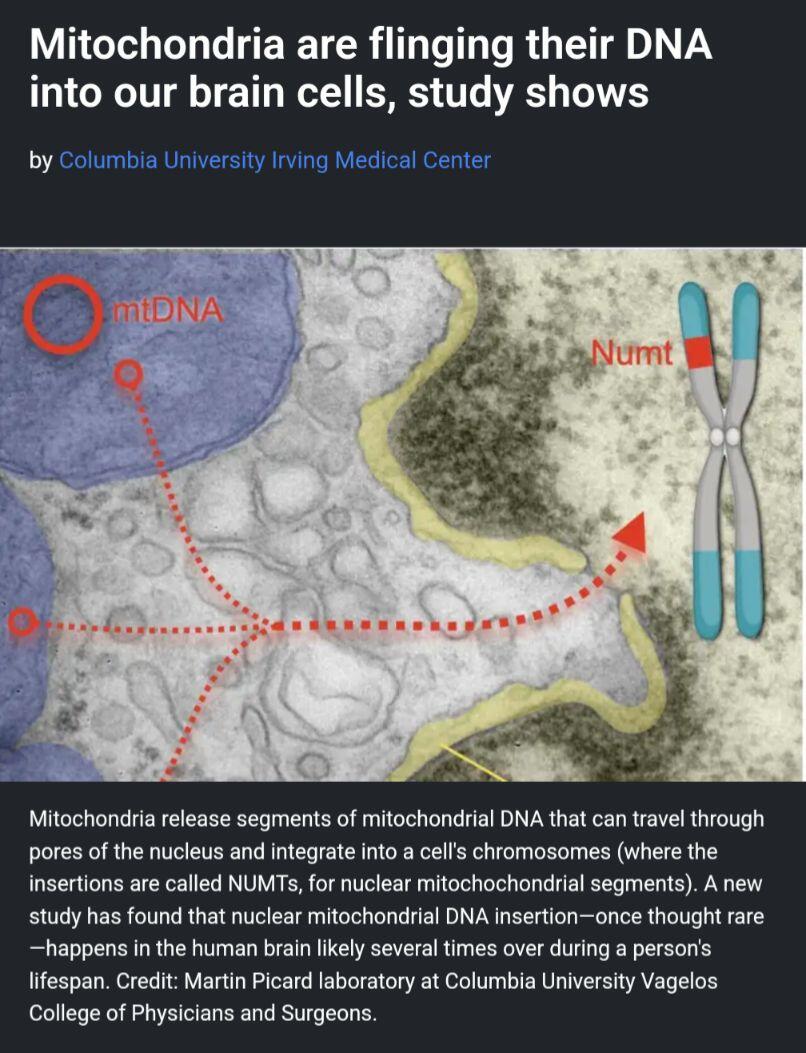
Cold exposure is supposed to increase the mitochondria count in your fat cells.
I wonder if that has any bearing on this? 🤔
Is this good or bad? It’s unclear. What are you getting at?
Very very good, but I wonder if having higher mitochondria counts in our fat increase or make more effective the "flinging" into our brains.
There's a clear mental benefit from cold exposure, but marrying it to the physiological changes hasn't been 100% tied together by science.
Sauna/cold plunge has been shown to greatly reduce risk of mental illness in some Finish studies.
100% I'm a believer that it fully changes your brain chemistry & physiology.
I just constantly look for connections within scientific evidence that can help support my experiences!
I've been questioning cold exposure on the basis of ancestral wisdom. Is there any evidence that ancient peoples had any kind of ceremony or practice where they would expose themselves to intense cold?
I think there is plenty of basis for heat - saunas, sweat lodges, etc. But cold would just be unnecessary risk of death or frostbite, right?
My general argument is that our physiology evolved to increase our chances of survival. Our ancestors were much more in tune with survival than we are today, and likely found the best practices to thrive in nature. In turn, our physiology also evolved to suit those practices. I don't restrict this to only humans either, where our general biology is largely shared with plenty of the animal kingdom. Not sure where cold exposure fits into this model. Even applying ice to pain should be questioned. When is the last time someone living outside of an icy biome applied cold to a muscle injury? Ever see an animal trying to cool off a sprained limb?
This is just part of my question everything mindset, especially anything that has changed over the last few hundred years. No particular attachment to this rabbit hole, just one I stick my nose in from time to time.
Sedj always thinking deep, love it 🤌💜.
Native Americans lived all up & down this continent.
To survive winter you must be able to survive cold waters - you're in the streams when the water is below 40, & are bathing & changing clothes when the temperature is even colder.
It's unavoidable unless you live in the topics.
Only modernity has allowed cold to be a choice instead of a way of life in the winter.
In terms of injuries, I tend to agree with you - there would be no way to ice yourself unless it was winter & below freezing.
This doesn't mean cold waters are not soothing to muscles & bones alike - but it's more pain management than healing protocol - it's the Advil of the rehabilitation world.
Whole body cold plunges are a physiological obvious benefit - just get in & then get out - that one quick dip will have your endorphins enthralled & you feeling great mentally & physically.
Mentally being the key factor of obvious human benefits & ancestral intelligence that was built into daily life as even spring & fall waters are very fucking cold.
That's why cold plunges start at considered anything below 57F. Makes sense.
I'm not disputing that people lived in cold climates. That is simply not the same as jumping in an icy pool by choice, with the expectation of some health benefit.
Last I checked, cold wasn't for pain management, often the cold exposure hurts worse! If anything, it is to stop swelling - but swelling is a sign of the body immobilizing the area in an effort to protect it during healing, while it is bringing all of its other healing mechanisms to bear on the area. Applying cold would slow that while process down, actually retarding your own body's healing efforts.
You mention bathing - how much bathing was actually happening in cold waters? Hot baths in sweat lodges were more common around here (pacific northwest). Not sure how much bathing in water the Inuit do, probably not a lot. But this is where I am making guesses, and don't know the answers. For all I know the Inuit yelled "cannonball" and did polar bear challenge plunges all the time!
Roman baths were also heated, as I understand it. Very different climate there.
Everything I have come to understand about survival would point to avoiding 1) cold and 2) being in water whenever possible, just from a general sense of risk/reward.
I still don't hear any evidence of ancestral humans or any animal species practicing cold plunges for physio- or psycho- wellness.
You're missing a major key factor here.
Humans didn't live only the tropics.
Native Americans bathed all year round & had hygiene protocols as well as fishing & other things that forced them into the water.
They lived all up and down this country with access to rivers, creeks, lakes, all which have a temperature below 57 & colder throughout the year.
In terms of survival, you'd want to train your body to enter cold water in case you ever fell in by accident for example.
The #1 cause of death in cold water isn't frost bite - it's loss of breath & the ability to recapture it.
No recapture= loss of control = ded
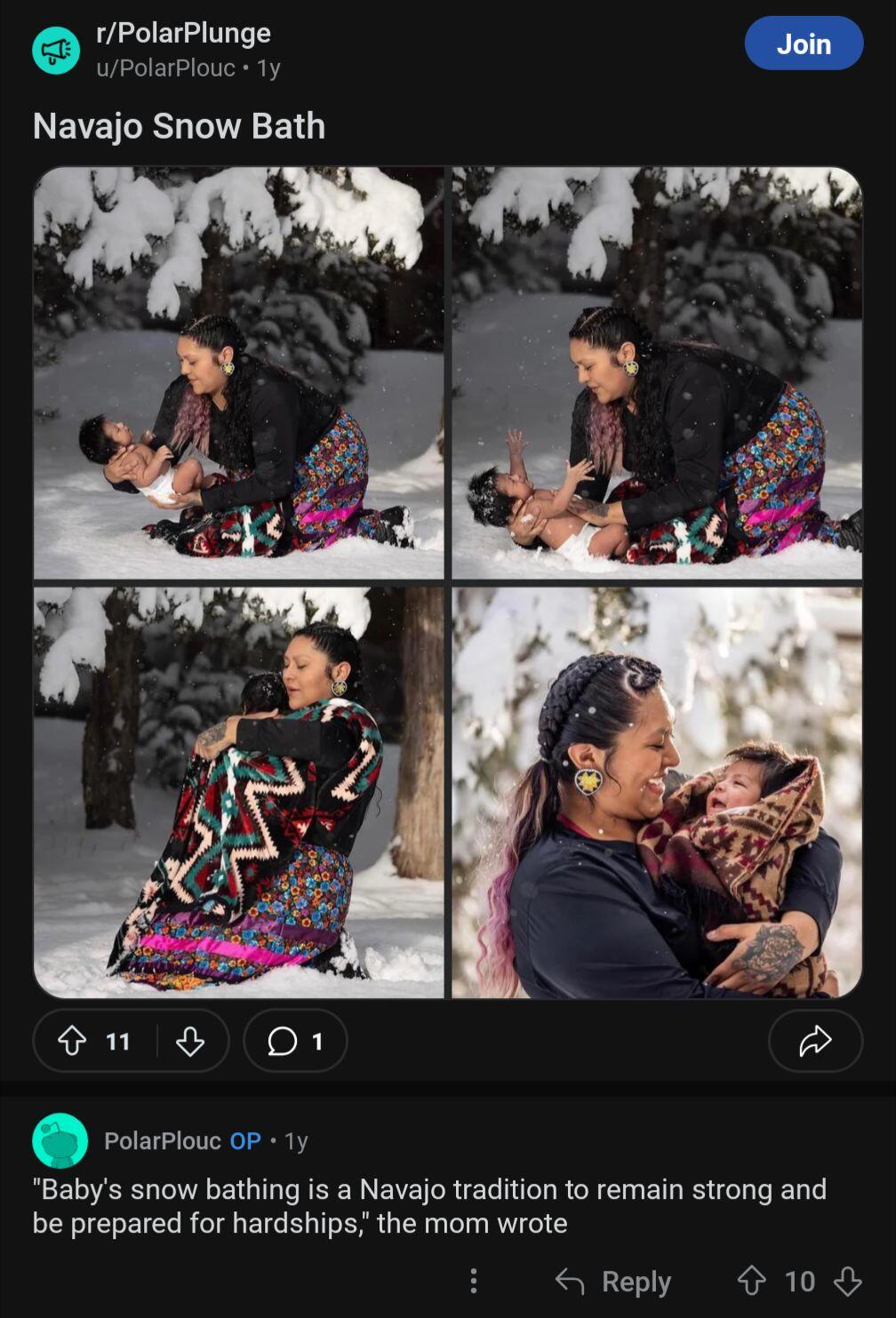
There we go - this is what I am looking for! Is it just done for infants, and to what purpose?
One Spanish chronicler said bathing was “as common and frequent as eating” among the native Americans. Mostly this was done in rivers and lakes, but Mesoamericans also developed a highly sophisticated bathing house, which used steam, cool water, natural soaps, and plant scrubbers to keep themselves clean.
That's interesting. I wasn't confining this to water, as I see cryo-chambers as the same thing in modern times. Are you sure about that, though? It wouldn't be frostbite, but I would think hypothermia or exhaustion would ultimately claim more lives, if we are including prolonged cold water deaths.
Here's a personal experience. As a boy, maybe 6 yrs old, I was running on the docks, tripped and fell in the water. I was in a life jacket - we always had to wear them outside of the house, for reasons exactly like this. There was some skim ice on the water, so it was plenty cold.
My parents were up at the house, but luckily heard my shouts or something and were able to find me and pull me out. Some hot cocoa and all was well, but I'm sure I gave them a horrible scare. I've actually experienced this in nightmares with my own children drowning and me not able to save them.
I live near rivers that people die in every year, because they think they can swim across them, but the spring snow melt runoff in the rivers is so cold that it exhausts them before they make it across.
As a survival skill, I'm not convinced cold plunging would be high on the list, compared to avoiding situations where an accidental exposure would happen, or being prepared with flotation or other safeguards.
I'm not missing that point at all. I started by stating it, amd referenced Inuit earlier.
Did native americans bathe year round as a form of hygiene? I don't know if this is true or not. I'm not willing to assume it. That is still different from experiencing less than 57 degree water for wellness or mental clarity. Exposure to cold temps for fishing or other food gathering also isn't the same as doing it optionally for wellness.
Exposure to heat through sweat lodges and various ceremonies was done for wellness. That is clear. Not all cultures, perhaps, but enough. Not seeing evidence of cold ceremonies.
the bulgarians and several other slavic cultures (could even be almost universal Orthodox) have an event every year where a bunch of young men dive into a river in the middle of winter to retrieve a crucifix i believe
to some extent, i think that baptism comes close to having some strong reference to cold rituals, and the implication of "waking you up" is definitely strong in the meme of baptism altogether IMO
also, yes, you ask the slavs about it and it isn't just this one religious related ritual, cold shock therapy is done for wellness in many of the cultures, that is just the most visible one you can easily find reference to
the ceremony usually makes an appearance on the TV news every year in serbia and bulgaria at least