

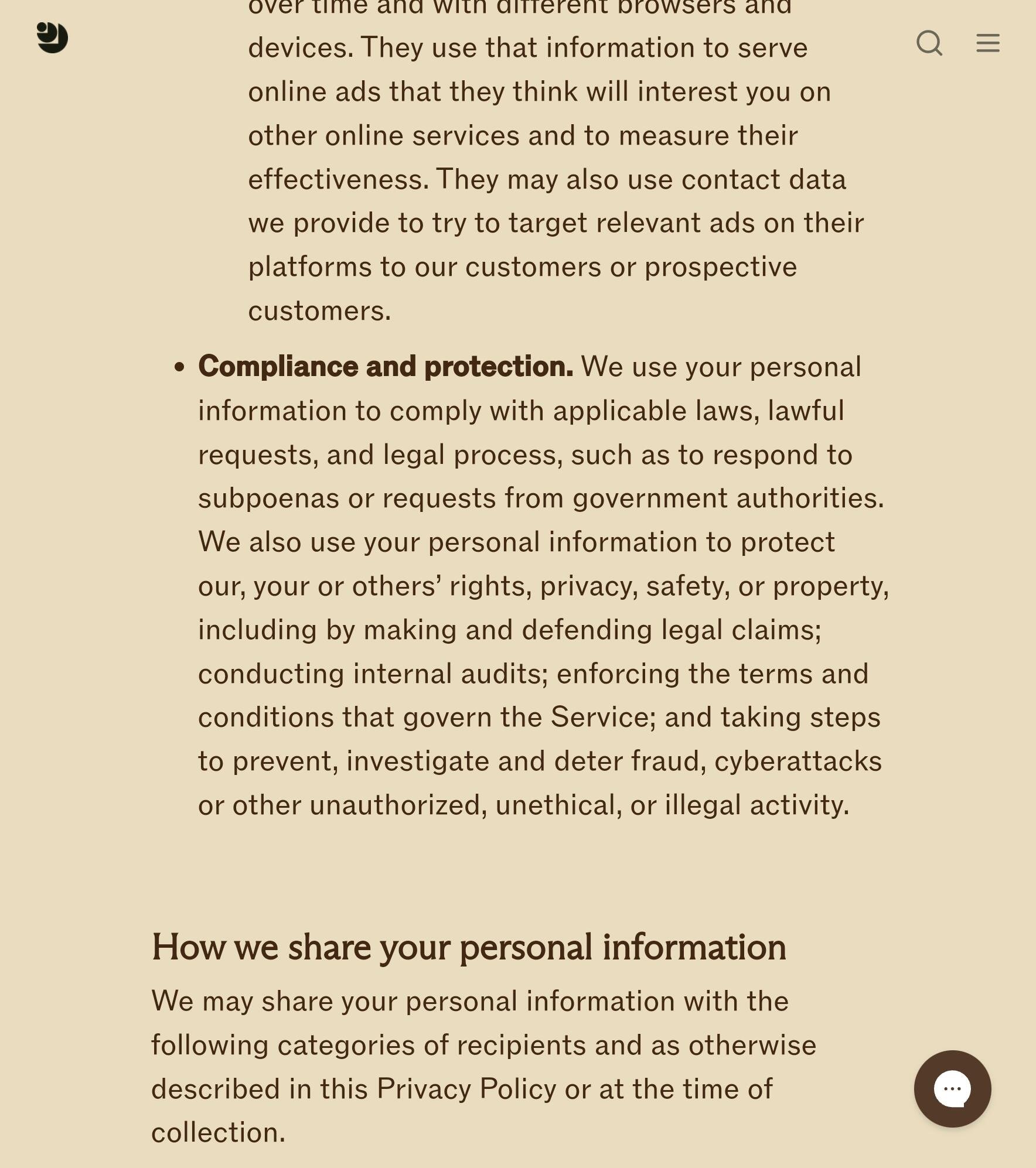
nostr:npub1a00wj229auzjswlq4s77y4u8eqdx5k9ppatgl8rtv8va65f6mwksum9q3h I want to believe what you're saying but your operating system, which is effectively your hardware, is lumped in with everything else in your business, and this privacy policy states that it collects personally identifiable information from nearly every interaction possible including pen strokes and will share this personally identifiable info with anybody for any reason, including marketers and law enforcement.
If your hardware/OS is private in any capacity, you need to separate it from the rest of your business legalese. I get that websites will track mouse movements, etc, from anon visits and use it for marketing optimization; I've seen this type of privacy policy for websites and other apps. But that shit is unacceptable if it's baked into the OS, and your privacy policy makes no distinction. 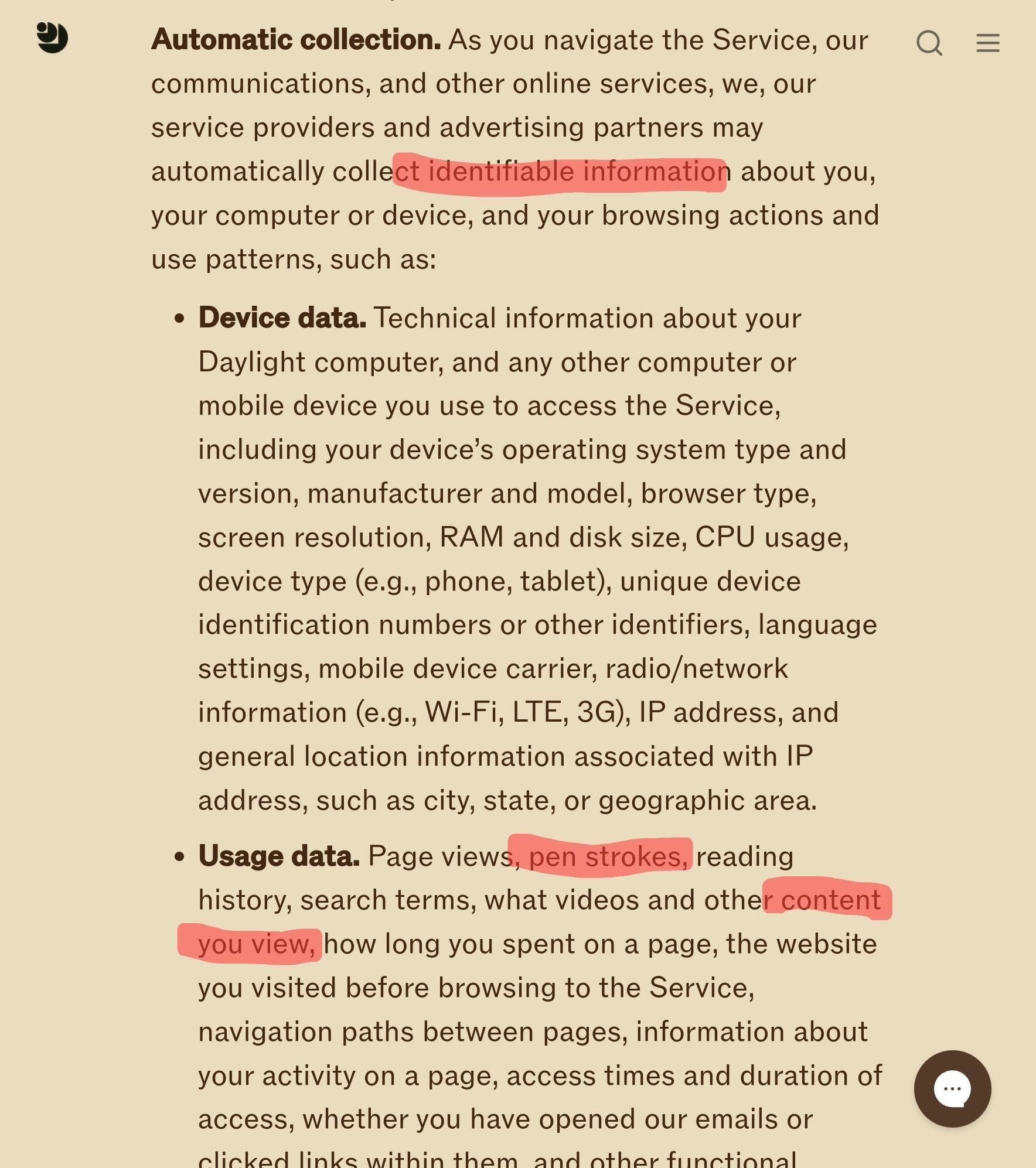
We're discussing closed source hardware and software?

Right here with you.
Who's running Dojo or RoninDojo?

It would be even better if you had a digital sign that updated 👀.
I would have fiat prices in the printed menus. You can still make it clear that you also accept bitcoin.




I can tell you where the money went but you won't like the answer.

I think it's also very important to not dehumanize them. We need to be loving while we fix this broken world.

Personal. Responsibility. We're also subjected to propaganda and it's probably worse.

It's good for Bitcoin.


Cashu currently has more trustworthy public mints IMO. nostr:npub12rv5lskctqxxs2c8rf2zlzc7xx3qpvzs3w4etgemauy9thegr43sf485vg and others aren't strangers on Nostr. I've never seen a Fedimint operator publicly interact with their users. nostr:npub1kvaln6tm0re4d99q9e4ma788wpvnw0jzkz595cljtfgwhldd75xsj9tkzv and nostr:npub1h2qfjpnxau9k7ja9qkf50043xfpfy8j5v60xsqryef64y44puwnq28w8ch are paving the way.

You can audit the supply. The real risk is in the implementation. It's a tough pitch. It's even harder when there's so much fear mongering and bad faith arguments.
My fundamental argument against monero is that I think it's a worse money than bitcoin. Specifically in these metrics:
- dynamic block sizes mean blocks will get big if monero gets popular
- large blocks are hard and expensive to validate
- validation difficulty discourages everyone except rich people from running nodes
- the people running the nodes control the network
- so if the rich alone run the nodes, the rich alone control the network, which sounds bad to me
- monero also has perpetual inflation, and I think that is a bad idea for the reasons outlined by Gregory Maxwell here: https://bitcointalk.org/index.php?topic=5405755.msg60542558#msg60542558
I will also give you a non-fundamental argument against monero: monero was created to achieve better privacy than bitcoin had at the time, which was a laudable goal. But lightning showed that there's an even better way to do privacy, so adopting monero now would be a step backward. There's better privacy technology available now and bitcoin adopted it via lightning.
Did you change your opinion about which one is more private?

You just have to copy and paste some info.

Somebody gets it.

The absolute worst case scenario is the network isn't worth securing.

A token is a Bitcoin IOU custodied at the mint.
Ecash isn't a scam but users need permission from mint operators.
Rumble have confirmed that their wallet is on the way, could have just added nostr:npub19hg5pj5qmd3teumh6ld7drfz49d65sw3n3d5jud8sgz27avkq5dqm7yv9p and open it up to a host of wallets, but I doubt they're going to be that bold
https://cryptoslate.com/rumble-bets-on-bitcoin-with-new-creator-payment-wallet/
Nostr isn't a guaranteed success and is already showing signs of stress. I''m bullish on its potential, but it's understandable for them to explore other solutions. More options for users, is a win for everyone.
Ross was pardoned. Let's recognize the real harm done: years of his life lost, productivity stifled, and freedom denied. Society took a big L. It's time to welcome him back to society with dignity. The rest is between him and his creator.
Context:
Finnish feds trace xmr: https://cointelegraph.com/news/finnish-authorities-traced-monero-vastaamo-hack
Japanese feds too: https://cointelegraph.com/news/monero-transactions-japanese-authorities-arrest-18-scammers
Ciphertrace explains how they trace monero: https://v.nostr.build/D4Nzp22vRF35IRnz.mp4
Popular monero wallets accidentally doxing users & their monero txs to chainalysis: https://digilol.net/blog/chainanalysis

How are people running it on Android? Their app doesn't look open source.

My understanding is they would only see the previous hop and the next hop. Do you know about this unique ID? I think nostr:npub12262qa4uhw7u8gdwlgmntqtv7aye8vdcmvszkqwgs0zchel6mz7s6cgrkj meant the well funded entities can create big nodes that have frequently used channels. I'm learning here.
They have a lot more work to do.

To the degree that you use the service. Being your own LN bank is much more time consuming.

You must be a working father.

I wondered about this because Cash App doesn't work for me either. I thought it might be risky to enable the exploit protection compatibility mode.

nostr:npub17lmqmq680446scdgvv58snglr3h2phe00thqfe0twa3l8q5mzmusj6c60g nostr:npub1294d6xdgvx30g2wvezpluueyx9ua22vzfryz04504l5z9e5hcq2qjmfjul nostr:npub14q8uffuxxnhzd24u4j23kn8a0dt2ux96h5eutt7u76lddhyqa0gs97ct2x nostr:npub1gcxzte5zlkncx26j68ez60fzkvtkm9e0vrwdcvsjakxf9mu9qewqlfnj5z nostr:npub1c9d95evcdeatgy6dacats5j5mfw96jcyu79579kg9qm3jtf42xzs07sqfm nostr:npub1hxx76n82ags8jrduk0p3gqrfyqyaxnrlnynu9p5rt2vmwjq6ts3q4sg75y It's very clearly a bug in the app. It's not a problem in GrapheneOS or specific to Grap[heneOS.
What happened to the keyboard bug in Amethyst? It was about a year ago? You couldnt use OpenBoard or similar keyboards with Amethyst. I don't remember how the bug was fixed.
OpenBoard like keyboards and Amethyst about a year ago. Vitor said there was nothing titWasnt it last year happen last year?