

Do it or pay the taxes on the revenue yourself. It’s a pin the tail on the donkey game, personal wealth is predicated on having enough donkeys. Sad but true.


Close. Incomplete proteins are surplus amino acids because synthesis of proteins for use by the body takes complete sets of amino acids. Energy and molecules aren’t the same thing. It takes energy to break chemical bonds. The net energy taken to break protein down is more than the energy provided by the resultant glucose, there is junk left over that has to be dealt with by the kidneys. Excessively high protein diets are taxing on your kidneys over long periods of time. Protein molecule on the left, glucose on the right. 


nostr:npub14eng8plhflea40cu3lafnw6nwkxsp5te2v7hzy74lz6a9mjhpaks0wm4rw Might I suggest that you turn that into soundbites? I have some patience for longer texts but

Really funny! 😂
nostr:npub14eng8plhflea40cu3lafnw6nwkxsp5te2v7hzy74lz6a9mjhpaks0wm4rw I'm seeing some very good argumentation here.
I appreciate that. 💜
nostr:npub14eng8plhflea40cu3lafnw6nwkxsp5te2v7hzy74lz6a9mjhpaks0wm4rw Are you a doctor or just very nerdy?
I did go to school to become a doctor for a while, but no, I’m not a doctor. I am very nerdy, I learn for entertainment, and try to wrestle complex concepts into practical applicable concepts for use by myself and others. I have a lot of free time at this stage in my life so I try to help where I can.
nostr:npub14eng8plhflea40cu3lafnw6nwkxsp5te2v7hzy74lz6a9mjhpaks0wm4rw GI is usually measured, not estimated. There are figures. They vary a bit. But roughly speaking, you want to consume foods with a low GI for health reasons. Most diet advice contains foods with a low GI.
I agree, my understanding is that low GI is less likely to result in blood glucose spikes. However none of that matters if your A1C is already high and your body is experiencing insulin resistance. Modern dietary routines result in this condition inevitably at an age that depends on dietary choices and activity levels. I would guess that a majority of the population equates an empty stomach with hunger, but hunger from a biological perspective is very different. The default state is no food processing, with fatty acid metabolism to maintain blood ketones and glucose levels. Very few people are hypoglycemic until insulin resistance causes their body to malfunction.


nostr:npub14eng8plhflea40cu3lafnw6nwkxsp5te2v7hzy74lz6a9mjhpaks0wm4rw Foods that contain fat and protein usually measure as having no glycemic index. You say it gets converted into sugars. Seeing as this is not seen when measured, how do you explain that?
I don’t know the metrics they use for calculating their glycemic index, my guess would be that because it is a metabolic energy loss they consider the index to be zero. The problem with that approach is that blood sugar is still handled the same way, with the same biological mechanisms; insulin to facilitate cellular absorption, then liver conversion to free fatty acids for adipose tissue storage. Excess blood glucose is toxic to the body, when the cells refuse receipt of the glucose, your liver must step in to moderate, or there will be coma and death. Plant protein is much worse with amino acid/glucose conversion efficiency. If you have the time and inclination there is a guy who explains these concepts named Sten Ekberg. He’s a sensible fellow Scandinavian with a decent grasp on human biological function.

 #m=image%2Fjpeg&dim=930x974&blurhash=%7CgOWc%3BMxx%5Doza_ozaejYfP_4V%40t7ogazogofaxWAyDozRPo1t7RjogWCogfAozj%3Fj%5BofaeRiogogROWBt8j%5DogkCWBt7axWBj%5Bj%5BflWBaya%7CWBWAozoft7bGRjaeayWAWBWUkDWBaeaxWBj%5Daya%7DtRWUj%5BWARiofayofog&x=7be0d12ae93e199bcbc0d428d6d073598d790c64554146d3bf468484b93a2a2e
Ahhh, that’s Frog and Toad! They’re good friends. Like Bert and Ernie. It’s ok to be gay. No more tear water tea. lol.
nostr:npub14eng8plhflea40cu3lafnw6nwkxsp5te2v7hzy74lz6a9mjhpaks0wm4rw Triglyceride Club often finds itself in violent disagreement with Amino Acid Club in other words.
You know, it’s a balance. We need consistent sets of complete amino acids, they don’t keep in our bodies though. Even meat is roughly 15%-30% garbage incomplete protein that ends up as sugar. Really high protein diets can cause problems for your kidneys, triglycerides are the preferred currency of energy in our bodies, that is why excess energy is converted to adipose tissue for storage and eventual use. The problem is of course, that we charge our fat batteries in nearly every hour we are awake. Consistent blood sugar translates to consistent presence of insulin in the blood which blocks the fatty acid metabolic pathway. Once insulin presence is consistent, it is physically impossible to loose or utilize stored fat energy. I eat as much and anything I want for one hour out of 24. I choose protein, fat, some veggies, and I avoid sugar and fruit. If I need to lose weight, I do the same one hour out of 48. I’m old, healthy, energetic, and I don’t struggle with satiety or my body weight. I can’t say it’s for everyone, but it works for me, and has for a long time.
Here’s something interesting. Protein is a net loss metabolically. It takes more energy to break down the structure than it gives back. Incomplete protein is processed into blood glucose and promotes metabolic syndrome in much the same way carbs and sugar do. If you want to avoid hunger, eat plenty of saturated fat. Fat inspires the hormone leptin to be produced and blocks the secretion of ghrelin the hormone that triggers hunger. Leptin produces satiety.

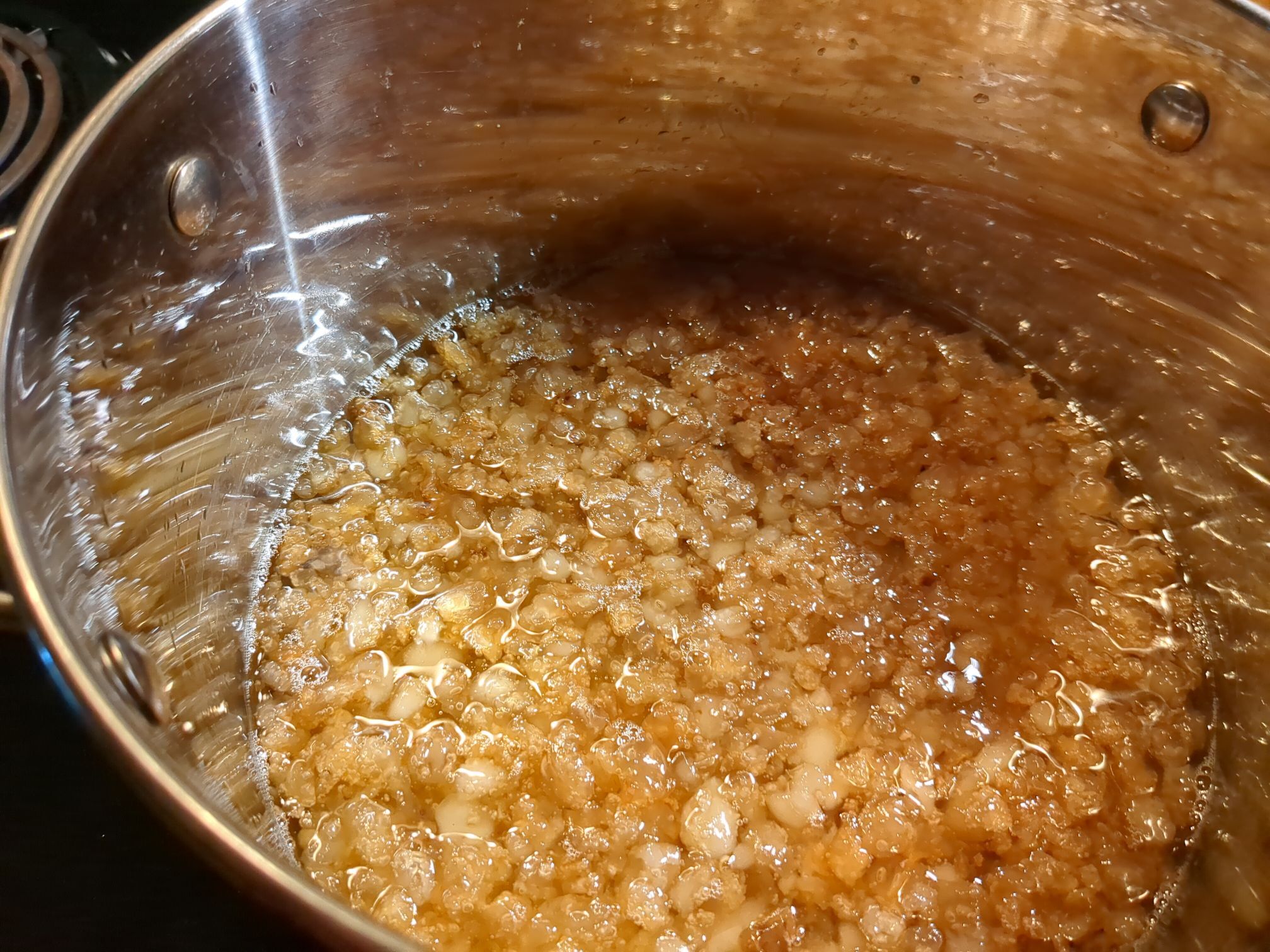 #m=image%2Fjpeg&dim=2016x1512&blurhash=%23DHwJUPV0jD%2BE1nNWU%252o%230PWG%7E9t2jER%25RkWXt7My9bNHxsNHsmWBWBjY%7E9WVR%2Cj%5DWqj%5DR*n%24RjxFR%2BS5xZt6n%25WBa%7CkB%251R%2CWXsmM%7CR%2BR*WCafNxbIoLWBn%24bGofofWq&x=b5420967e969a782d90f4a34be9c33c3da7f28b2b6278ea99d73ce3d2f0b5212
Browning usually means the temperature is a little high. I render pork fat and use water as a temperature buffer, it layers the bottom of the pan. I strain the water and fat together, let it cool, then remove the solid disk of lard or tallow, leaving the water behind. It takes some time, I’m usually at it all day before I think the yield is complete. That is going to taste amazing! 😊


Looks like a western juniper. I wouldn’t trust the high branches either. ☺️

Agree. Fully electric cars make sense in an urban environment, where freight is concerned the grid simply doesn’t have the capacity. Rail is already electric, powered by diesel; there is no easier scenario for grid electrification than rail, the problem is scale. Trains use a phenomenal amount of power, one engine can use as much as 13,400kw. I don’t see many one engine freight trains here in the western US, and that is one train. We just don’t have the production capacity or the infrastructure to support freight motivation by electricity.
Another problem is that electric power transmission is extremely inefficient. Transform voltages up, transform them down, losses through every transformation and there is no way to store AC power, if the generation stops, so does the grid. Just imagine the mess that would ensue through a blackout or even the random outage.

Indeed. This legislation for 2024 attempts to regulate every heavy tractor in the country, and charge them a per tractor fee for doing so. Apparently the fee schedule was defeated in court, and enactment delayed. Emissions have come an amazing distance in the last 30 years, and while generally I support legislation that protects the air we breathe and live in, the engines to meet these more stringent NOX emissions doesn’t exist. Electric heavy vehicles aren’t yet a viable option, and the life cycle emissions are not much better, particularly when consideration of electrical energy generation sources are taken in to account. Anyway, my simple note agreeing with you turned into a rant. It all looks like an agenda to push electric vehicle technology, and it’s likely a few people’s well placed investments in electrical vehicle resources driving the legislation. It’s likely not about the well being of people or our environment.
nostr:npub14eng8plhflea40cu3lafnw6nwkxsp5te2v7hzy74lz6a9mjhpaks0wm4rw That disparity is fairly long-standing in Norway. There's always been some antagonism. Fights about who gets to define the country. It runs so deep that we have two official written forms of the language, and the rural areas fight tooth and nail to keep existing. We live on the outskirts of Europe, where few other people want to live. This whole country kind of exists out of sheer determination.
What you wrote aptly describes the notions I had while there. 🤘🏻
nostr:npub14eng8plhflea40cu3lafnw6nwkxsp5te2v7hzy74lz6a9mjhpaks0wm4rw If you leave Oslo and start asking people along the west coast (the region that pretty much defines the Norwegian identity) what they think, they're the ones making the money while Oslo is where they spend it.
My experience too. Bergen elites. 😏
nostr:npub14eng8plhflea40cu3lafnw6nwkxsp5te2v7hzy74lz6a9mjhpaks0wm4rw "most Norwegians" gets a little weird when you're not from where most Norwegians live these days (urban areas) but you are from where they used to live traditionally (rural areas). Hard and honest work was the mentality for most of this country's history.
I did get around Norway and noticed a rough difference even in physical stature between those from royal or elite families and those who fit the sturdy Norwegian farmer profile. Sturdy Norwegian farmers are my kind of people, I later married one, American, but all Norwegian lineage. Urbanization is happening here in the US too. The metropolitan populations are creating regulation for the sparse rural populations that sometimes make rural operation difficult. There is an increasing disparity in understanding between rural and urban dwellers.
nostr:npub14eng8plhflea40cu3lafnw6nwkxsp5te2v7hzy74lz6a9mjhpaks0wm4rw 33.4% of Norwegians above the age of 16 have a college education. 37.4% have only finished high school. 26.2% have only finished secondary school.
In my age cohort, it's 47.6% for college, 32.7% for high school and 16.2% for secondary school only.
I expect these figures would look different if you eliminated the big cities from that statistic.
It wasn't that common for my parents' generation to get educated. Only 26.1% of people above the age of 67 have a college education.
That’s interesting. I suspect the US statistics are appreciatively worse. I think that state funded post secondary education is so important to the advancement of human culture. It should be a global standard.