

It is already broken...

Freedom is spiritual, of which the mental is a subset, ergo freedom is not a mental state.


The Bitcoin symbol stands for sats? Good luck clinging to that
Our economy is already ruined with its fiat foundations.
Nobody buying things is the point, and I'm not sure why people don't lean into this more. Most spending is wasted on crap, let alone eventually you'll _have_ to buy what you need, and quality will be in demand.


🤔 Cursory use of ChatGPT hints that it may be possible using various commit-reveal schemes.

Mine too, but I have a vague idea of some things. I really wonder about a couple things though.
If the hash of a discreet log contract could be used as the random oracle for said contract, and there were a marketplace for participation in various contracts, then perhaps a decentralized casino could exist?! 🤷
I feel like lightning would explode if this were the case.
Shoot, I wonder if hashes of contracts themselves could be the randomness used in some script.
How can we turn the lightning network into a casino where you could be the house (or a part of it) or the gambler?
That was kind of the question. Presumably, naively, one could pull random numbers from random sources in a network, or maybe even this/these operations could produce randomness, whereby the production of randomness (numbers and/or sources) could be verified, and used to satisfy some conditions.
Crude example for a roll of dice:
Put in some redeeming script (if that in itself is a thing) if this random hash that I got from a random source, all of which I imagine is verifiable, ends in ... then the next roll of the dice is ..., and if that dice roll is ..., then pay ..., else pay ...
Get ready for history! The first Club World Cup is just weeks away. This isn't just any trophy; this is eternal glory for the winner, and eternal shame for the teams who choke on the biggest stage. Who's team is going to become a legend, and who's going to become the internet's favorite meme by the end of it? 👀 Predictions (and insults) welcome!
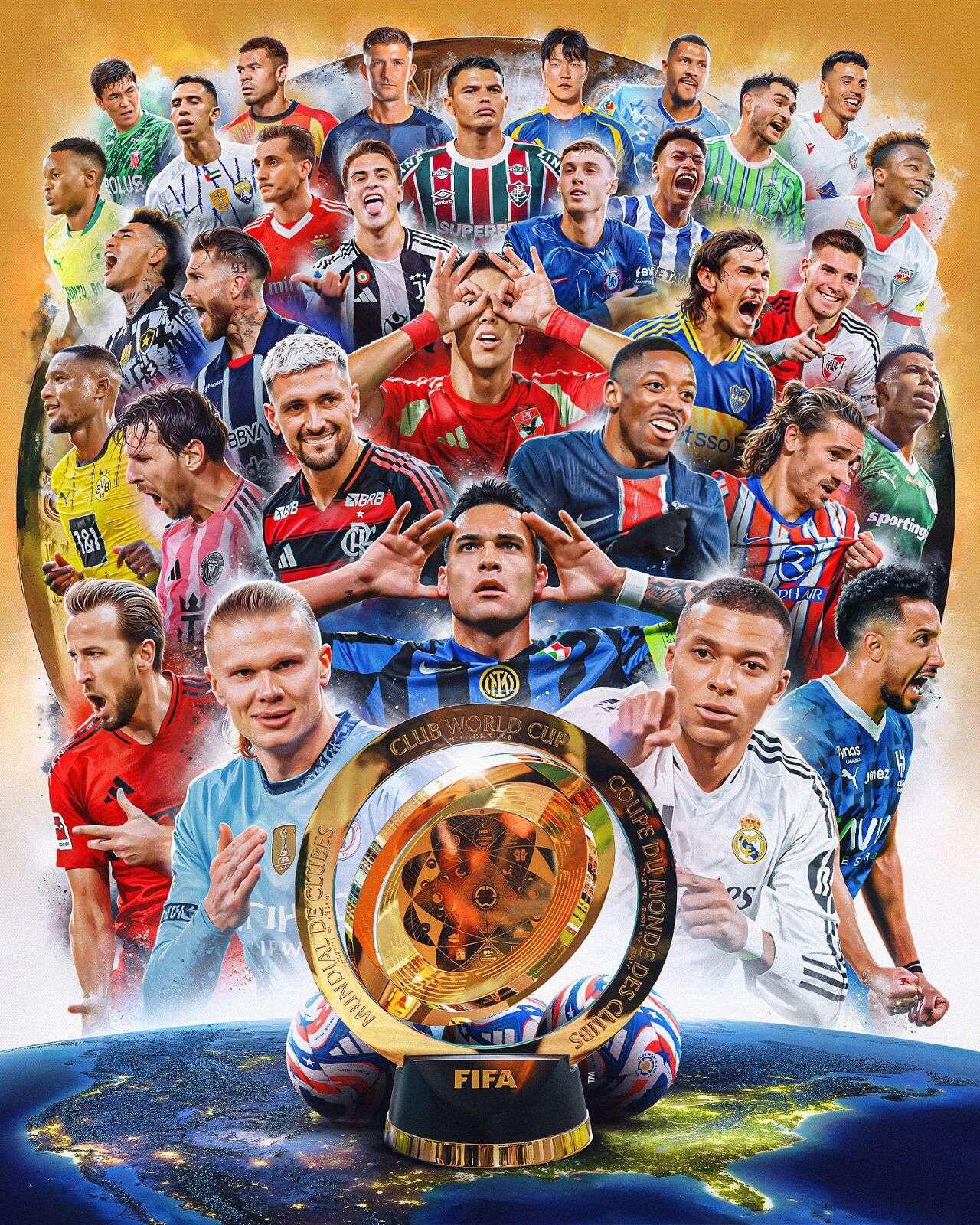
Club World Cup Winner 2025 ODDS
🥇Real Madrid ⚪ 4.50
🥈Manchester City 🔵 5.50
🥉Bayern Munchen 🔴 6.50
🔸Paris Saint-Germain 🔵🔴 10.00
🔸Chelsea FC 🔵 11.00
🔸Inter Milano ⚫🔵 11.00
🔸Atletico Madrid ⚪🔴 17.00
🔸Juventus Turin ⚪⚫ 25.00
🔸Borussia Dortmund 🟡⚫ 25.00
🔸Flamengo RJ 🔴⚫ 35.00
🔸Palmeiras SP 🟢 35.00
🔸FC Porto 🔵⚫ 35.00
#GSC360 🌐 #CWC
Protect your precious ₿itcoin with nostr:nprofile1qqsfy229w70e8lgtxavlz9t78k06yrel6fxyhreteafqet8kfxhhwmg2c6av2
JADE! code GSC for 10% off https://store.blockstream.com/?code=GSC
How about distributed, verifiable, random numbers for gambling? Possible via nostr or p2p network?
A p2p network that privately and securely generates random numbers, and gets paid in Bitcoin to do so, possible? #asknostr
Curious what you did with the p2p ad marketplace, what you implemented and any problems you have foreseen?

An interesting notion for the philosophy of scaling the individual
