Profile: ede3d957...


Why is everybody still using Bisq 1 if not RetoSwap?

Most Bitcoiners are just trend following plebs. They will buy when prices are high.
You can use them as exit liquidity.

Would you mind to share your source. Would be interesting to monitor.

Indeed. Nothing worth of discussion since it is all through centralised third parties.
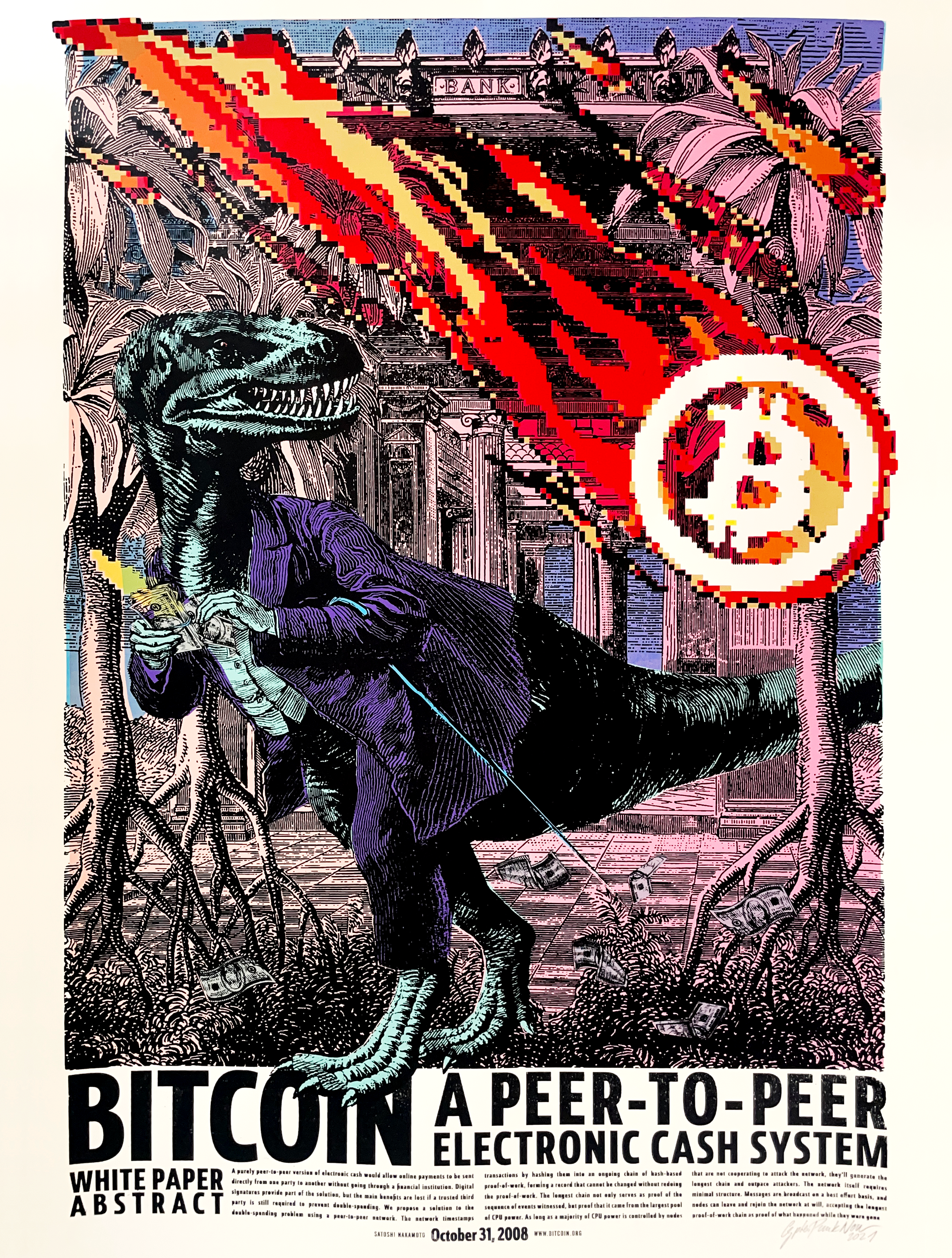
The masses are due for the slaughterhouse.
Motor oil
Biological relevant RF
Vaxxx
Blue light exposure/indoor lifestyle
Is just the tip of the iceberg.
Most are on their last years. Have you looked in the eyes of people. 40 year olds looking like they are in their eighties.

Monero is a better tool to protect your privacy. It's also more easy to use in a self-custodial way.
Great mobile wallets out there:
Cake
Stack
Monfluo
Monerujo
Unstoppable
Skylight


Are you asking what is the point of an offshore bank account?

I prefer Monero over Bitcoin. Because it challenges the challengers and by that humbles everyone.

Xmrbazaar.com
If you can offer concierge services this will be highly sought after.
Devs can earn bounties or if you are really good can get a Monero salary if you work for one of the core Monero projects.
Then set a target for DCA.
I would recommend at least a 10% Monero position.
Do 1% every two weeks and in 20 weeks you will have reached your desired position.

Making a long story short.
We (old Bitcoin OGs) figured that out of necessity we can't protect our families with transparent BTC, where everybody buys with KYC and therefore transforms the pseudonymous ledger into a perfectly traceable information base.
We moved on to build Monero. Monero rocketed to prominence in 2017/18 (top 4 coin). That's when Binance listed it. Ironically it's also when Binance rediscovered crust fractional reserves are a competitive advantage between CEX. So they started to naked sell 80 later presumeldy more than 90% of their users coins issuing them IOUs. Later basically any CEX started their own naked shorting to stay in the game.
The community started to become aware of this as early as 2021 creating a so called Monerorun that CEX massively failed with closed withdrawals for weeks months or even years.
Since then it was pretty obvious that CEX (in cahoots with states) gave massive power over the price if it is only traded on CEX.
After years of campaigning against CEX and making the public aware about this misconduct (that states enjoyed if they didn't directly demand it) it became clear that they maxed out the scheme and if they didn't want to embarrass themselves they would need to pull out.
Entering the "regulatory" delistings.
Now this was a way to reduce liquidity which resulted in a flash crash that Binance used to oartialy get rid of their naked short and states enjoyed because if you can not control price the next best thing is to control liquidity.
Ever since the landscape changed. There are only very frew remaining CEX that do fractional reserves like KuCoin that can keep withdrawals maintained while Poloniex, HTX, MEXC basically are Monero insolvent. Bitfinex and Kraken seem to be mostly honest.
RetoSwap (DEX) and EigenWallet (atomic swaps) pull volume from CEX.
So Monero rising simply means that oppressive forces have lost the means to control the price.
This will likely escalate when KuCoin is forced to delist.
Out of this experience we warned Bitcoiners yo not go down that route of more CEX, more custodians, more ETFs as in our opinion it is short term gain for long-term pain.
While exchange delistings improve privacy and P2P infrastructure meaning short term pain for long-term gain.
Guess what. Nobody listened, because we are still seen as shitcoiners by many maxis.


That's why we do Monero.
(Not because we want to annoy you!)

Converting to fiat?
If you earn in Monero you have the skills to stay in Monero.
Many deva live purely on Monero.
Totally depends if you are starting from zero exposure or if you already hold a core position next to BTC.
I am bad at giving advice at critical inflection points.
The last 1.5 years (with the exception of the last 2 months) it was a steel buy, but I very well know by now that most people will simply mute peak opportunity voices and ask later when the situation gets much more difficult for recommendations.
I am a Bitcoiner from 2010. You'll find many people here are from 2009-2013 if you are willing to listen.
Even my mum was open to me shilling it to her in 2012, which ironically makes her a Bitcoin whale compared to the many self proclaimed BTC maxis here, that came all for the wrong reasons (fiat NGU instead of freedom go up).
Prosperity follows freedom and freedom follows privacy.
We are still here to tell you all this.

⚡️🎙️ NEW - Comedian John Crist says after attending a recent Tucker Carlson party, he realized the world is a stage.
He claims Candace Owens, Tucker Carlson, Marjorie Taylor Greene, and Turning Point USA staff were all friendly with each other behind the scenes.
Crist says he was told the public feuds are largely for entertainment value and career advancement.
"I hate to say this out loud ... everybody friends. Everybody friends."
https://blossom.primal.net/a3e07bfd02bf005ad7f9a03e6050e7894246147faf4b79129776b916246eaf1b.mp4
If this is news to anybody here I fear they are fit enough yo survive this.
Imagine not being able to differentiate between the Bitcoin OG that "shilled" Bitcoin to you 15 years ago (now turned a Monero privacy advocate) and a real shill that gets paid by stolen fiat money to keep you down and vulnerable (no privacy) in the fight to come.
I really like that (absent monitoring) that there is no permanent track record on chain, also we will produce on chain opening and closing tx that can tell a lot.
I come to the conclusion that two things are necessary for functioning LN.
1) on chain privacy so you can open and close channels without revealing things
2) lower fees/more tx so force closes can not become an economic viable attack
There are still plenty of drawbacks, but LN would already work much better on XMR than on BTC.

And as your friends we sometimes allow ourselves to call out the state compliant Bitcoin ETF IOU SBR KYC NGU boot lickers.
It's actually a service to the Bitcoin community.
Personally I do think we are all in the same boat and I couldn't care less if BTC, XMR, bcash, doggiecoin or all of them together finish the job.

Sentiment only matters if we are talking about speculative investments.
People even hold money (USD) when it's a losing proposition.
Last bear market Monero fell less than BTC. This bear episode it's stable/slightly rising. People use it and many need it.
Ignoring tail emission and a potential inflation bug.
But then USD has an inflation bug as well - it's called the FED.

People still ignore the ease of running a Monero node?
More like 50 to 400k or at best 80 to 640k.
Big boys are in control of Bitcoin price now. They can't kill its price development over the decade to come but they can extract any positive exuberance meaning price development should be much slower than seen before as seen during the 5 years of fractional reserves of Monero by Binance.
160k by end of the decade. 350k by 2032. Store of value realised.
Price discovery will move to other utility coins.
I support this and I would love to see the maxi community rally behind this.
Also this should be significantly harder for BTC, because of institutionalised custodians and ETFs. Is this why XMR and BCH are the biggest "gainers" in 2025?
Excercise your property rights!
https://www.reddit.com/r/Monero/comments/1pmyu8w/bchxmr_bank_run_v200_15th_december_2025/

Monero is both more decentralised (thanks to P2P mining, ASIC resistance) and almost no nodes in Google or Amazon data centers (like with BTC).
One is transparent the other is private.
Monero is about to take over this market and maxis will be bystanders.
⚡️🇦🇺 NEW - News reporting the hero that disarmed one of the attackers is 43-year-old dad of two Ahmed al-Ahmed, taken to hospital with two bullets to the arm.
Ahmed al-Ahmed, a 43-year-old Arab-Australian Muslim father of two and owner of a fruit shop in Sutherland, was the unarmed bystander who tackled and disarmed one of the gunmen during the Bondi Beach terrorist shooting. Salute to him—what a legend!
https://blossom.primal.net/254ff1085a1373e7c82db315e9d7a35604fd5ad2df40cdc7e3050820b4581df9.mp4
False flag.


There's also Redox.

Remember that there are P2P exchanges like RetoSwap doing ten times the volume of Bisq or Robosats.
He will never recommend this to you because it is based on Monero. Meanwhile 80% of volume on Bisq and a significant part of Robosats is done in Monero.
Blockstream are the scammers that captured BTC development in 2014 in the name of banking giants.
They will sell us their "revolutionary" shit to the end of days if not more Bitcoiners wake up.
https://blog.blockstream.com/enabling-lightning-payments-with-liquid-swaps-in-the-blockstream-app/

Pretty retarded. I mean we all started somewhere. But if we are not careful St the beginning our past can hunt us down.

They don't understand that this is Monero biggest (store of) value proposition.



Some of you still haven't understood that if most people store IOUs on CEX the marketmakers and naked short can print any profitable number.
It doesn't even matter that 15 M coins are in self-custody when paper markets define the price with only 1M real coins.
Bitcoin value on CEX is arbitrary and easy to manipulate. You want 80%+ of the volume traded on DEX.
Show me your farmer and I tell you if you are part of the choir or part of the pretenders...

You know that Feds are always impersonating people to make whole groups look bad. Monero users are in it because they know that money should be the most neutral tool. Everything else should be judged in front of court.


That's a great offer will get back to you.


I read all your posts. I know when people come from an angle that is so unique that it is pure alpha. Thanks for that.
So I guess you will draw your own conclusions.
1. What we know is that some scholars recommended direct state attacks on Monero.
2. Almost all CEX run or ran fractional reserves
3. Once exposed and maxed out, the system reacted with new regulation forcing CEX into delistings reducing liquidity.
4. Ever since most liquidity has been pulled Monero is rising (which is counter intuitive, but makes sense if we assume the fractional reserve pressure fades)

Absolutely understand you. In that case you run a "space" in your GrapheneOS with a second separate SimpleX installation for all your business needs. Compartmentalization my friend.


People feared to introduce unintended consequences with Taproot and SegWit.
They have been right. But what if those unintended consequences have been intended consequences by Core devs via their backers. The compromise has been going on for far longer than many here might admit.
Most have not even been here in 2014 when Mastercard and a couple of conglomerate Bilderbergers founded Blockstream.
The retiree economy will be a much bigger challenge to Bitcoin than to Monero. Especially in a world where retirees will be the last to adopt Bitcoin as money. They prefer what they used their whole life. Fiat.
Which means they will convert their investments back to fiat to pay for their stuff.
Meanwhile Monero is not an investment. It is used for payments. What made it unattractive in the past as an investment ironically may lead to it becoming the best investments of the coming decades.
#asknostr
Which desktop or web client for nostr can you recommend that runs purely over .onion ?
There's no way to win by playing their game.
Exit the game. Create new reliable ties with people that have exited as well.
No way you build a future/company/family/community with people still tied up in the control grid (including fiat NGU fake maxis!)

No. They only killed the character not the player.
They love magick. The world is their stage and 99% of the people believe everything they want to believe.



So similar to a standard CPU in a mini PC many people already have at home when mining Monero!
Check out Gupax or Gupaxx. Everybody can become a miner within 5 minutes.