

Some people say that
When I was learning SQL my textbook told me it didn't stand for anything in particular
Also, yes, it's a computer language that deals with databases

I've seen an interesting argument that interprets the first clause negatively, to the effect of:
Because well-armed militias are (unfortunately) necessary, the right to arms shall not be infringed (so that the people can resist the militia if necessary)
Which, if accurate, dispels any thought of limiting arms only to a government-backed militia


So while we're waiting for the abolition of the state, what should state officials do with the infrastructure they control?
Should they allow anyone who likes to set up tents and take it over?
Should they operate these things for the benefit of all humanity?
Or should they use their authority (illegitimate though it may be) to support the well-being of the native population (who have a better ownership claim to the property in question than anyone else) ?
Moreover, should the state officials act in a way that makes the future security of private property more doubtful (eg by importing infinity browns by funneling tax dollars to "charity" networks) or more secure (by restricting access to state-controlled infrastructure and resources) ?

I don't own the street outside my front door but I believe I have some sort of legitimate interest in keeping vagrants from setting up tents and blocking the road
Obviously if you can privatize everything you can resolve disputes on the basis of private property
Failing that, I believe public property should be managed as a trust for benefit of those whose collective effort (including via coercive taxation) made its aggregation possible (or their heirs)
That's not my plan, just an example
and the US secession from Britain was like 3% of the population (who were outnumbered by loyalists)
France wouldn't have to beg - the French are already there.
I think usually the white nationalists want to restore a white country that already exists, not occupy some brownoid country and try to turn it white.


All politics is domestic politics.
If the Americans faked going to the moon, we can fake going to the moon. If we fake going to the moon, this further cements the wondrous power of Soviet communism.
What's the connection between white nationalism and freeloaders being able to get away with crimes?
Early modern England was basically a uniformly white state and they hung plenty of whites who comitted serious crimes
On the problem of political authority:
If I made up a rule that my neighbors can't barbecue on Sundays, then I went around and told them all about it, then if any did barbecue on Sunday I extorted money from them and kidnapped them and assaulted them, this would clearly be criminal.
So why isn't it criminal when a government official does it?
One possibility is that might makes right. Government officials have the power to do it, maybe there's no such thing as right and wrong, so it happens. One problem with this is I have the power to kill a cop. Sure, a jury would have the power to sentence me to death, but they'd also have the power to let me walk free. If the police have no special moral authority they also have no special moral protection. I think most people recoil from the premise that whatever can be done is morally justified, but even if they don't the logical conclusion is that "whatever' is also done to those in power or to those who don't recoil. See: Luigi Mangione, who (seemingly) found the power to kill a healthcare executive who (seemingly) operated his business in a predatory manner.
Another possibility is that government officials are somehow inherently morally superior to the rest of us. Obviously they would like us to believe this is the case, but in a post-monarchic world I don't see that they have a leg to stand on. Government officials are supposedly drawn from the general public on the basis of competence, and if the competent have the right to do whatever they want to the less competent we're back at the "might makes right" case we've already considered.
Another possibility is that when any act is done in an orderly and organized manner it is praiseworthy, but when the same act is done on individual initiative it is evil. I don't know how you could justify such a claim, but even if you could it would seem to be an endorsement of organized crime.
Finally, we should consider the possibility that what is evil for the private individual to do is evil for a government official to do as well. If this is the case, we must be anarchists, tax evaders, anti-imperialists, etc.

Hm, seems better not to slice it up if I can help it
I think the more fundamental point is that a sexually promiscuous woman can't be trusted to produce true offspring.
The ultimate reproductive nightmare for a man is to fail to reproduce and spend all his time and energy raising some other dude's kids. This is why men often kill their wives when they find them cheating.
I think cuckoldry is a low-self-esteem man hoping (perhaps subconsciously) that if he gives the woman all his resources he'll at least get to put one of the buns in her oven. I think there's also a hope that if the woman gets all worked up for Mr. Hot then Mr. Simp will have his way with her as well.
The ultimate reproductive nightmare for a woman is that she has kids who are sick or retarded and won't go on to reproduce themselves. This is why women get post-birth depression and kill their babies. This is also why women are promiscuous with men who show excellent health (or to a lesser extent, status), even without the assurance of resources from the father.
I think white men are more sensitive to abstract concepts of resources (than women or nons) and that women's dream man earning 6 figures (probably 7 or 8 in today's economy) is more about status and ability than about money directly.
I don't think there's ever been a shortage of whores, though.
How do I reassemble them into real gold?

It's a form of protest against invasion-by-immigration, and especially the practice of housing criminals around british schools



I was going to correct you and say officials see us as resources to be exploited
But since we have fiat currency that's also just numbers on a spreadsheet
Medieval Christianity still incorporated many pagan elements... I am convinced that pure Christianity is too Jewish to support a flourishing civilization (ie too monotheist, anti-reason, anti-nature, anti-life)
Haven't a lot more than that already stopped?



"Literally nothing is even in the same ballpark"
Quite so. Literally nothing.

Interesting correlation
I'm guessing extractive taxes and anti-depressants are both features of developed countries, especially western ones
I wonder if you restricted your search to just western countries how strong the correlation is within that subset
Google Gemini AI:
Jewish Cabal is a baseless conspiracy theory
Cabal of Jews is a verified historical fact
🤣🤣🤣

Yes - very important distinction between authoritarian countries & totalitarian countries.
In an authoritarian country rule is by force and you can basically say and do whatever you want as long as it doesn't threaten the regime.
In a totalitarian country rule is by pseudo-religion. Failure to clap enthusiastically for Stalin is a crime by itself.
I don't think the generals are in charge. I do think the manner in which government power is shown to the public has almost nothing to do with the manner in which it actually works.
I think that there's a vast ruling class that achieves rough consensus which is then independently implemented by thousands of bureaucratic managers. I'm sure there are factional conflicts within the ruling class, but they prefer to keep the scam going and are in that sense united.
I think elections are almost totally divorced from actual power, and are essentially a show. Elections are the 2nd-player controller you give to your little brother so he can pretend he's making things happen.

I doubt we will ever know the history even if they are kicked out of power. Khazars, Masons, Order of the Dragon, etc... lots of secret societies that might have mutated into it over time.
Regarding loss of civil liberties:
In an ideal world I would be free from both disorganized crime and organized crime (including state actors as organized criminals).
If that's not available to me, I would prefer to be free of more serious crimes (regardless of who commits them) and to enjoy a greater degree of liberty (regardless of how it is enforced).
So I would prefer to lose free speech than to lose my right of self-defense against burglars, although ideally all of my rights should be fully intact against all comers.
Regarding rule by the military / raw power:
I think raw power is always what rules in the short run and the power of ideas is always what rules in the long run. I don't see how rule by the military is any worse than rule by the psuedo-military we call police. Moreover, being open about the nature of power allows the citizenry to react intelligently, in a way that most struggle to do when power is masked as "the people" ruling "themselves".
yeah, Nagasaki
US government became infested with socialists in the 1910s and 20s, and with Jews after that (especially during WW2)
both of which are much more likely to bomb a church than the WASPs we are told ran the country

Central banks stopped stacking US Treasuries and started stacking gold years ago
Is martial law bad and if so why?
I think the US nuclear bombings of Japan were almost certainly fake
This book makes a persuasive case that Hiroshimans were the victim of firebombs and poison gas, with the nuclear fallout consisting of nuclear waste rather than nuclear explosive byproducts.
https://archive.org/details/Hiroshima_revisited
Nakitani (referenced in Palmer's book) thinks all nukes are fake, while Palmer seems to think the Soviets did successfully develop nukes
I'm not sure how a civilian could find the truth - or if we even need to.
There's an argument made (if I recall correctly) by US Retired Colonel Douglas McGregor, to the effect that nukes were valuable because they could definitely destroy a target. Now that we have very accurate guided missiles, the argument goes, there's no longer any need for nukes. You can simply hit the target directly and destroy it with conventional high explosive.
Regardless of whether or not there is a role for nukes, it seems that military men can blow up civilians if they really want to. So as a civilian, it seems to matter more that military men don't want to blow me up (either because they have nothing against me or because they fear retaliation) rather than worry about what sort of explosives military men might use to do so. To a lesser degree the same goes for terrorists.

Blacks didn't invent peanut butter
https://nationalpeanutboard.org/news/who-invented-peanut-butter/
> Africa before (((white))) government officials steal $10,000,000,000,000 and send it to Africa
> Africa after (((white))) government officials steal $10,000,000,000,000 and send it to Africa

You DO need to melt them if you want them to explain molten steel observed by the firefighters in the rubble over the next several weeks
I did a bunch of research a few weeks back and made an effortpost on nostr about it.
I wanted to know which handguns were most effective and if any could match the performance of long guns. I also wanted to understand the wounding effect of shotgun pellets and whether shotguns had some special wounding mechanism or were equivalent to a bunch of pistol shots.
I consumed whatever source I could find including autopsy reports, gel tests, battlefield reports, hunting videos and medical trauma care guides.
I found that typical handgun rounds are very close in effectiveness. In fact, I found that higher velocities can dissipate more energy elastically (through tissue stretching and deforming without permanent damage) and so a faster handgun round can actually penetrate less. 9mm for example was less likely to stop a threat in one shot than 380ACP, which has the same diameter but doesn't drive the bullet as fast.
Consequently I dismiss as suboptimal the handguns that virtually everyone claims are the best for self-defense. I think at 9mm or bigger you're adding a lot of bulk (to handle cartridge pressure) while getting very little or even reducing performance compared to a smaller gun. I think to improve over the most basic pistol performance you need 2,000+ fps, 250+ grain projectile weight, or high capacity plus rapid fire (to emulate the peformance of a rifle, shotgun or SMG).
I now carry a Glock 33 with ammo rated at 2,300 fps. Based on my research, I believe this should give me rifle-like performance. My home defense platform is an AR-type rifle, but I would probably take a full auto SMG with recoil mitigation (eg a proper MP5) over it for home defense or civil unrest, due to the shorter weapon length (and thus ability to move through doorways).
The answer on shotgun wounding was less clear. I think with greater spread (at longer range) each pellet is similar to a handgun round. However, I think when a sufficient mass (seemingly greater than 250 grain but data is sparse) impacts in a sufficiently small area (not sure how small), it exceeds the capacity of bodily tissue to stretch and dissipate damage. In other words, the fact that the pellets hit at the same time dynamically produces more damage than the exact same pellets hitting the exact same places, but spread over time.
The ultimate conclusion of my shotgun research was that slugs are more reliable manstoppers than shot. I now have my truck pump-action loaded with frangible rifled slugs, which get some of the non-penetration benefit of buckshot but with more consistent damage, much greater range, and the ability to be used in breaching. I think buckshot is overrated as a combat round, requiring a "flight control" type wad to keep the shots together and be effective, effectively simulating a frangible slug.
In terms of handheld shotguns, I considered .410 models such as the Taurus Judge, and concluded that 000 buck out of such a handgun is only more effective than the 45LC it can also fire at extreme close range (say, within 5 yards). Beyond that, the pellets spread out and are effectively 4 handgun rounds (but with much less control over placement).
So the only classes of gun I consider to be really sensible for self-defense are:
1) Pocket pistols in light calibers like 32ACP, 380ACP or 38 Special (for the most basic protection)
2) Specialty pistols/ammo reaching over 2,000 FPS
3) High capacity machine pistols (eg Glock with a switch)
4) True SMGs
5) True shotguns (with shot for drones or slugs for men)
6) Intermediate rifles (AR, AK, etc)
For *offense* you can bring in belt-feds, DMRs, and snipers.
I think they were just early.
They used to have an amazing catalog of cinema, but over time as streaming has built up a lot of those films are now on platforms owned by their original studio. I suspect also the price Netflix pays to offer these old films is much higher and thus they have to be more selective about what they can afford to license. They used to (seemingly) have everything.
In which (among other things) an Englishman makes the serious but understandable mistake that the US President is in control of the CIA and State Department


On objective moral values: That's just your opinion. Prove it.
"you can't actually get to today if there's an infinite number of days before it"
Then when did God create the universe? You can't get to that day if there's an infinite number of days before it.
"information always come from a mind"
That's just your opinion.
If you define "information" such that it must always come from a mind, then either DNA might not be/contain information or you are begging the question.
If you don't define information in this way, you have yet to make your case.
"Physics shows the universe is fine-tuned in ways so exact that blind chance is incredibly unlikely"
"Fine-tuned" is loaded language that presumes it could be otherwise and was chosen this way.
"Blind chance is incredibly unlikely" doesn't actually make sense when you have no idea what process generates universes. Maybe it's incredibly likely that if there's a universe it behaves like ours. Maybe it's certain. What are the odds of flipping heads ten times in a row? What if the coin has heads on both sides? Similarly, you don't know what the "heads" and "tails" are of whatever "blind chance" generates the universe. Maybe it's almost all heads. Maybe it's all heads. Then the fact that we actually see all heads shouldn't surprise us at all or make us doubt that "blind chance" is sufficient to cause the result.
"The simplest explanation is that the universe had a beginning" except you don't stop there. You invoke some sort of pre-universe that did not have a beginning. A simpler explanation is that instead of having infinite universe (A, which you might call heaven or God or something to that effect) and finite universe (B) we only have infinite universe (A, which might be here) or finite universe (B, which is here if A is not here) and not both.

Not sure this is how the trap is supposed to work. The rat is using it to reach nasturtium seeds. https://video.nostr.build/7bd9b46b1cbcedacd9a9ae0b01e7acac264dd41cf7fcef9e02ae8ab5ae769b84.mp4
I am strongly of the opinion that if rats are a problem for your food production you're eating the wrong foods

Bring back the church being able to tax the local peasants if you want great cathedrals
Bring back Christian prohibitions on most forms of consumption & wealth if you want great art


I am unironically in favor of abolishing prison
Just beat 'em and/or kill 'em
I learned about the Fed during Ron Paul's 2008 campaign
How life first originated is a mystery, for which you might invoke miracles (a form of confession of ignorance).
But once you have replicating organisms, no miracle is required to explain evolution.
The issue is not over-payment, but payment at all. The central bank is straightforwardly creating new currency (without any reserve ratio or capital ratio imposed as a regulation on how much they can create).
Werner points out that (most) credit creation happens at commercial banks, ignoring or not understanding that a little credit creation at the central bank turning into a lot of credit creation at commercial banks is exactly the reserve ratio "theory".
I put scare quotes because reserve ratio controls on commercial bank lending are regulatory fact, not a natural phenomena which requires a theory to explain. Calling reserve requirements a theory is like calling speed limits a theory.
No, I would not.
In an expansion-of-credit boom, businesses take loans specifically because they believe they can expand or enhance their operations at a lower cost than the interest they must pay on the loans. They borrow credit and use it to buy productive assets (raw material, machines, land, etc).
As those businesses buy up real assets, the price of those assets is driven up.
This is straightforwardly inflation - an expansion of credit which causes prices higher than otherwise would have been.

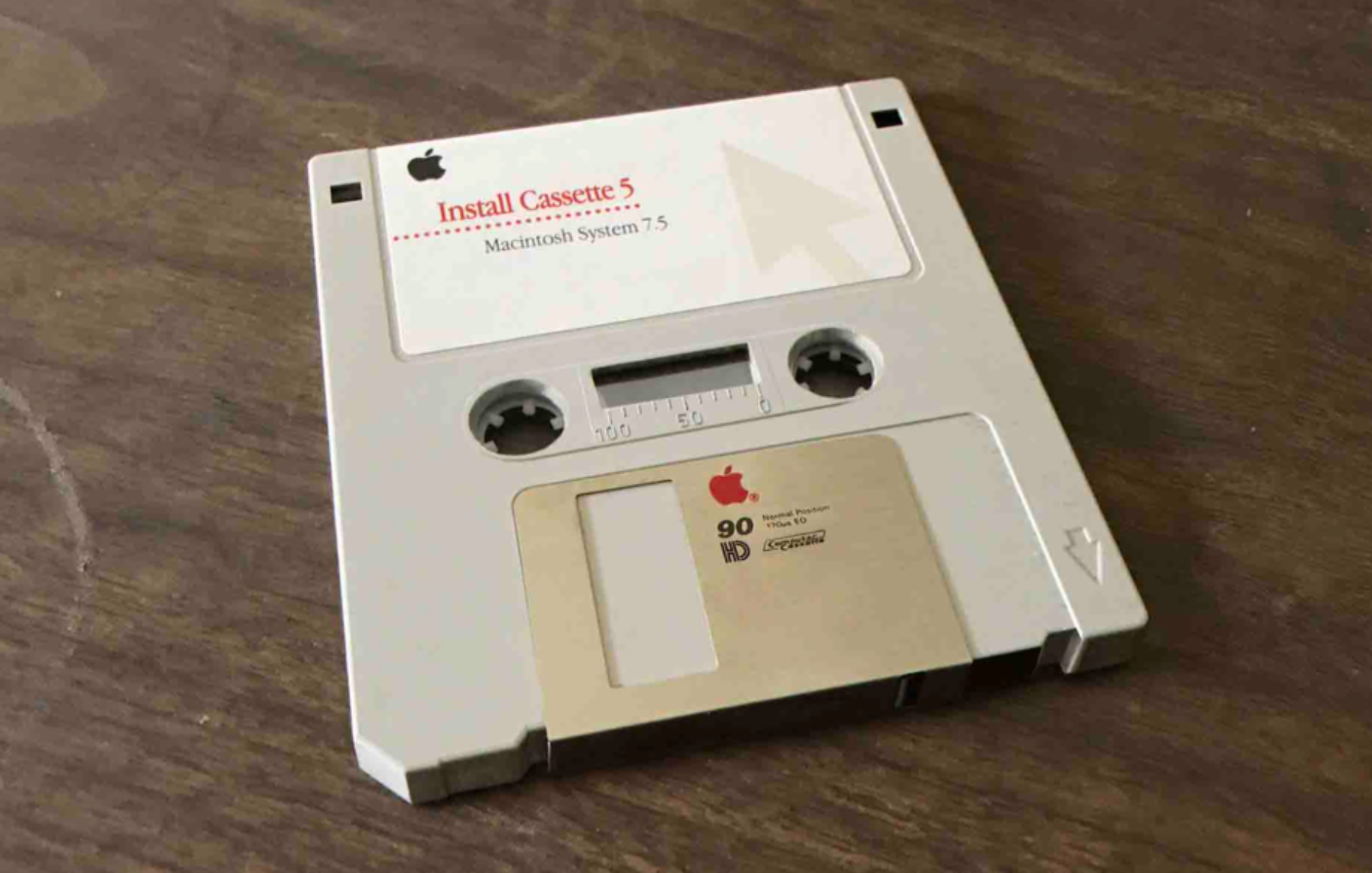
Thankfully you can't send explosives via email


occupied Germany, but close enough
Kill it and eat it, retards
https://apnews.com/article/moose-trail-closed-adirondacks-new-york-c5d2332038ead4c127135ade1010ee13