GM 🌞 *hugs*


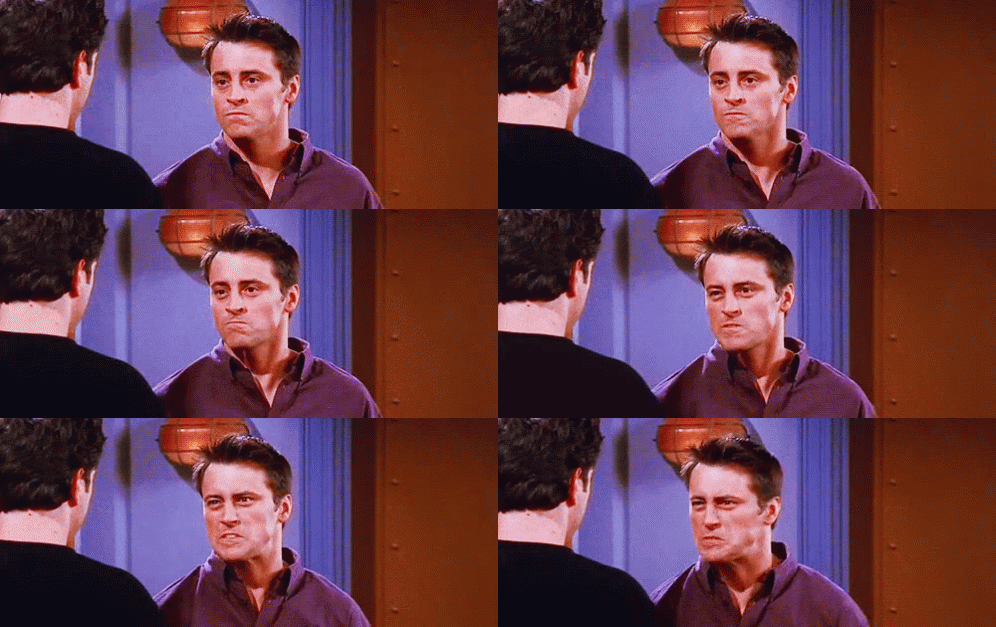
Maybe instead of a thumbs down for a downvote, we use the disappointed face / blank stare emoji 😐
This is way better than a downvote 🤣🤣🤣 nostr:note1t2n932ja794u9cymvvycgyge3fcj92jghrc3d9gvluvzaws53dyq0zd9j9

Yasss I just got done working out myself 🏋🏻♀️

Yes so I’ve thought about that too but that kind of comments-for-mutuals-only seems a little difficult to accomplish via nostr… maybe I’m wrong about that? I’ll have to think on it. But that was a big discussion on Twitter when Mute was introduced but people still preferred Block because then bad actors couldn’t even reply. That’s a little tougher on an open protocol.

Private accounts are a little dicey. I’ve always thought it’s super creepy that a private account can see me but I can’t see them unless they allow it. It’s like giving somebody an invisibility cloak 🤣
Exactly. I could even see there being a rolling calculation like “past-30-days trust rating” or whatever (would be really cool if the user could set and change those parameters in the client). There are lots of ways to increase trust without censoring and a big part of that includes accountability and transparency while putting the user experience into the hands of the user themselves.
User reviews - negative and positive - are utilized in e-commerce for the common good. Why do we not also value this kind of “credentialing” so to speak in terms of the quality of our social interactions? Just food for thought. nostr:note15nrs6tezg9d3hfaj8t2teqz7ztlzzylk8ak0g0xcmyv5hlr729wq45whyz

I disagree if the downvotes are fully transparent - meaning anyone can see who is doing the downvoting. Part of the reason people feel comfortable running around and “dogpile reporting” users on a platform like Twitter is there is absolutely no trail - you can gang up on people to try to get them banned and no one will ever even know you did it. That’s part of why that happens in the first place bc there aren’t social consequences for that “tribal tyranny” - it’s all covert and hidden. That’s also why the worst notes here are in the replies where they are partially hidden/nested.
In the scenario of downvoting, no one would get banned, but the OP would have options inside the client to limit their own view of heavily-downvoted replies. For example, if someone replies “you fat ugly slut” on a note of someone I follow, I’d like to be able to downvote that and keep it out of their mentions entirely unless they choose to go see the trash. It’s like the web-of-trust idea. Imagine women in a bar together and some drunk guy starts bothering one of them. What will they do? They’ll unite to get their friend away from the harasser.
The idea that we are only allowed to approve, ignore, or avoid yet cannot simply disapprove without comment is a really weird facet of social media if you think about it. nostr:note1u8n53g0vuvaqpaku8fj7rlmk3edzhxnxpxe3kqdpsqkswup6gqssn30vqg

Technically what I described wouldn’t silence anyone. It would just give the OP the choice of whether or not they want to see downvoted replies. And if someone didn’t like that feature they could use a client who doesn’t implement it like that.
I’ve been thinking about this too in a way that allows for decentralized accountability. Example: a downvote is a really interesting tool - if it was paired with a client that could filter out downvoted replies unless you wanted to see them, that might be helpful. Then what might be even more helpful would be giving people an upvote vs downvote ratio on a profile (including their replies)… almost like a friendliness rating.
Anyway just thinking out loud. nostr:note14vv6dnnjx0uusrvhdl9yp33ft286dgamrz94rrtqsv5uddlz5a5suv2klc