


Exposing Simon Dixon's Double Standards: Beneath the Mask of a Sovereign Individual
npub1546jstdajzf6gw4plvr6z4kpcaxtvl3h0zjdv5gw8tx8uup5d6rq8ef9mt presents himself as a champion against elites, a Bitcoin defender through self-custody, and an anti-imperialist urging everyone to "follow the money." But when you dig deeper into his views, what emerges is a web of contradictions: principles of freedom applied selectively, with criticism driven by personal and religious biases.
1. Selective History in Geopolitics:
He passionately condemns Zionism as colonialism marked by displacement, genocide, and apartheid, framing Israel as a proxy for American military-industrial imperialism. At the same time, he completely overlooks similar historical actions by Arabs and Muslims—from the 7th-century conquests (seizing the Levant and Palestine "by right of the conqueror") to Ottoman expansion, which involved cultural shifts and subjugation.
He rails against Western or Zionist empires but stays silent on Muslim ones. This isn't genuine anti-imperialism; it's biased selectivity with an anti-Western and pro-Islamic tilt.
A real libertarian would reject all conquests equally as violations of individual rights.
2. One-Sided View of Islam:
Dixon portrays Islam as a personal path of peace, tolerance, and resisting oppression (quoting verses like "no compulsion in religion" and limiting jihad to self-defense). Yet he never mentions the dhimmi system—the institutionalized subjugation of non-Muslims in Islamic societies: jizya tax for "protection," restrictions on bearing arms, building new places of worship, equal court testimony, or criticizing Islam.
This creates a clear hierarchy where non-Muslims are second-class citizens, involving economic and social coercion that's incompatible with true equality and non-aggression. By glossing over this, Dixon romanticizes Muslim history as "harmonious," implicitly justifying domination. As a Muslim, his drive comes from a religious sense of duty to "serve humanity," but it makes his anti-oppression stance selective—freedom only on his terms.
2. Fixation on Saylor and Dictating the "Right" Way to Bitcoin:
Day after day in posts, podcasts, and videos, he accuses npub15dqlghlewk84wz3pkqqvzl2w2w36f97g89ljds8x6c094nlu02vqjllm5m of serving elites, centralizing Bitcoin via debt, and sabotaging the revolution (custody vs. self-custody). He claims $MSTR is a tool for price manipulation through FUD and potential forced sales.
But on a free market, a sovereign individual should be free to handle their capital any way they choose—whether through leveraged treasuries, ETFs, or derivatives. The risks are theirs alone.
Dixon doesn't just highlight dangers (which could be helpful); he passes moral judgment and prescribes the "one true path" (self-custody only). His manipulation theory falls apart under scrutiny: $MSTR shares drop in response to BTC stagnation, not the reverse—the market naturally punishes leverage.
This obsession comes across as fixation, perhaps psychological or tied to promoting his own agenda/business.
Conclusions:
Behind the "follow the money" mantra lies not objective insight but a subjective ideology—anti-Western, pro-Islamic, laced with collectivist tendencies. Dixon excuses historical hierarchies (like dhimmi), condemns others' choices, and pushes a "revolution" where freedom is reserved for those who align with his vision.
He's valuable for pointing out risks in centralization and leverage, but his stance isn't libertarianism—it's propaganda riddled with double standards.
True freedom means no one dictates your choices: how to hold BTC, whom to criticize, or which history to focus on. No one owes the "revolution" anything against their will. Always test these gurus for consistency—otherwise, their "truth" is just a disguise for control.
#Bitcoin #Libertarianism


ENDdependence


...and not limited in time...
My node is my property. I have the right to harm anyone who spams it. Claire Ostrom's proposal isn't confiscation, but a warning shot followed by lethal force. The scoundrel should pay me for spamming, not the miners. Pay me if you dare :)
#bitcoin #bitcoin_knots


“If I put $100 in #Bitcoin in 2010 I’d have $2.8B now.”
No.
If you bought $100 of Bitcoin in 2010 and watched it go to:
$1k → $100k → $1.7M
and did nothing
Then watched $1.7M go to $170k
and still did nothing
Then watched $170k go to $110M
and still did nothing
Then watched $110M wither to $18M
and still did nothing
Then watched $18M surge to $390M
and still did nothing
Then watched $390M deteriorate to $85M
Then watched $85M climb to $1.6B
and still did nothing
Then watched $1.6B shrink to $390M
and still did nothing
Then watched $390M surge to $2.8B
and then for some reason finally decided to do something…
Then yes, $100 in 2010 would be worth $2.8B today.
Vivek Sen
"Only the tiniest fraction of mankind want freedom. All the rest want someone to tell them they are free."
— Irving Layton


"Finding the occasional straw of truth awash in a great ocean of confusion and bamboozle requires vigilance, dedication, and courage. But if we don't practice these tough habits of thought, we cannot hope to solve the truly serious problems that face us—and we risk becoming a nation of suckers, a world of suckers, up for grabs by the next charlatan who saunters along.
An extraterrestrial being, newly arrived on Earth—scrutinizing what we mainly present to our children in television, radio, movies, newspapers, magazines, the comics, and many books—might easily conclude that we are intent on teaching them murder, rape, cruelty, superstition, credulity, and consumerism.
We keep at it, and through constant repetition many of them finally get it. What kind of society could we create if, instead, we drummed into them science and a sense of hope?"
— Carl Sagan, The Demon-Haunted World: Science as a Candle in the Dark


Sorry, but could you put it more simply? We're not at a financial conference, after all :) I don't want to sound like an arrogant asshole, but I think you need to change your style from formal to informational.
We often think that if we speak in official language, like bankers, we look smarter and more respectable. But that's a business mistake.
If a consumer doesn't understand how they can use your product, they will go to your competitor.
I read your posts here and didn't understand anything. That's why I asked you a question.
We can divide our clients into different groups, from university smart alecks to Texas farmers. The former will understand the meaning of your posts, while the latter won't. Ultimately, you'll sacrifice the latter for the former. Is that the goal of your business? Even famous brands advertise and explain their products in simple language.
But to win more clients, it's not enough to speak in simple terms. You have to talk about a specific life scenario every time. We understand better when we can visualize what we're being told. That's why you should tell the client a real-life scenario.
For example, you want to buy a coffee and a slice of your favorite pie, but the cafe won't accept your satoshi? No need to look for an exchanger and make the cashier and people in line behind you nervous. We'll pay for your coffee and pie the moment you deposit satoshi in our app...
However, this example will attract a university smart aleck, but it won't convince a Texas farmer. Because it's not from his life. Therefore, you must publish different scenarios for different clients. To do this, you must study the lives of a farmer, a policeman, a petty clerk, a school teacher, an auto mechanic, a store clerk, a taxi driver, or the president.
Pay attention to the pictures in your posts. They don't paint a picture of my life in my mind. Dead buttons, text input fields, dry interface words. People like to look at people, not at information boards. So, if you're writing about a coffee scenario, give me a picture of a cafe, a cashier with a payment terminal. Even better if you give me two pictures: the first negative, where the client is without your product, and the second positive, where you helped them.
Conclusion. Once again, please don't be mad at me. I don't want to seem like an arrogant asshole. I just want to help because your product deserves recognition. Thank you!


If you have both #bitcoin and shitcoins you are not a bitcoiner with shitcoins.
You are a shitcoiner with bitcoins. 😊

Stand Up for Freedom: Pardon the Innocent Coders Jailed for Building Privacy Tools! - Sign the Petition! c.org/2SrLpjTM6d
#freesamurai #bitcoin


⚡ botrift.com — a pocket exchange for real everyday use
Most exchanges don’t support Lightning, and it’s often too expensive or complicated just to move a few dollars —
whether you want to buy a coffee, top up your debit card, or simply grab a few sats without making a big investment.
That’s why we built botrift, a micro-exchange experiment designed for small, real-world swaps:
BTC ↔ USDT between Lightning and Polygon, in seconds, with no custody and no account needed.
It works smoothly with Strike, Wirex, Revolut, and other fintech wallets,
as well as Wallet of Satoshi, Phoenix, and other custodial or non-custodial Lightning wallets.
We’re starting small — but in the future, we’ll add more stablecoins and more networks,
making pocket-sized crypto truly universal.
💡 Try it, learn, experiment:
https://botrift.com/btc-exchange
#botrift #LightningNetwork #Bitcoin #USDT #Polygon #DeFi #NonCustodial #CryptoExperiment #MicroExchange #Sats
What use cases might your customers have?


I thought it was Sepultura. They also have a video in the desert.

You haven't had Rick from England on your podcasts for a long time. Is he okay?

So excited to arrive at the finish line with this:
. Custom hat materially improves
nostr:npub17tyke9lkgxd98ruyeul6wt3pj3s9uxzgp9hxu5tsenjmweue6sqq4y3mgl user experience without changing security assurances
. $10 from each HAT split between our lead developer and lead maintainer
. HAT & enclosure designs will be open sourced
. No external investment or venture funds involved
The Waveshare display hat will also be perpetually supported for any users / builders who prefer it.
There were multiple shortcuts or alternative approaches that could have made this process quicker, easier, or more profitable but it was important to me to do this in what I felt was the right way.
https://btc-hardware-solutions.square.site/

Thank you!
Thank you nostr:nprofile1qqsvnvvlln2ru6jlyweayugxecv7ftfdlzd6zqca63sh7x6ercggjegpp3mhxue69uhkyunz9e5k7qg4waehxw309ajkgetw9ehx7um5wghxcctwvszvprka !
#bitcoin #bitcoin_knots #knots
#bitcoin #bitcoin_knots #knots #bitcoin_core

human death is a tragedy. you are right. but that is not what i said. i explained why i paid attention to your quantitative conclusions. you said about a small error in calculation and the ratio of 1/10. and i asked why such conclusions.
no. i am a bitcoiner. and bitcoin is mathematics. mathematics is an exact science. it does not tolerate uncertainty in those questions that require precision. if i make a conclusion, i must justify it. for example, if i say that many people were killed, i must say how many. of course, killing even one person is a tragedy. but you did not say exactly that. you said that people made a slight mistake in their calculations. that even 1/10 is a lot. so i, as a bitcoiner, asked myself: why a slight mistake, a slight mistake in relation to what number, and why did the arbitrary value 1/10 get into the reasoning?
To say a lot or a little, you need to know exactly how much. How much did they exaggerate? What is the exact amount? We don't know.

You didn't answer my question: how would you fight terrorists on the territory of these states?
and what about the terrorists who are in these territories?
https://www.pcbs.gov.ps/post.aspx?lang=en&ItemID=6022
https://www.pcbs.gov.ps/post.aspx?lang=en&ItemID=5901
341,790 is the MAXIMUM (unrealistic)
Because the statistics bureau says that 15% of the population are children aged 0-4 (even if we imagine that 2 million people live in the Gaza Strip (which is not true) - 15% of 2 million is 300 thousand. This was in 2024, therefore we add the birth rate index IN PEACETIME (although I somehow doubt that during a war they give birth there as in peacetime) and we get a MAXIMUM of 341 thousand children under 5 years of age.
According to the Gaza Bureau of Statistics, there are 341,790 children under 5 years of age living there.

Why do they need an office building? Let them work remotely.

I didn't know about that. Another problem.
and every #bitcoin_knots node becomes an unwitting accomplice of criminals, because it will be forced to store the csam that miners included in the blockchain, and will also be forced to distribute csam throughout the network. #bitcoin_core are headed straight to jail. for me, this is not a big problem, because they are adults and have the right to build their own future. but I care when bitcoin_core drags me and other bitcoin_knots owners to jail. as a lawyer, I see only one way to save myself: a hard fork. and the hard fork must happen before September 30th, so that the new branch cannot load csam that may appear after September 30th. I don’t see any other technical way to save myself and my node. and also. imagine if, in addition to child pornography, someone posts government secrets on the blockchain. imagine how quickly federal agents will come to our homes. i am not against a new Snowden. I am against him killing bitcoin.
i'm afraid so. i don't want to be alarmist because i don't understand the technical side of bitcoin. maybe i'm wrong. god forbid i'm wrong. otherwise the police will destroy all the nodes and bitcoin will die.
This will not save us in court. From a criminal law perspective, we will be guilty of storing and distributing csam. The police will charge us with the following: We understood the socially dangerous nature of storing csam on a computer and distributing it online, we understood the socially dangerous nature of the consequences of our actions, but we did not turn off our nodes, thereby creating favorable conditions for the creators of csam to commit a crime. If you store and transport someone else's drugs in your car, it does not matter that you did not manufacture or sell them. You are already guilty as an accomplice, at the very least.

yes, that's what i meant. if governments start arresting all bitcoin node holders as members of an international criminal organization, then they will paralyze bitcoin. every new node will automatically download the entire blockchain, and therefore all the csam nastiness. and every new node will be attacked by the police. we won't be able to support the network by launching new nodes, because the police will start hunting us. we need a hard fork. and we need to launch it before september 30th, so that it doesn't absorb csam.
if most nodes upgrade to core 30, and csam penetrates the blockchain, then csam will be preserved on knots. am i right?

I don't understand why it is dangerous to use raspberry pi?
I don't understand why there is a need to create a new party when there is a libertarian party? The libertarian party is: a developed foundation of the Austrian School of Economics, a ready-made political structure, a clear program, the embodiment of the original spirit of freedom. This party lacks the material resources that Elon could provide, without exacerbating relations with the authorities.
if there is a fork, will i need to transfer my coins to the new chain or will it happen automatically?



The mask issue needs to be addressed. Any owner has the right to set any rules within their property. If you don't agree with the owner's rules, don't use that property. If you don't like the government's rules, refuse their money and move on. I used to think that bitcoiners should follow this simple libertarian rule. But now I see that not everyone does.
1. If a Jewish student is not allowed onto the university premises, then his property rights are violated. According to the libertarian rule, no one has the right to encroach on someone else's property. If I have paid for an academic year at a university, I have the right to receive an education at this university for a year. If I am not allowed onto the university premises, then I am not being allowed to receive the educational service I have paid for. Islamists have the right to protest on their own property, but not on someone else's. University property is not the property of Islamists. 2. By property we mean not only property, but also the physical body of a person. Including the body of a Jewish student. Encroachment on someone else's property is unacceptable. There are several ways to encroach on someone else's property: by causing harm directly, by aiding the direct perpetrator, by inciting the direct perpetrator, and by other means known to criminal law. Supporting Hamas means supporting terrorism and the violation of someone else's property by inciting and aiding violence.
#bitcoin
nostr:nprofile1qqsv8fus0eeygg3k4mzlv9y5j9x5jka6pzvyfgkcyrug38hmutnfd5spz3mhxue69uhhyetvv9ujuerpd46hxtnfduq3vamnwvaz7tmjv4kxz7fwwpexjmtpdshxuet5u34wfv nostr:nprofile1qqs9cau563c3tgd3xwsevu74wdrv5j2dxeehj3vd36vt7f9ynz4ug6cpz4mhxue69uhk2er9dchxummnw3ezumrpdejqz8rhwden5te0vejk2ern9ehx7um5wghxyctwvshk6etdv4esy0eq8t nostr:nprofile1qqs03eglcgtv32zswdrk2yse7plz9mulg2v6svvlu0m7a9apjs2qsygpzemhxue69uhk2er9dchxummnw3ezumrpdejz7qgdwaehxw309ahx7uewd3hkc6x6mvf nostr:nprofile1qqs9uu8jjaaxzg2dug24skjqn72e9ejm6xupwuvswq9wvxfhkyq5wdcpr4mhxue69uhkgetk9ehx7um5wfcxcctevaex7atwvshxxmmdqy2hwumn8ghj76rfwd6zumn0wd68ytnvv9hxgt89l4m nostr:nprofile1qqs82e9z02hr92cvtylzd5f5c365qhjqxnm78rmpyj940erlmamlwfgpz4mhxue69uhkummnw3ezucn5vdaxstn5wuhszxnhwden5te0dehhxarj9e5hgumwv4382mrp9ehx2ap02x0y3q nostr:nprofile1qqsz9qzkcdqqldc8a3nn4fw85zkhxz2llevjc4shvh56ea4upr9j27qpr4mhxw309askgmtfdchxjurddaekz6trduhxxmmd8g6rsdpcqyf8wumn8ghj7ur4wfcxcetsv9njuetn77w3zl nostr:nprofile1qqsq2adlq0pxrsv4pqy5mmefe22r5k43frz0wmphnzj9hwc3v23ts7gpr3mhxue69uhkcatwvd5xymmc9eekzmnywa5kx6pwveshymgpp4mhxue69uhkummn9ekx7mqsvuu5d nostr:nprofile1qqsw34n9r8jrkys54350nu4ah3pcd4q6ce4jp3dzvzumqsgz0pq8f6gppemhxue69uhkummn9ekx7mp0qywhwumn8ghj7mn0wd68ytnzd96xxmmfdejhytnnda3kjctv9um3zmwu nostr:nprofile1qqszk9vcnyp8wlrzxh0t0tzz4e5fvd4essyqu93x0j7mgkgldmf62egppemhxue69uhkummn9ekx7mp0qywhwumn8ghj7mn0wd68ytnzd96xxmmfdejhytnnda3kjctv9uwkkt0a nostr:nprofile1qqsyw2lflynya6sj2net9a7d9ksvxxw6unlye4jf7ppya9prfh9vl9cpzemhxue69uhky6t5vdhkjmn9wgh8xmmrd9skcqglwaehxw309a3xjarrda5kumtp0p5k6ctvd9ehguewdahxc6twv5z6juuz nostr:nprofile1qqszwaxc8j8e0zw9sdq59y43rykyx3wm0lcd2502xth699v0gxf0degpz4mhxue69uhk2er9dchxummnw3ezumrpdejqzrthwden5te0dehhxtnvdakqr3qtfm nostr:nprofile1qqsw34n9r8jrkys54350nu4ah3pcd4q6ce4jp3dzvzumqsgz0pq8f6gppemhxue69uhkummn9ekx7mp0qywhwumn8ghj7mn0wd68ytnzd96xxmmfdejhytnnda3kjctv9um3zmwu nostr:nprofile1qqsyw2lflynya6sj2net9a7d9ksvxxw6unlye4jf7ppya9prfh9vl9cpzemhxue69uhky6t5vdhkjmn9wgh8xmmrd9skcqglwaehxw309a3xjarrda5kumtp0p5k6ctvd9ehguewdahxc6twv5z6juuz nostr:nprofile1qqsp4gwmhm4sfh0rpc085q8ha6nkq42fu7rjd4f4yt3ejz4xsqylgvcpzfmhxue69uhkgctdw4ejumn0wd68ytcppemhxue69uhkummn9ekx7mp0cg259r nostr:nprofile1qqsrf5h4ya83jk8u6t9jgc76h6kalz3plp9vusjpm2ygqgalqhxgp9gpzemhxue69uhkzarvv9ejumn0wd68ytnvv9hxgqgkwaehxw309a3xjarrda5kuetj9eek7cmfv9kqs6xl8h
nostr:nprofile1qqs9uu8jjaaxzg2dug24skjqn72e9ejm6xupwuvswq9wvxfhkyq5wdcpr4mhxue69uhkgetk9ehx7um5wfcxcctevaex7atwvshxxmmdqy2hwumn8ghj76rfwd6zumn0wd68ytnvv9hxgt89l4m
Where will the US Government get the money to buy bitcoins for the Bitcoin Reserve? As long as its expenses exceed its income by $2 trillion, the Government can only buy bitcoins in two ways: a) by not paying off its debts, b) by printing money out of thin air. If it starts printing money, not only the price of bitcoin will rise, but also the prices of other goods. So instead of celebrating the Bitcoin Reserve, we should think about the consequences.
#bitcoin
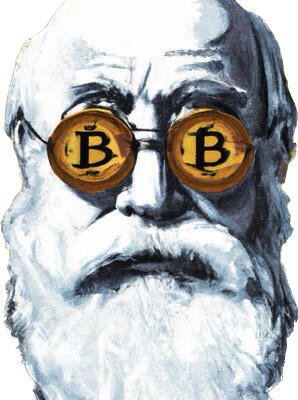
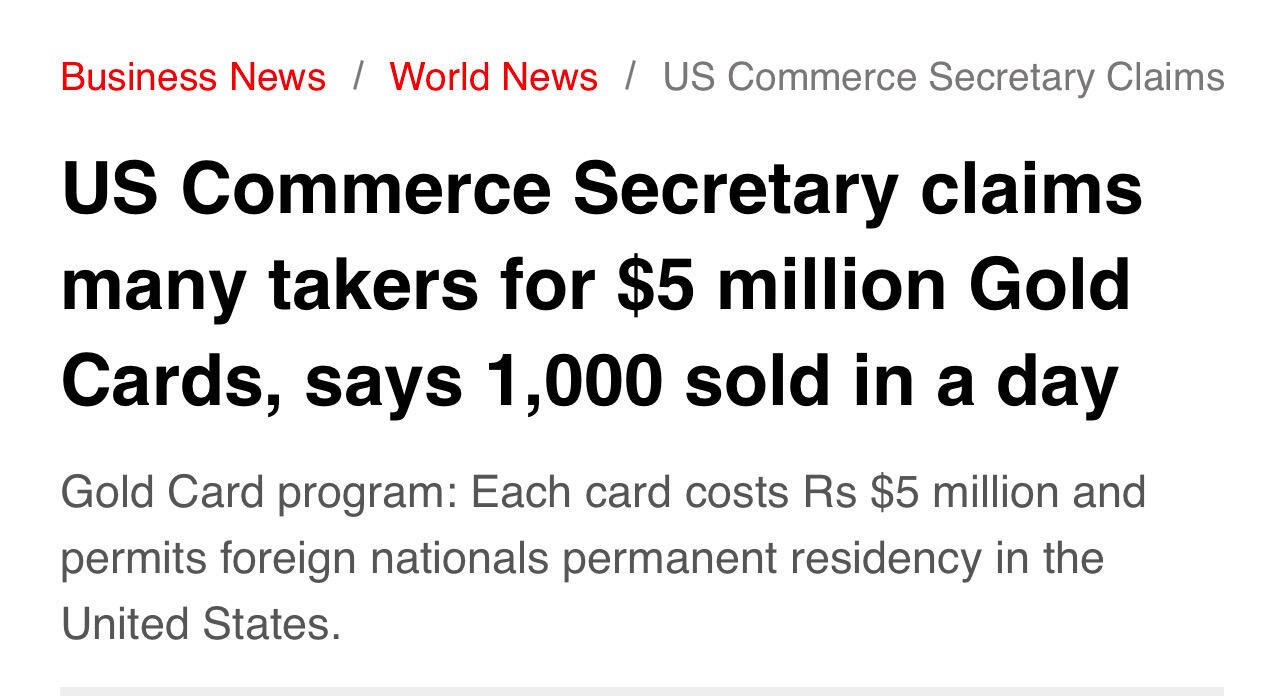
you compared what can't be compared: concrete and abstract. the gold card is the way to the usa. that is, to a specific geographical place. bitcoin is the way to personal freedom. that is, the way to some abstraction and nowhere specific. if i live in iran, do i need to buy 60 bitcoins and continue living in hell? or does it make sense to provide a future for my children in the usa?

but i heard that Ireland is the freest of european countries: low taxes, little regulation etc. why do they want to leave?

without beer?


does this justify the destruction and damage of other people's property in order to intimidate other Tesla owners?
#bitcoin will win